• About
  • Special Reports
  • Topics
    • Climate
    • Earth Science
    • Oceans
    • Space & Planets
    • Health & Ecosystems
    • Culture & Policy
    • Education & Careers
    • Opinions
  • Projects
    • Postcards From the Field
    • ENGAGE
    • Editors’ Highlights
    • Editors’ Vox
    • Eos en Español
    • Eos 简体中文版
    • Print Archive: 2015–2025
  • Policy Tracker
  • Blogs
    • Research & Developments
    • The Landslide Blog
  • Newsletter
  • Submit to Eos
  • AGU.org
  • Career Center
  • Join AGU
  • Give to AGU
  • About
  • Special Reports
  • Topics
    • Climate
    • Earth Science
    • Oceans
    • Space & Planets
    • Health & Ecosystems
    • Culture & Policy
    • Education & Careers
    • Opinions
  • Projects
    • Postcards From the Field
    • ENGAGE
    • Editors’ Highlights
    • Editors’ Vox
    • Eos en Español
    • Eos 简体中文版
    • Print Archive: 2015–2025
  • Policy Tracker
  • Blogs
    • Research & Developments
    • The Landslide Blog
  • Newsletter
  • Submit to Eos
Skip to content
  • AGU.org
  • Career Center
  • Join AGU
  • Give to AGU
Eos

Eos

Science News by AGU

Support Eos
Sign Up for Newsletter
  • About
  • Special Reports
  • Topics
    • Climate
    • Earth Science
    • Oceans
    • Space & Planets
    • Health & Ecosystems
    • Culture & Policy
    • Education & Careers
    • Opinions
  • Projects
    • Postcards From the Field
    • ENGAGE
    • Editors’ Highlights
    • Editors’ Vox
    • Eos en Español
    • Eos 简体中文版
    • Print Archive: 2015–2025
  • Policy Tracker
  • Blogs
    • Research & Developments
    • The Landslide Blog
  • Newsletter
  • Submit to Eos

Africa

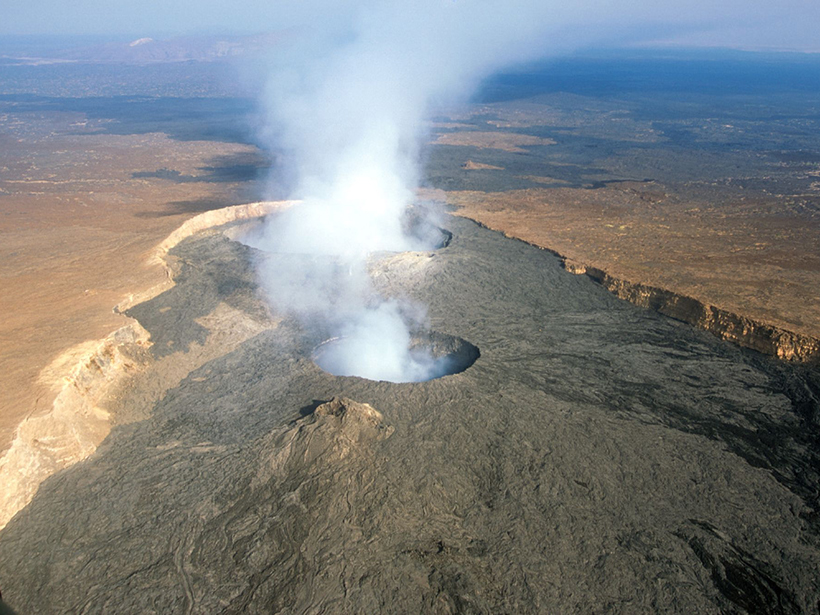
Aerial view Erta Ale volcano in Ethiopia
Posted inScience Updates

Breaking Up Is Hard to Do, Especially for Continents

by Lindsay Lowe Worthington, B. D. Shuck, A. Bécel, Z. C. Eilon and C. Lynner 24 March 202125 October 2022

A decade-long research collaboration has revealed that the split between Africa and North America roughly 200 million years ago was more drawn out than previously thought.
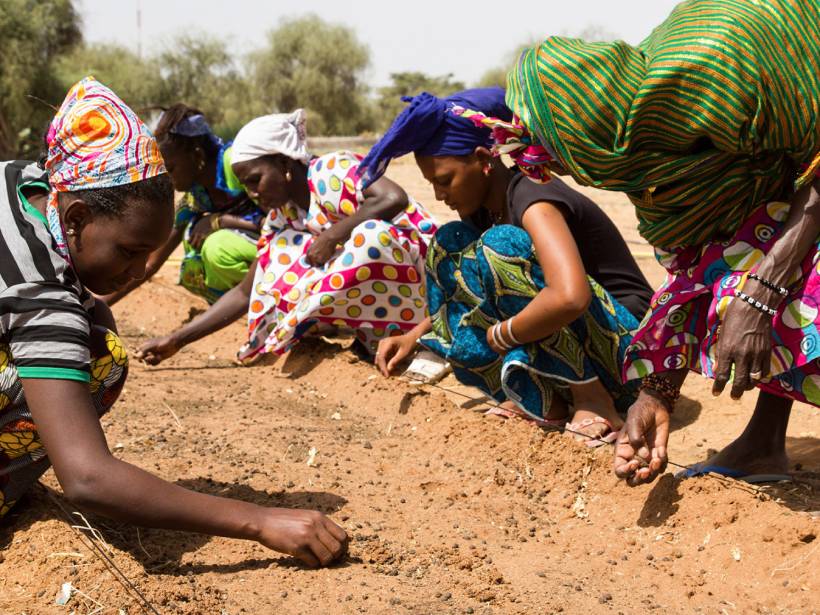
African women plant seedlings as part of the Great Green Wall.
Posted inNews

New Funding Fortifies Africa’s Great Green Wall

Tim Hornyak, Science Writer by Tim Hornyak 9 March 20215 October 2021

With increased investment and renewed interest, a project to halt land degradation across the Sahel aims to transform the landscape—and people’s lives.
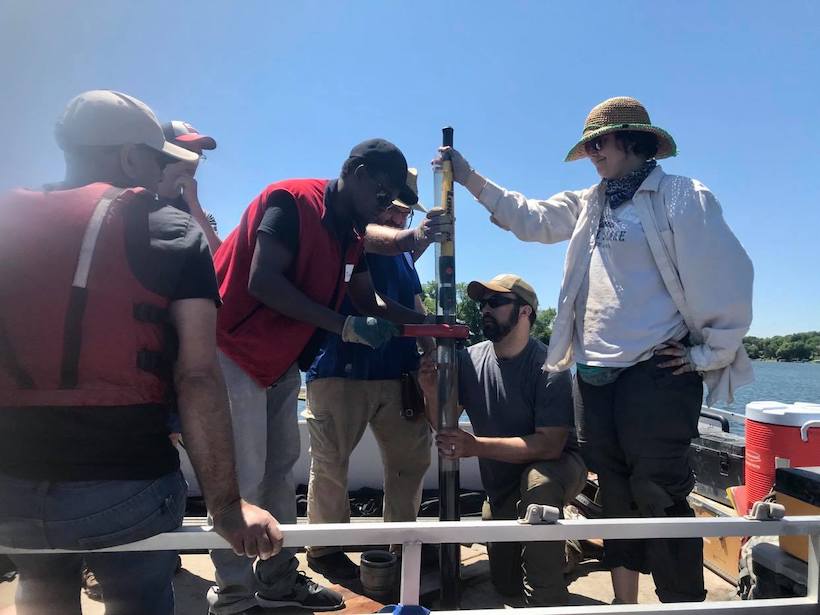
Paleolimnologist Tumaini Kamulali takes core samples on Sweeney Lake in Minnesota.
Posted inNews

Why Aren’t There More Journal Papers by African Geoscientists?

by Andrew J. Wight 17 February 202130 May 2024

Africa is a geoscientist’s dream. But new research shows that less than 4% of the world’s high-impact geoscience papers focus on Africa, and few of those have even one African author.
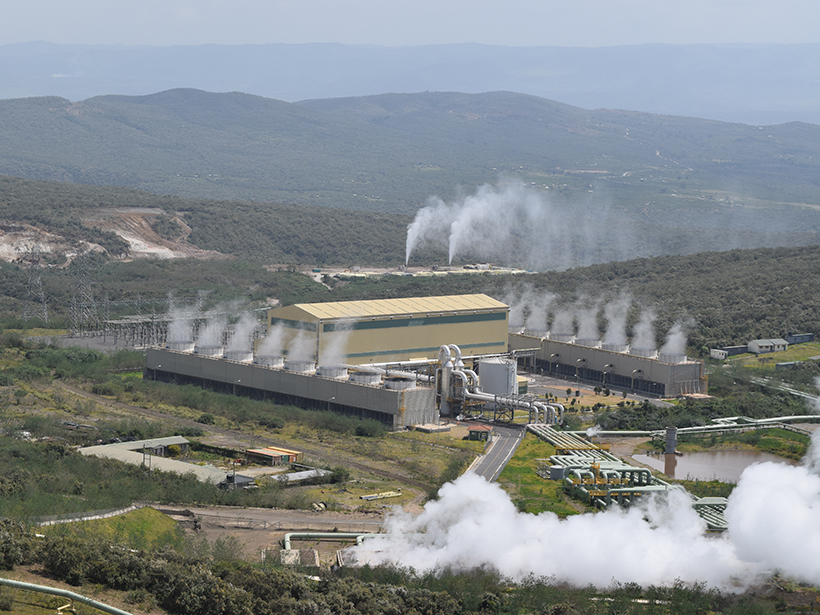
Aerial view of the Olkaria 4 power plant in Kenya’s Olkaria geothermal field
Posted inScience Updates

Geoscientific Monitoring of Olkaria’s Geothermal Motor

by I. Fadel, C. Hecker, J. Kimata, E. Bonyo, M. van der Meijde, H. van der Werff and F. van der Meer 28 January 20215 December 2022

In situ geophysical measurements from Kenya’s Olkaria geothermal field, integrated with remote sensing and meteorological data, shed light on subsurface energy transport to and from the surface.
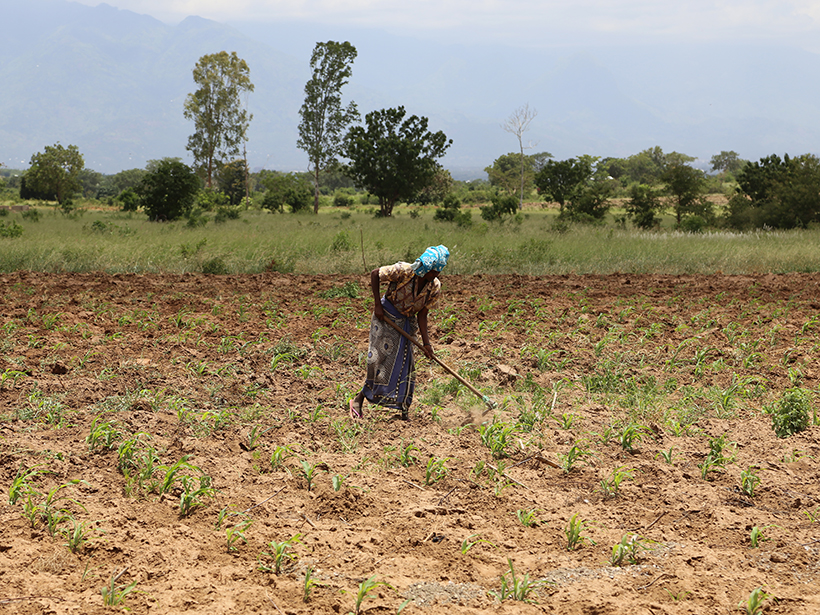
A farmer weeds her field in Morogoro, Tanzania.
Posted inScience Updates

Sowing Seeds of Food Security in Africa

by C. Nakalembe, C. Justice, H. Kerner, C. Justice and I. Becker-Reshef 25 January 202110 March 2023

An innovative program focused on collaboration and capacity building is looking to improve outcomes for smallholder farmers, reduce hunger, and alleviate food insecurity in sub-Saharan Africa.

Aerial photo of a squared-off archaeological dig
Posted inNews

When Did Archaic Humans Control Fire?

Mary Caperton Morton, Science Writer by Mary Caperton Morton 15 December 202031 October 2023

A familiar geochemical technique shines a new spotlight on early hominin use of fire.

Herd of wildebeests descends from a low cliff into a river.
Posted inNews

La Geología y la Química Impulsan la Migración Animal en el Serengueti

Katherine Kornei, Science Writer by Katherine Kornei 11 December 20206 September 2022

Trabajo de campo en Tanzania sugiere que la química del suelo—influenciada por el vulcanismo local y la actividad tectónica—podría ayudar a determinar la migración sin precedentes de más de un millón de ñus.

Aerial photo of Saint-Louis, Senegal, with the Faidherbe Bridge connecting the newer part of the city with the African mainland
Posted inNews

Sea Level Rise May Erode Development in Africa

by H. Mafaranga 13 November 20203 November 2021

The continent is enduring some of the highest global sea level rise. A new report identifies the western coast as particularly vulnerable to coastal erosion and saltwater intrusion.

Neat rows of crops grow between rows of trees
Posted inNews

Using Nuclear Fallout to Measure Soil Erosion in Tunisia

by Issa Sikiti da Silva 5 November 202028 January 2022

Cesium-137 acts as a tracer to evaluate the efficiency of conservation methods.

An artist’s depiction of early modern humans living amid the grasslands of the Paleo-Agulhas Plain
Posted inFeatures

A Lost Haven for Early Modern Humans

by K. Braun 14 October 202024 January 2024

Sea level changes have repeatedly reshaped the Paleo-Agulhas Plain, a now submerged region off the coast of South Africa that once teemed with plants, animals, and human hunter–gatherers.

Posts pagination

Newer posts 1 … 9 10 11 12 13 … 17 Older posts
Over a dark blue-green square appear the words Special Report: The State of the Science 1 Year On.

Features from AGU Publications

Research Spotlights

The Speedy Particles That Could Help Us Learn More About Uranus

18 June 202618 June 2026
Editors' Highlights

Where Methane is Emitted Matters for Global Burden

18 June 202616 June 2026
Editors' Vox

Small-Scale Indian Ocean Dynamics Underpin Marine Ecology and Climate

4 June 20263 June 2026
Eos logo at left; AGU logo at right

About Eos
ENGAGE
Awards
Contact

Advertise
Submit
Career Center
Sitemap

© 2026 American Geophysical Union. All rights reserved Powered by Newspack