• About
  • Special Reports
  • Topics
    • Climate
    • Earth Science
    • Oceans
    • Space & Planets
    • Health & Ecosystems
    • Culture & Policy
    • Education & Careers
    • Opinions
  • Projects
    • Postcards From the Field
    • ENGAGE
    • Editors’ Highlights
    • Editors’ Vox
    • Eos en Español
    • Eos 简体中文版
    • Print Archive: 2015–2025
  • Policy Tracker
  • Blogs
    • Research & Developments
    • The Landslide Blog
  • Newsletter
  • Submit to Eos
  • AGU.org
  • Career Center
  • Join AGU
  • Give to AGU
  • About
  • Special Reports
  • Topics
    • Climate
    • Earth Science
    • Oceans
    • Space & Planets
    • Health & Ecosystems
    • Culture & Policy
    • Education & Careers
    • Opinions
  • Projects
    • Postcards From the Field
    • ENGAGE
    • Editors’ Highlights
    • Editors’ Vox
    • Eos en Español
    • Eos 简体中文版
    • Print Archive: 2015–2025
  • Policy Tracker
  • Blogs
    • Research & Developments
    • The Landslide Blog
  • Newsletter
  • Submit to Eos
Skip to content
  • AGU.org
  • Career Center
  • Join AGU
  • Give to AGU
Eos

Eos

Science News by AGU

Support Eos
Sign Up for Newsletter
  • About
  • Special Reports
  • Topics
    • Climate
    • Earth Science
    • Oceans
    • Space & Planets
    • Health & Ecosystems
    • Culture & Policy
    • Education & Careers
    • Opinions
  • Projects
    • Postcards From the Field
    • ENGAGE
    • Editors’ Highlights
    • Editors’ Vox
    • Eos en Español
    • Eos 简体中文版
    • Print Archive: 2015–2025
  • Policy Tracker
  • Blogs
    • Research & Developments
    • The Landslide Blog
  • Newsletter
  • Submit to Eos

USGS

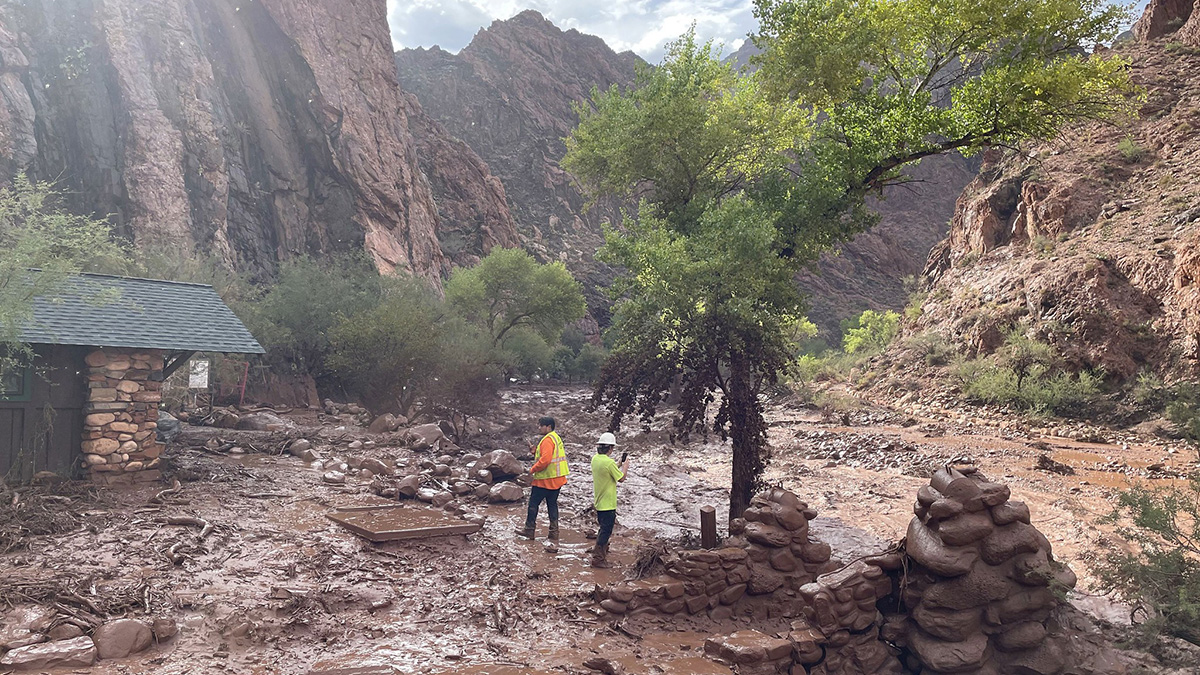
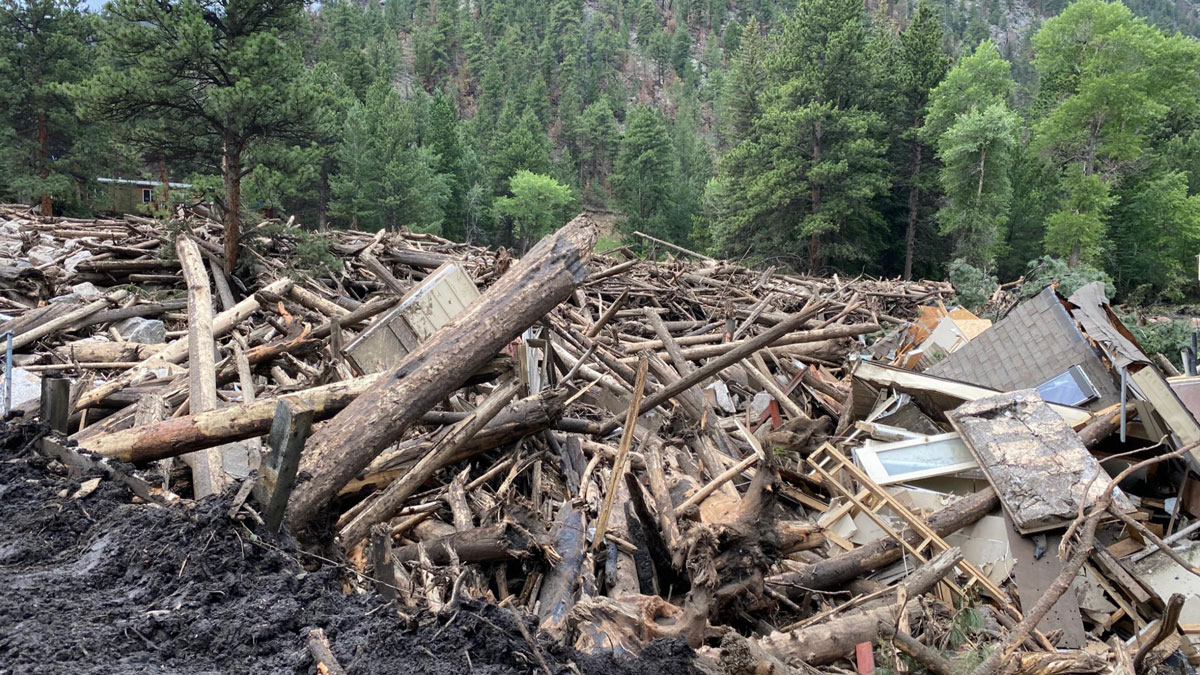
Debris, including downed trees and building materials, in a valley below a mountain.
Posted inNews

A New Approach Can Better Predict Debris Flow Hazards Years After Fires

by Grace van Deelen 19 May 202619 May 2026

USGS hazard maps don’t always reflect real landslide risk in the years after wildfires. Fine-tuning assessments of vegetation recovery could help.
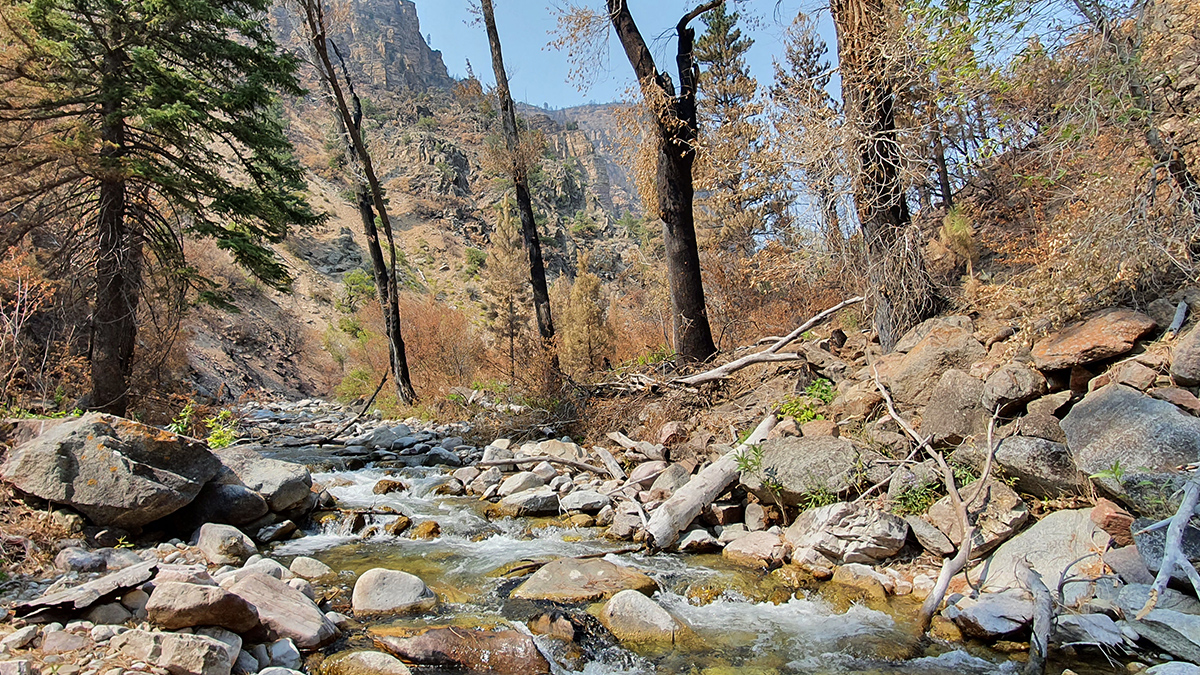
A rocky stream flows through a landscape of burned trees. A mountain is visible in the background.
Posted inResearch Spotlights

How Wildfires Worsen Flood Risk

by Nathaniel Scharping 30 April 202630 April 2026

A new approach to analyzing watersheds shows how storms occurring after a wildfire can have higher flooding risk than similar storms that occurred before a fire.

A bridge crosses a river beneath a relatively short waterfall. A city skyline is on the other side of the river.
Posted inResearch & Developments

New USGS Tool Fills in the Gaps on U.S. Water Supply

by Emily Dieckman 29 April 202629 April 2026

The National Water Availability Assessment Data Companion is the first tool that integrates information about water availability in individual watersheds at a national scale.

Seattle’s Space Needle is seen at dusk, with mountains and an orange sky in the background.
Posted inNews

On the Seattle Fault, the Biggest Quakes Aren’t the Most Likely

by Rebecca Dzombak 14 April 20261 May 2026

Smaller quakes from secondary faults—which are not included in national seismic hazard modeling—occur more frequently than previously thought.

People gather in front of the U.S. Capitol Building holding American flags and signs. A sign in the foreground reads, “Federal workers are patriots. Save lives. Cure diseases. Fight crime. Make jobs. Stop pollution.”
Posted inReport

The State of the Science 1 Year On: The Federal Workforce

by AGU 15 January 202615 January 2026

Thousands have left the federal workforce, and those who remain face significant uncertainty about their professional futures.

Weather instruments surrounded by a wooden wind shield and rustic lodge pole fencing stand in a grassy clearing with snow-capped mountains in the background.
Posted inFeatures

The Looming Data Loss That Threatens Public Safety and Prosperity

by Thomas R. Karl, Stephen C. Diggs, Franklin Nutter, Kevin Reed and Terence Thompson 9 January 20269 January 2026

Cuts to funding and staff needed to maintain trusted datasets of reference Earth system observations could limit their availability and quality, undermining hazard predictions and risk assessments.

A woman at a protest holds up a sign that says "No RIF"
Posted inResearch & Developments

Judge Stops Shutdown-Related RIFs Indefinitely

by Emily Gardner 28 October 202529 October 2025

A judge has announced she would rule that the government cannot issue further reduction-in-force (RIF) notices to federal employees because of the government shutdown, nor implement RIFs that had already been issued during the shutdown.

A helicopter equipped with a long boom-like sensor attached to the bottom and extending in front sits on asphalt tarmac under a partially cloudy blue sky.
Posted inFeatures

New Maps of Natural Radioactivity Reveal Critical Minerals and More

by Anjana K. Shah, Daniel H. Doctor, Chloe Gustafson and Alan D. Pitts 7 October 20257 October 2025

High-resolution airborne radiometric surveys are covering more ground than ever to provide insights into unseen geology, mineral resource potential, and possible health hazards.

The U.S. Capitol building on a cloudy day.
Posted inResearch & Developments

Science Agencies Shuttered in Government Shutdown

Kimberly M. S. Cartier, News Writing and Production Intern for Eos.org by Grace van Deelen and Kimberly M. S. Cartier 1 October 20251 October 2025

At 12:01 a.m. this morning, the U.S. federal government shut down. This shutdown comes after weeks of negotiations and pressure tactics failed to bring Congressional Republicans and Democrats together on a budget for the 2026 fiscal year or a continuing resolution to fund the government for a few more weeks.

Animation of the Cooperative National Geologic Map from the USGS
Posted inNews

New USGS Map Offers an Interactive Look at the Rocks Beneath Our Feet

by Nathaniel Scharping 26 September 202526 September 2025

The Cooperative National Geologic Map is an interactive tool that builds on both cutting-edge technology and decades of mapping by geoscientists.

Posts pagination

1 2 3 … 7 Older posts
Over a dark blue-green square appear the words Special Report: The State of the Science 1 Year On.

Features from AGU Publications

Research Spotlights

Keeping Humans in the Loop Improves Flood Forecasting

19 May 202619 May 2026
Editors' Highlights

Small and Large Grains Move Differently in Water

18 May 202618 May 2026
Editors' Vox

The Impact of Advocacy: American Geophysical Union’s Days of Action

14 May 202613 May 2026
Eos logo at left; AGU logo at right

About Eos
ENGAGE
Awards
Contact

Advertise
Submit
Career Center
Sitemap

© 2026 American Geophysical Union. All rights reserved Powered by Newspack