• About
  • Special Reports
  • Topics
    • Climate
    • Earth Science
    • Oceans
    • Space & Planets
    • Health & Ecosystems
    • Culture & Policy
    • Education & Careers
    • Opinions
  • Projects
    • Postcards From the Field
    • ENGAGE
    • Editors’ Highlights
    • Editors’ Vox
    • Eos en Español
    • Eos 简体中文版
    • Print Archive: 2015–2025
  • Policy Tracker
  • Blogs
    • Research & Developments
    • The Landslide Blog
  • Newsletter
  • Submit to Eos
  • AGU.org
  • Career Center
  • Join AGU
  • Give to AGU
  • About
  • Special Reports
  • Topics
    • Climate
    • Earth Science
    • Oceans
    • Space & Planets
    • Health & Ecosystems
    • Culture & Policy
    • Education & Careers
    • Opinions
  • Projects
    • Postcards From the Field
    • ENGAGE
    • Editors’ Highlights
    • Editors’ Vox
    • Eos en Español
    • Eos 简体中文版
    • Print Archive: 2015–2025
  • Policy Tracker
  • Blogs
    • Research & Developments
    • The Landslide Blog
  • Newsletter
  • Submit to Eos
Skip to content
  • AGU.org
  • Career Center
  • Join AGU
  • Give to AGU
Eos

Eos

Science News by AGU

Support Eos
Sign Up for Newsletter
  • About
  • Special Reports
  • Topics
    • Climate
    • Earth Science
    • Oceans
    • Space & Planets
    • Health & Ecosystems
    • Culture & Policy
    • Education & Careers
    • Opinions
  • Projects
    • Postcards From the Field
    • ENGAGE
    • Editors’ Highlights
    • Editors’ Vox
    • Eos en Español
    • Eos 简体中文版
    • Print Archive: 2015–2025
  • Policy Tracker
  • Blogs
    • Research & Developments
    • The Landslide Blog
  • Newsletter
  • Submit to Eos

carbon cycle

Two plots showing measurements of soil and ecosystem metabolism
Posted inEditors' Highlights

Dueling Eyes on Ecosystem Metabolism Tell Diverging Stories

by Ankur R. Desai 2 April 202122 December 2021

Multiple state-of-the-art independent observing systems consistently disagree on magnitudes and patterns of ecosystem metabolism of carbon dioxide, but together can shed new insight.

Many ecosystems across Latin America are not represented by environmental observatory networks
Posted inResearch Spotlights

The Gaps in Environmental Networks Across Latin America

Kate Wheeling, freelance science writer by Kate Wheeling 29 March 20216 March 2023

Despite its notable influence on global carbon and water cycles, Latin America accounts for a relatively small share of FLUXNET sites, which limits the representativeness of the network in the region.

Steam and gas rise from a volcano on the island of Java, Indonesia.
Posted inScience Updates

Earth’s Volatile Balancing Act

by J. D. Muirhead, Samer Naif, T. P. Fischer and Donna Shillington 24 March 20213 November 2021

How do greenhouse gases and water circulate from minerals deep below Earth’s surface into the atmosphere and oceans—and then back again? Our understanding continues to evolve.
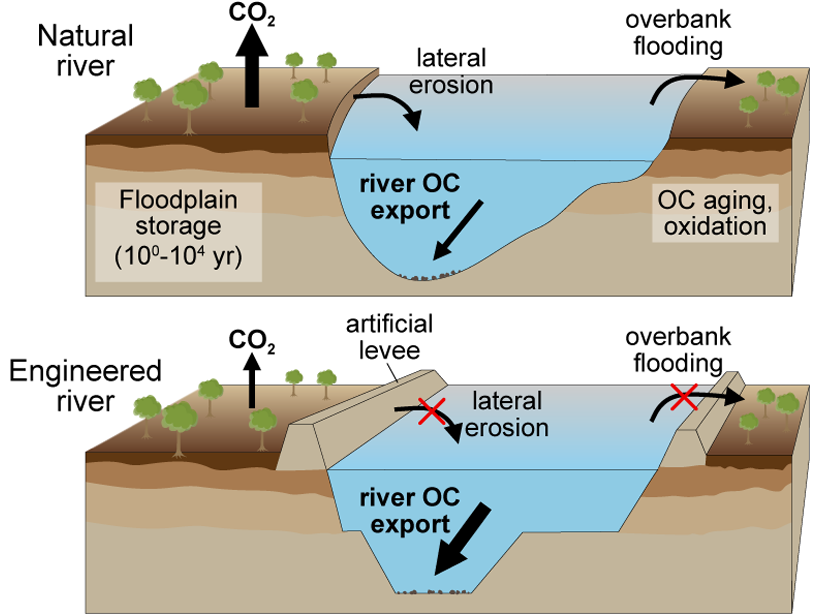
Two figures comparing organic carbon fluxes in a natural river (top) versus an engineered river with artificial levees (bottom).
Posted inEditors' Highlights

How River Engineering Alters Carbon Cycling

by Susan Trumbore 23 March 202127 January 2022

Artificial levees in the Lower Mississippi River bypass floodplain processing and increase delivery of carbon to the ocean.

Dead pine tree trunks stand amid tall grass.
Posted inResearch Spotlights

Coastal Flooding Enhances Methane Buildup in Forests

Aaron Sidder, freelance science writer by Aaron Sidder 25 February 20212 November 2021

Increased seawater exposure from flooding and storms is altering how coastal forests cycle methane, leading to more greenhouse gas accumulation in tree stems and soil.

Map of the Southern Ocean showing the flux of carbon dioxide determined from the USV measurements during the 196-day circumnavigation of Antarctica
Posted inEditors' Highlights

Robot Measures Air-Sea Carbon Dioxide Exchange in Southern Ocean

by J. Sprintall 22 February 202117 August 2022

Unique air and ocean surface observations of the Southern Ocean from a 22,000 km, 196-day circumnavigation around Antarctica by an Uncrewed Surface Vehicle.
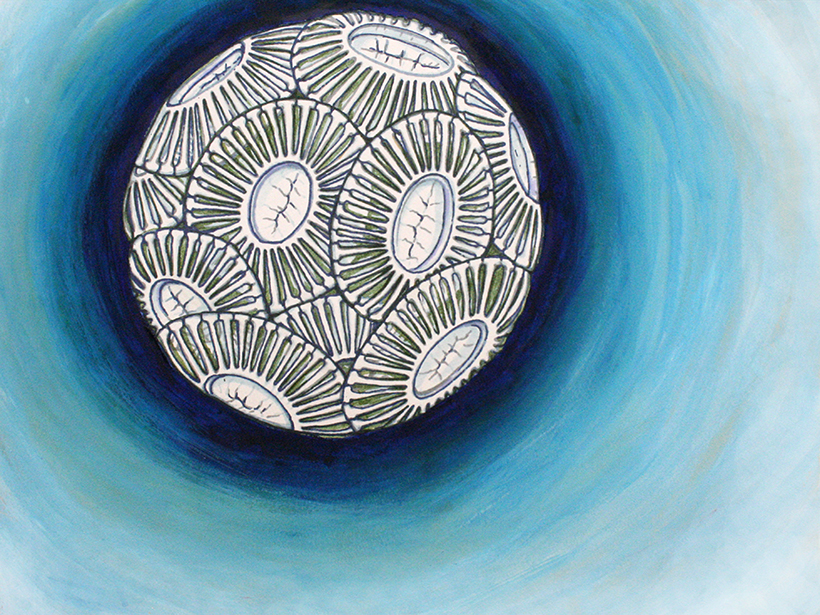
Illustration of a coccolithophore against a blue background
Posted inResearch Spotlights

The Alkalinity Trap at the Bottom of the World

Elizabeth Thompson by Elizabeth Thompson 9 February 202117 August 2022

Tiny microorganisms in the Southern Ocean affect the way the rest of the world’s seas respond to carbon dioxide.
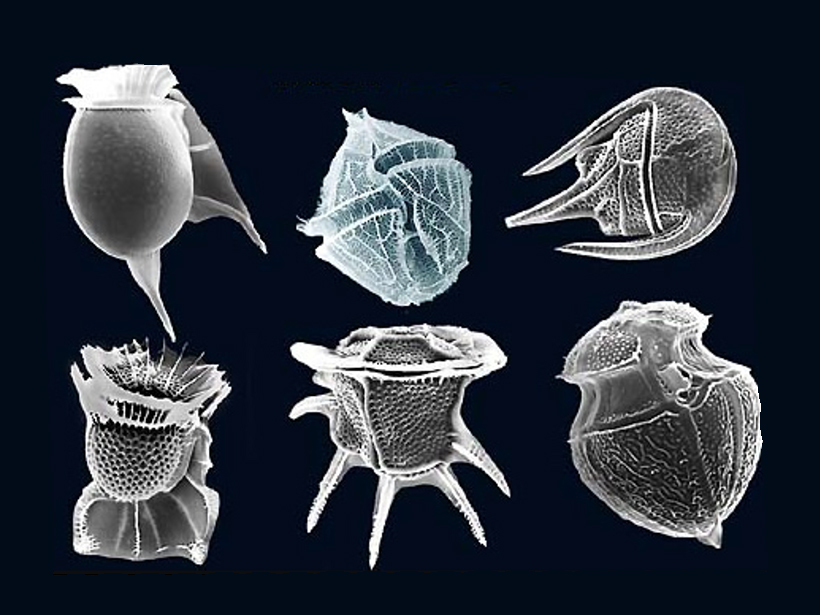
Microscope image of several types of dinoflagellates
Posted inResearch Spotlights

The Role of Midsized Phytoplankton in Earth’s Biological Pump

Kate Wheeling, freelance science writer by Kate Wheeling 4 February 202127 September 2022

New research finds that nanoplankton may have a larger influence on carbon cycling than previously thought.
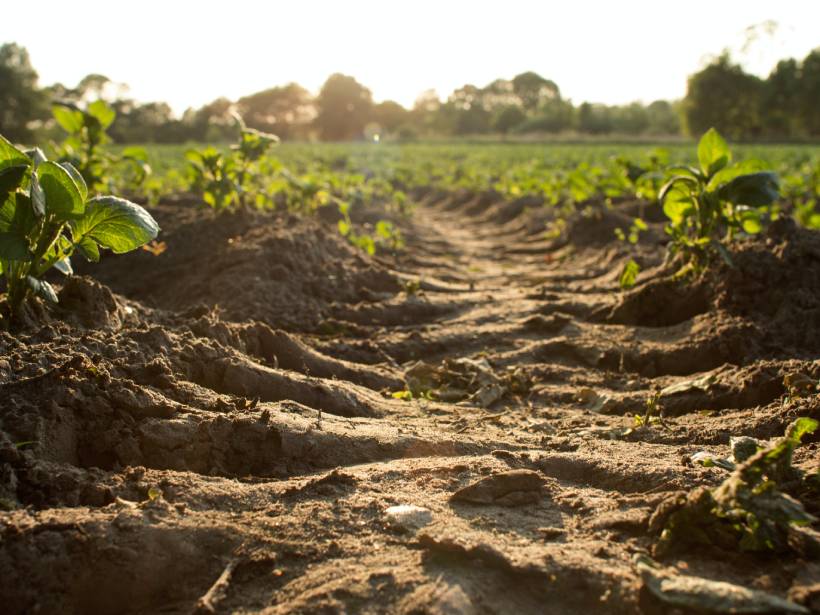
On-the-ground view of a tractor tread mark going through soil in a farm field
Posted inResearch Spotlights

A Global Look at Surface Soil Organic Carbon

by David Shultz 1 February 20215 October 2021

Soil organic carbon is an important element of ecosystem and climate health. Remote sensing can now give scientists a global look at this important piece of the carbon puzzle.
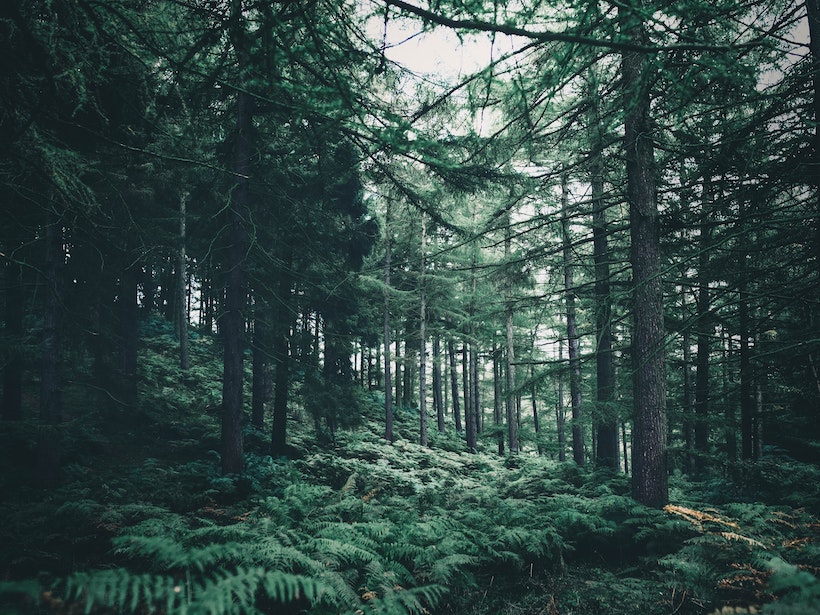
A forest with boreal trees rich in leaves and vegetation
Posted inNews

Trees That Live Fast, Die Young, and Mess with Climate Models

by Meghie Rodrigues 27 January 20212 November 2021

The trade-off between tree longevity and life expectancy can mean future carbon uptakes are overestimated in current global climate models.

Posts pagination

Newer posts 1 … 14 15 16 17 18 … 36 Older posts
Over a dark blue-green square appear the words Special Report: The State of the Science 1 Year On.

Features from AGU Publications

Research Spotlights

InSight into Seismology on the Red Planet

21 October 202621 October 2026
Editors' Highlights

The Geomagnetic Polarity Time Scale Revisited Once Again

22 October 202622 October 2026
Editors' Vox

Opening Access to Earth Observation Data for Disaster Mitigation

21 October 202620 October 2026
Eos logo at left; AGU logo at right

About Eos
ENGAGE
Awards
Contact

Advertise
Submit
Career Center
Sitemap

© 2026 American Geophysical Union. All rights reserved Powered by Newspack