• About
  • Special Reports
  • Topics
    • Climate
    • Earth Science
    • Oceans
    • Space & Planets
    • Health & Ecosystems
    • Culture & Policy
    • Education & Careers
    • Opinions
  • Projects
    • Postcards From the Field
    • ENGAGE
    • Editors’ Highlights
    • Editors’ Vox
    • Eos en Español
    • Eos 简体中文版
    • Print Archive: 2015–2025
  • Policy Tracker
  • Blogs
    • Research & Developments
    • The Landslide Blog
  • Newsletter
  • Submit to Eos
  • AGU.org
  • Career Center
  • Join AGU
  • Give to AGU
  • About
  • Special Reports
  • Topics
    • Climate
    • Earth Science
    • Oceans
    • Space & Planets
    • Health & Ecosystems
    • Culture & Policy
    • Education & Careers
    • Opinions
  • Projects
    • Postcards From the Field
    • ENGAGE
    • Editors’ Highlights
    • Editors’ Vox
    • Eos en Español
    • Eos 简体中文版
    • Print Archive: 2015–2025
  • Policy Tracker
  • Blogs
    • Research & Developments
    • The Landslide Blog
  • Newsletter
  • Submit to Eos
Skip to content
  • AGU.org
  • Career Center
  • Join AGU
  • Give to AGU
Eos

Eos

Science News by AGU

Support Eos
Sign Up for Newsletter
  • About
  • Special Reports
  • Topics
    • Climate
    • Earth Science
    • Oceans
    • Space & Planets
    • Health & Ecosystems
    • Culture & Policy
    • Education & Careers
    • Opinions
  • Projects
    • Postcards From the Field
    • ENGAGE
    • Editors’ Highlights
    • Editors’ Vox
    • Eos en Español
    • Eos 简体中文版
    • Print Archive: 2015–2025
  • Policy Tracker
  • Blogs
    • Research & Developments
    • The Landslide Blog
  • Newsletter
  • Submit to Eos

carbon cycle

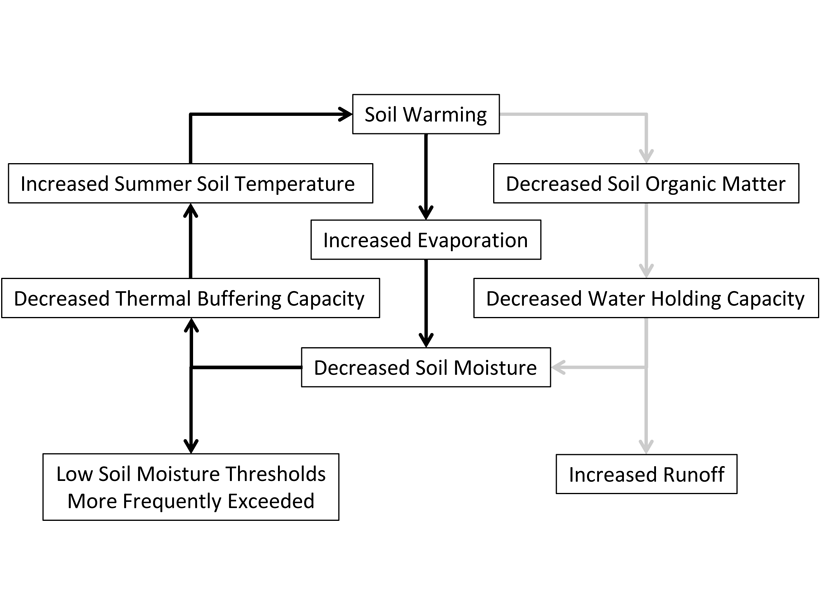
Schematic showing hypothesized feedbacks of soil warming, the ability of soil to buffer warming, and the amount of water soil can hold
Posted inEditors' Highlights

Soil Remains Warmer and Drier After Long-term Warming Stops

by W. M. Hammond 23 July 202022 March 2023

Pausing a long-term soil warming experiment revealed that previously warmed plots remained both warmer and drier compared to plots which had not experienced previous soil warming.
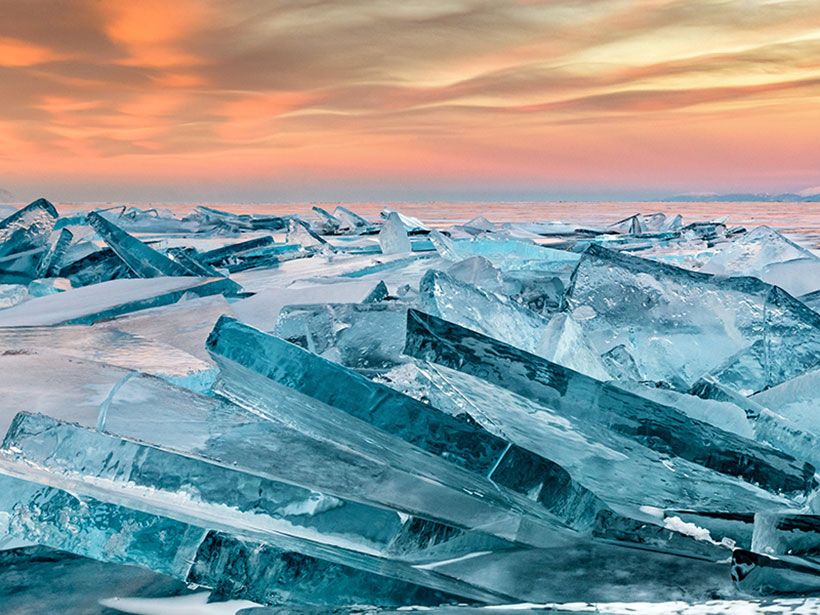
Ice near Olkhon Island on Lake Baikal in Siberia
Posted inScience Updates

Big Questions, Few Answers About What Happens Under Lake Ice

by S. E. Hampton, S. M. Powers, S. P. Devlin and D. M. McKnight 6 July 202027 October 2022

Scientists long eschewed studying lakes in winter, expecting that cold temperatures and ice cover limited activity below the surface. Recent findings to the contrary are changing limnologists’ views.

Aerial photo of the Yongle blue hole in the South China Sea
Posted inResearch Spotlights

El Ciclo del Carbono en el Agujero Azul Más Profundo de la Tierra

Elizabeth Thompson by Elizabeth Thompson 16 June 20202 September 2022

Científicos encuentran nuevos extremos mientras investigan el ciclo del carbono en el agujero azul de Yongle.

A view of the ocean and clouds from the International Space Station
Posted inResearch Spotlights

A First Look at Elusive Deep-Ocean Carbon Molecules

Sarah Stanley, Science Writer by Sarah Stanley 12 June 202029 September 2021

A new analytical technique enables direct analysis of dissolved organic carbon molecules that store carbon in the ocean for thousands of years.

Snapshot from animation frozen on the Pangaea supercontinent in the early Mesozoic
Posted inNews

Visualizing the Deep Carbon Cycle

by C. Fogerty 12 June 20207 October 2021

Geoscientists have created animations to help visualize different components of Earth’s carbon cycle.

Close-up of a rock containing methane-derived carbonates
Posted inNews

Oceanic Changes Correlate with Methane Seepage

Hannah Thomasy, Science Writer by Hannah Thomasy 8 June 20202 November 2021

Changes in sea level and organic carbon burial may have affected seafloor methane seepage over the past 150 million years.

Diagram showing carbon dioxide cycle with ocean
Posted inEditors' Highlights

Eruption and Emissions Take Credit for Ocean Carbon Sink Changes

by Eileen Hofmann 3 June 202028 February 2023

A new model explains why the ocean’s capacity to take up carbon was reduced on a decadal scale, by accounting for reduced pCO2 emissions and ocean state changes due to the eruption of Mt. Pinatubo.

Map of the Lesser Antilles volcanic arc showing the subduction zone trench and the location of two Deep Sea Drilling Cores
Posted inEditors' Highlights

Extremely High Carbon Return in Certain Volcanic Arcs

by S. D. Jacobsen 3 June 202023 September 2022

By comparing measured volcanic output with subducted carbon fluxes from drill cores, the Lesser Antilles subduction zone shows nearly complete slab carbon release at sub-arc depths.

Hanging bridge in a lush tropical rain forest
Posted inAGU News

A Whole World View

Heather Goss, AGU Publisher by Heather Goss 21 May 202013 March 2023

Scientists are dedicated to understanding the complexities of the Earth’s carbon cycle—and how our actions can throw it off.

A mountain stream in the Swiss Alps
Posted inNews

Mountain Streams Exhale More Than Their Share of CO2

Kimberly M. S. Cartier, News Writing and Production Intern for Eos.org by Kimberly M. S. Cartier 20 April 202030 March 2023

Streams that flow down mountainsides are more turbulent than those that run along forest floors, which leads to faster gas exchange between water and air.

Posts pagination

Newer posts 1 … 16 17 18 19 20 … 35 Older posts
Over a dark blue-green square appear the words Special Report: The State of the Science 1 Year On.

Features from AGU Publications

Research Spotlights

Improving Eddy Tower Evapotranspiration Estimates

20 May 202620 May 2026
Editors' Highlights

Recycled Rocks Reveal Subduction Zone Dynamics Off Baja California

21 May 202621 May 2026
Editors' Vox

The Impact of Advocacy: American Geophysical Union’s Days of Action

14 May 202613 May 2026
Eos logo at left; AGU logo at right

About Eos
ENGAGE
Awards
Contact

Advertise
Submit
Career Center
Sitemap

© 2026 American Geophysical Union. All rights reserved Powered by Newspack