• About
  • Sections
  • Topics
    • Climate
    • Earth Science
    • Oceans
    • Space & Planets
    • Health & Ecosystems
    • Culture & Policy
    • Education & Careers
    • Opinions
  • Projects
    • ENGAGE
    • Editors’ Highlights
    • Editors’ Vox
    • Eos en Español
    • Eos 简体中文版
    • Print Archive
  • Science Policy Tracker
  • Blogs
    • Research & Developments
    • The Landslide Blog
  • Newsletter
  • Submit to Eos
  • AGU.org
  • Career Center
  • Join AGU
  • Give to AGU
  • About
  • Sections
  • Topics
    • Climate
    • Earth Science
    • Oceans
    • Space & Planets
    • Health & Ecosystems
    • Culture & Policy
    • Education & Careers
    • Opinions
  • Projects
    • ENGAGE
    • Editors’ Highlights
    • Editors’ Vox
    • Eos en Español
    • Eos 简体中文版
    • Print Archive
  • Science Policy Tracker
  • Blogs
    • Research & Developments
    • The Landslide Blog
  • Newsletter
  • Submit to Eos
Skip to content
  • AGU.org
  • Career Center
  • Join AGU
  • Give to AGU
Eos

Eos

Science News by AGU

Support Eos
Sign Up for Newsletter
  • About
  • Sections
  • Topics
    • Climate
    • Earth Science
    • Oceans
    • Space & Planets
    • Health & Ecosystems
    • Culture & Policy
    • Education & Careers
    • Opinions
  • Projects
    • ENGAGE
    • Editors’ Highlights
    • Editors’ Vox
    • Eos en Español
    • Eos 简体中文版
    • Print Archive
  • Science Policy Tracker
  • Blogs
    • Research & Developments
    • The Landslide Blog
  • Newsletter
  • Submit to Eos

China

Posted inNews

A Volcanic Trigger for Earth’s First Mass Extinction?

Lucas Joel by L. Joel 30 May 201730 January 2023

Abnormally high levels of mercury in Ordovician rocks may imply that a huge surge of volcanism took place at a time when much of the planet’s ocean life vanished.

Researchers examine the mechanics behind a deadly rock avalanche in China.
Posted inResearch Spotlights

What Causes Rock Avalanches?

by Terri Cook 24 April 201710 March 2023

Experimental studies of frictional weakening beneath a deadly rock avalanche in China help to clarify the mechanisms that cause these devastating natural disasters.

Aerosol concentrations in different regions of eastern China are impacted differently by El Niña.
Posted inResearch Spotlights

La Niña Subtype May Have a Big Impact on Aerosols in China

Sarah Stanley, Science Writer by Sarah Stanley 19 April 201713 February 2023

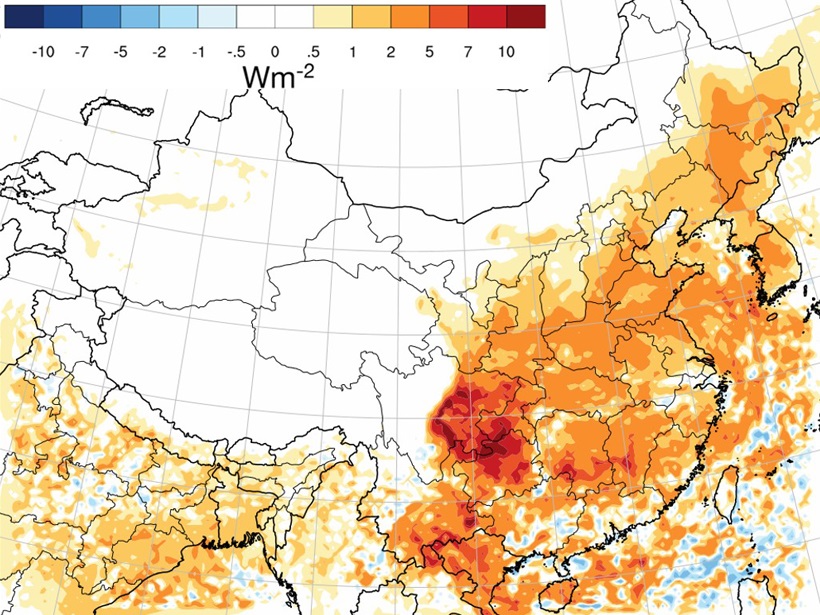
During a newly identified "flavor" of La Niña called La Niña Modoki, aerosol concentrations over different regions of eastern China may depend heavily on the strength of the event.

Researchers analyze the small physical processes in Typhoon Matmo
Posted inResearch Spotlights

Reading Raindrops: Microphysics in Typhoon Matmo

Leah Crane by L. Crane 9 December 20163 February 2022

Quantitative predictions about tropical storms require an understanding of even their smallest physical processes. A new study observes unusual microphysics in 2014's Typhoon Matmo.

Posted inEditors' Vox

Water Challenges of Megacities

by J. M. Bahr 26 October 20166 February 2023

After attending a groundwater conference this summer in Shenzhen, China, Water Resources Research editor Jean Bahr reports back and summarizes the water management challenges posed by large cities.

Models show Hong Kong may be at greater tsunami risk than previously thought.
Posted inResearch Spotlights

Hong Kong, Macau at Greater Tsunami Risk Than We Thought

by W. Yan 19 October 201614 April 2022

Researchers assess tsunami risk in the South China Sea based on models of seismic slip along the Manila megathrust.

This photo shows Jishi Gorge upstream from the landslide dam. Gray silt deposits reveal an ancient, massive lake held by the dam.
Posted inNews

Evidence Found for China's Ancient Origin Story

JoAnna Wendel, freelance science writer and illustrator by JoAnna Wendel 4 August 201624 February 2023

New geological findings suggest that an ancient flood in a popular legend about the birth of China's civilization might have actually occurred, but some 150 years later than historians thought.

Smog and Hong Kong’s skyline, seen from Victoria Peak.
Posted inResearch Spotlights

Chemical Boosts Ozone Production over Southern China

by Terri Cook 27 May 201613 February 2023

The presence of nitryl chloride in polluted urban air can enhance the production of ozone by up to 41%, according to a new modeling study constrained by ground-based measurements.

Posted inNews

Targets of Biggest Global Carbon Emitters Flunk Fairness Test

Cody Sullivan by C. Sullivan 30 October 20156 March 2023

Pledges so far by the United States, European Union, and China would require all other countries to emit 7 to 14 times less per capita than those three regions by 2030 to limit warming to 2°C.

Posted inNews

Chinese Cave Inscriptions Tell Woeful Tale of Drought

JoAnna Wendel, freelance science writer and illustrator by JoAnna Wendel 21 August 201514 April 2023

Researchers use the graffiti to extrapolate future drought risk in central China.

Posts pagination

Newer posts 1 … 13 14 15 16 Older posts
A view of a bridge, with the New Orleans skyline visible in the distance between the bridge and the water. A purple tint, a teal curved line representing a river, and the text “#AGU25 coverage from Eos” overlie the photo.

Features from AGU Publications

Research Spotlights

An Ecosystem Never Forgets

19 December 202519 December 2025
Editors' Highlights

Frictional Properties of the Nankai Accretionary Prism

11 December 20259 December 2025
Editors' Vox

Hydrothermal Circulation and Its Impact on the Earth System

3 December 20253 December 2025
Eos logo at left; AGU logo at right

About Eos
ENGAGE
Awards
Contact

Advertise
Submit
Career Center
Sitemap

© 2025 American Geophysical Union. All rights reserved Powered by Newspack