• About
  • Special Reports
  • Topics
    • Climate
    • Earth Science
    • Oceans
    • Space & Planets
    • Health & Ecosystems
    • Culture & Policy
    • Education & Careers
    • Opinions
  • Projects
    • Postcards From the Field
    • ENGAGE
    • Editors’ Highlights
    • Editors’ Vox
    • Eos en Español
    • Eos 简体中文版
    • Print Archive: 2015–2025
  • Policy Tracker
  • Blogs
    • Research & Developments
    • The Landslide Blog
  • Newsletter
  • Submit to Eos
  • AGU.org
  • Career Center
  • Join AGU
  • Give to AGU
  • About
  • Special Reports
  • Topics
    • Climate
    • Earth Science
    • Oceans
    • Space & Planets
    • Health & Ecosystems
    • Culture & Policy
    • Education & Careers
    • Opinions
  • Projects
    • Postcards From the Field
    • ENGAGE
    • Editors’ Highlights
    • Editors’ Vox
    • Eos en Español
    • Eos 简体中文版
    • Print Archive: 2015–2025
  • Policy Tracker
  • Blogs
    • Research & Developments
    • The Landslide Blog
  • Newsletter
  • Submit to Eos
Skip to content
  • AGU.org
  • Career Center
  • Join AGU
  • Give to AGU
Eos

Eos

Science News by AGU

Support Eos
Sign Up for Newsletter
  • About
  • Special Reports
  • Topics
    • Climate
    • Earth Science
    • Oceans
    • Space & Planets
    • Health & Ecosystems
    • Culture & Policy
    • Education & Careers
    • Opinions
  • Projects
    • Postcards From the Field
    • ENGAGE
    • Editors’ Highlights
    • Editors’ Vox
    • Eos en Español
    • Eos 简体中文版
    • Print Archive: 2015–2025
  • Policy Tracker
  • Blogs
    • Research & Developments
    • The Landslide Blog
  • Newsletter
  • Submit to Eos

COVID-19

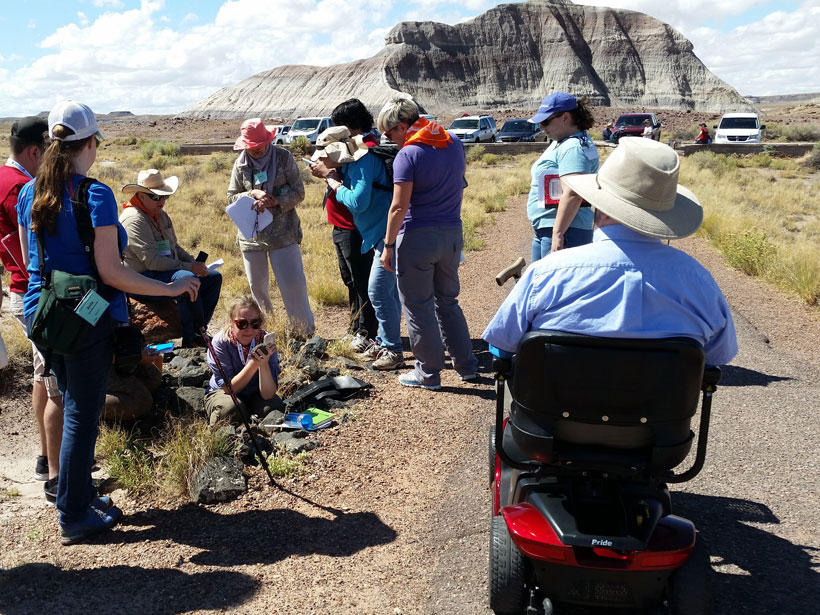
Group of men and women, some with walking sticks and one in a wheelchair, collects data in a field near a mountain
Posted inFeatures

Accessibility and Fieldwork in the Time of Coronavirus

Richard Sima, freelance science writer by Richard J. Sima 23 July 202023 February 2023

Fieldwork in the geosciences is increasingly relying on groundwork laid by accessibility advocates.

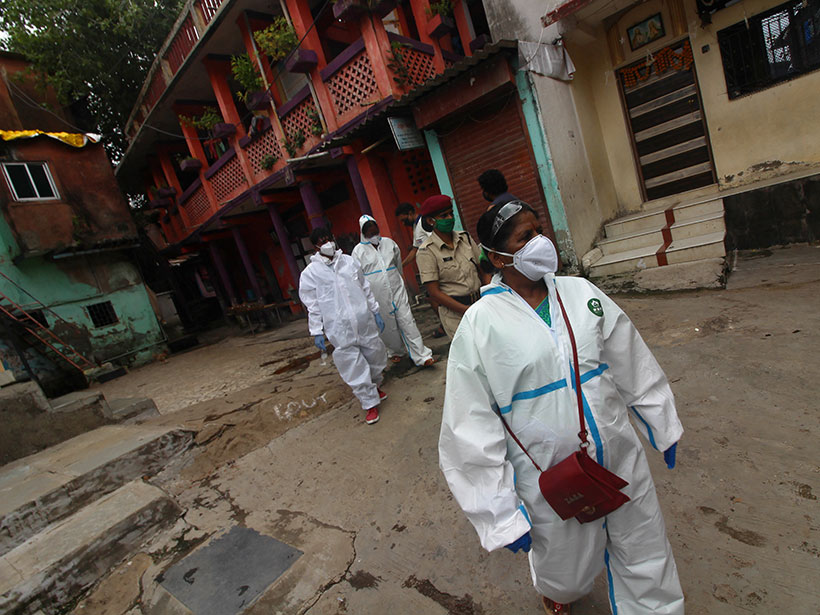
Health care workers in masks and hazmat suits walk through a residential area in India.
Posted inNews

When Natural Disasters Cross the Path of COVID-19

by T. V. Padma 2 July 20209 September 2024

Natural hazards are intersecting with the coronavirus pandemic in India, and researchers will need to model both to inform the public health response.
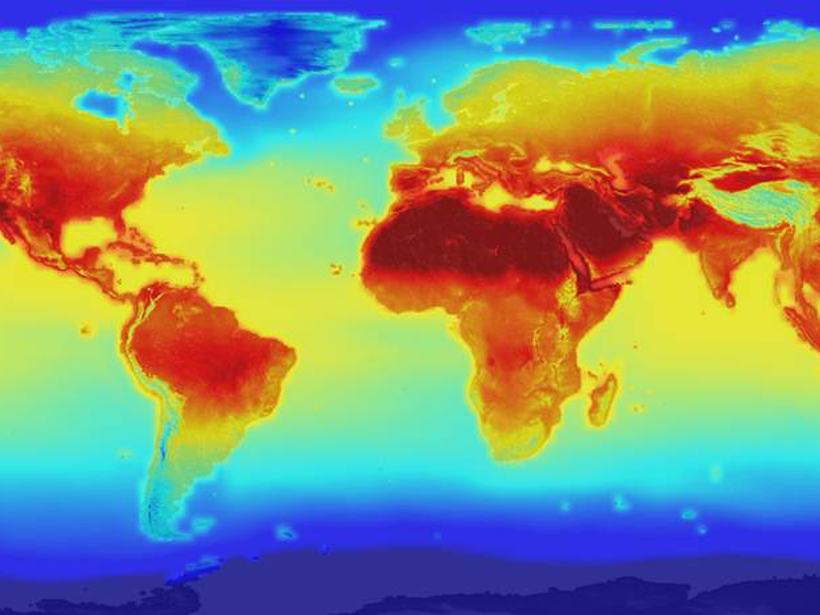
World map showing a climate simulation with hotter forecasts shaded red and cooler forecasts shaded blue
Posted inNews

Will COVID’s Cleaner Skies Muddy Climate Models?

JoAnna Wendel, freelance science writer and illustrator by JoAnna Wendel 2 July 202030 November 2022

Reduced greenhouse gas emissions for a year or two won’t slow down climate change, but they may throw off scientists’ ability to model short-term phenomena.

Map of nitrogen dioxide values for India
Posted inGeoFIZZ

Six Ways Satellites Tracked COVID-19

Jenessa Duncombe, Staff Writer by Jenessa Duncombe 26 June 202030 March 2023

A new database reveals dimmer cities, empty farming fields, and vacant ports.
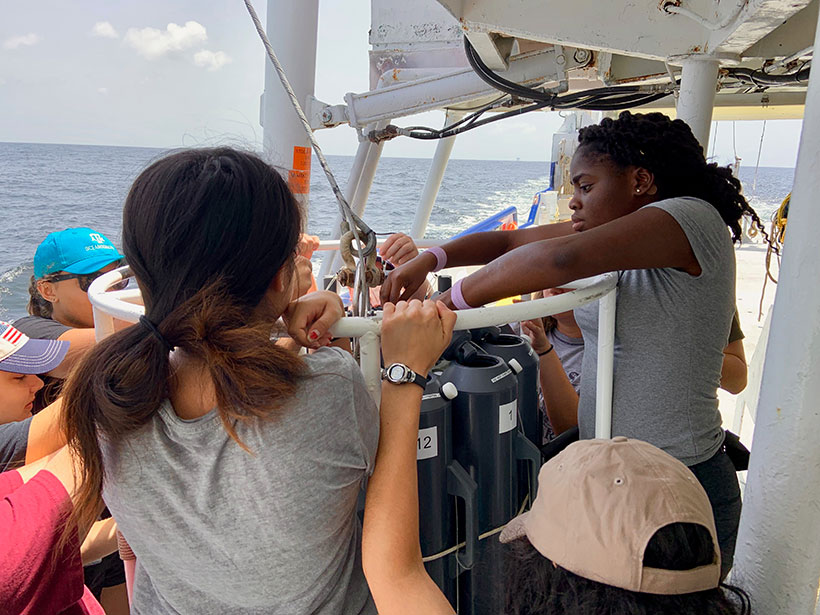
Students work with a water sampling device aboard a research cruise
Posted inScience Updates

How COVID-19 Is Affecting Undergraduate Research Experiences

by V. Sloan, Rebecca Haacker, R. L. Batchelor and C. Garza 18 June 202015 October 2021

Limitations on summer research internships imposed by the pandemic are impeding students’ engagement in geoscience education and preparation for careers. The community is acting quickly to adapt.
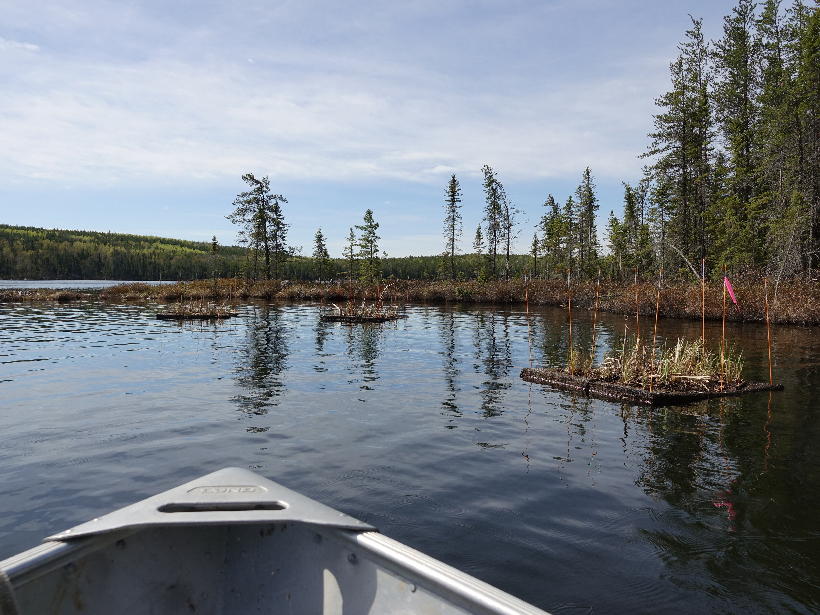
Tip of a small boat leads into the placid near shore of a forested lake.
Posted inNews

Fieldwork in the Experimental Lakes Area Adapts to COVID-19

Lesley Evans Ogden, Science Writer by Lesley Evans Ogden 3 June 202013 March 2023

Though anticipating long days and hard work as a few key crew members do the job of many, researchers heading to the lakes this summer are excited to leave the house.

People wearing facemasks
Posted inEditors' Vox

How Is the Pandemic Affecting AGU Journal Article Submissions?

by Paige Wooden 27 May 20207 January 2022

AGU journal submissions have not seen a significant decrease in the proportion of female corresponding authors.
New visualization of COVID-19 virus
Posted inEditors' Vox

The Role of Earth and Space Scientists During Pandemics

Chris McEntee, executive director and CEO of AGU by Fabio Florindo and Chris McEntee 26 May 20209 September 2024

Insights from Earth and space sciences are valuable for addressing the current global health emergency, and such societal challenges are best addressed by integrated and interdisciplinary research.
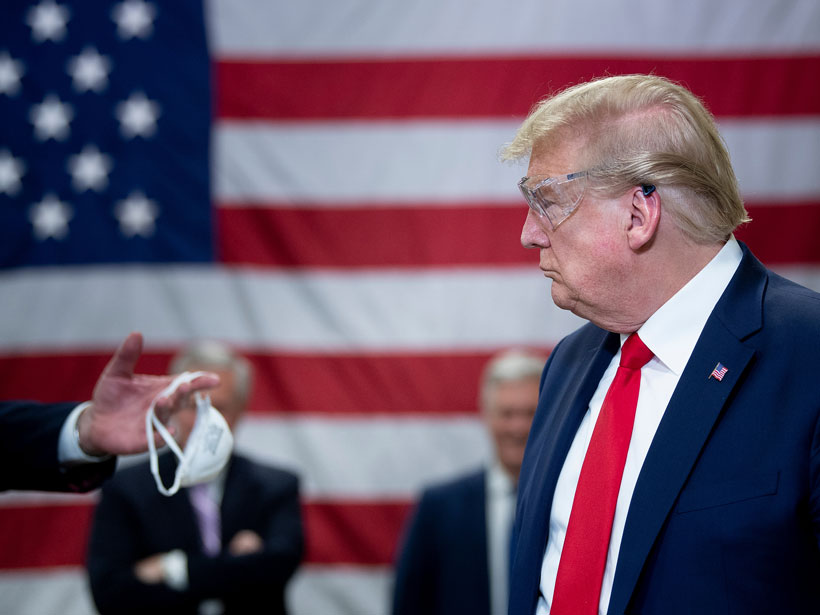
President Donald Trump at mask factory
Posted inNews

No Mask? You May Not Worry About Climate Change, Either

Jenessa Duncombe, Staff Writer by Jenessa Duncombe 14 May 202013 March 2023

People untroubled by climate change are more likely to forgo masks in public.
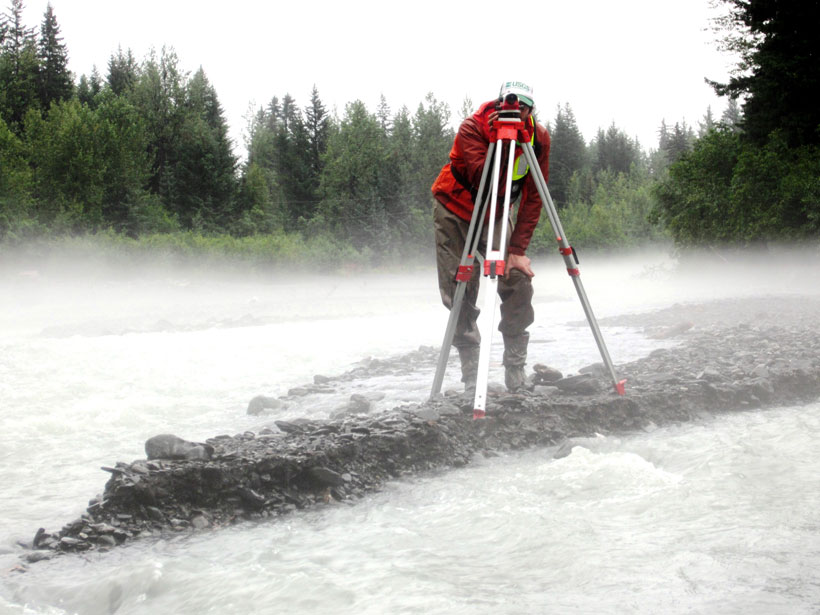
An engineer on a tiny islet uses a total station to survey a rushing stream.
Posted inNews

How Routine Monitors Weather the Pandemic Storm

JoAnna Wendel, freelance science writer and illustrator by JoAnna Wendel 13 May 202023 January 2023

Much of routine monitoring can be done remotely these days, but networks aren’t completely immune to COVID-19’s society-halting symptoms.

Posts pagination

Newer posts 1 … 3 4 5 6 7 Older posts
Over a dark blue-green square appear the words Special Report: The State of the Science 1 Year On.

Features from AGU Publications

Research Spotlights

A Long-Term Look Beneath an Antarctic Ice Shelf

6 March 20269 March 2026
Editors' Highlights

The Fate of the Greenland Ice Sheet: Deep Learning from SkySat Images

9 March 20269 March 2026
Editors' Vox

How Radar Reveals the Hidden Fabric of Ice Sheets

9 March 20269 March 2026
Eos logo at left; AGU logo at right

About Eos
ENGAGE
Awards
Contact

Advertise
Submit
Career Center
Sitemap

© 2026 American Geophysical Union. All rights reserved Powered by Newspack