• About
  • Special Reports
  • Topics
    • Climate
    • Earth Science
    • Oceans
    • Space & Planets
    • Health & Ecosystems
    • Culture & Policy
    • Education & Careers
    • Opinions
  • Projects
    • Postcards From the Field
    • ENGAGE
    • Editors’ Highlights
    • Editors’ Vox
    • Eos en Español
    • Eos 简体中文版
    • Print Archive: 2015–2025
  • Policy Tracker
  • Blogs
    • Research & Developments
    • The Landslide Blog
  • Newsletter
  • Submit to Eos
  • AGU.org
  • Career Center
  • Join AGU
  • Give to AGU
  • About
  • Special Reports
  • Topics
    • Climate
    • Earth Science
    • Oceans
    • Space & Planets
    • Health & Ecosystems
    • Culture & Policy
    • Education & Careers
    • Opinions
  • Projects
    • Postcards From the Field
    • ENGAGE
    • Editors’ Highlights
    • Editors’ Vox
    • Eos en Español
    • Eos 简体中文版
    • Print Archive: 2015–2025
  • Policy Tracker
  • Blogs
    • Research & Developments
    • The Landslide Blog
  • Newsletter
  • Submit to Eos
Skip to content
  • AGU.org
  • Career Center
  • Join AGU
  • Give to AGU
Eos

Eos

Science News by AGU

Support Eos
Sign Up for Newsletter
  • About
  • Special Reports
  • Topics
    • Climate
    • Earth Science
    • Oceans
    • Space & Planets
    • Health & Ecosystems
    • Culture & Policy
    • Education & Careers
    • Opinions
  • Projects
    • Postcards From the Field
    • ENGAGE
    • Editors’ Highlights
    • Editors’ Vox
    • Eos en Español
    • Eos 简体中文版
    • Print Archive: 2015–2025
  • Policy Tracker
  • Blogs
    • Research & Developments
    • The Landslide Blog
  • Newsletter
  • Submit to Eos

Earth science

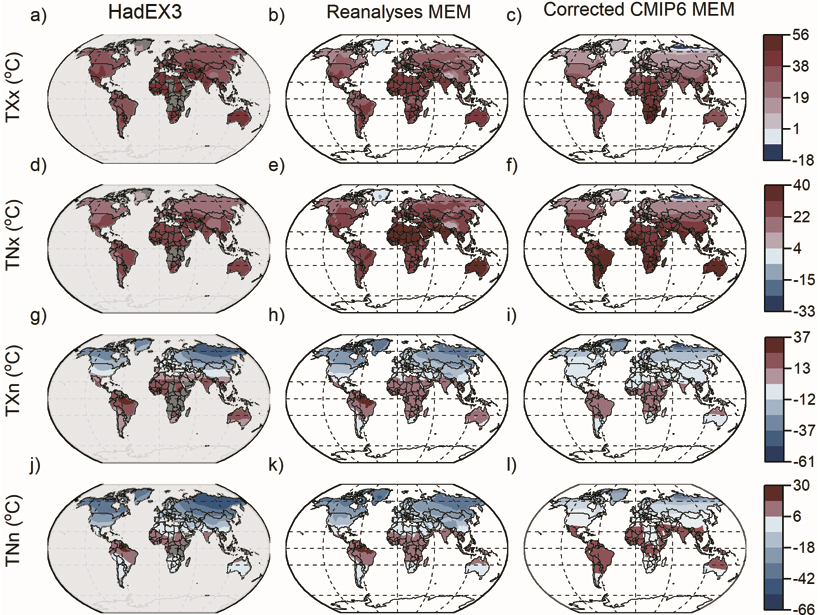
Series of world maps showing the historical average of warmest and coldest days and nights during 1981-2010, according to the observations in the left column, reanalyses in the center column, and climate models in the right column.
Posted inEditors' Highlights

Temperature Extremes: Exploring the Global Outbreak

by Jonathan H. Jiang 27 September 20215 November 2021

Using cutting-edge observations, reanalyses, and climate models, a new study projects the outbreak of temperature extremes over new global areas by 2100.

Photo of the Makahiku Falls in the Haleakala National Park Maui, Hawaii
Posted inEditors' Vox

Evaluating the Impact and Reach of Biogeochemical Cycles

by K. Dontsova, Z. Balogh‐Brunstad and G. Le Roux 20 September 20211 October 2021

A new book examines flow of the elements in the biosphere from biological drivers to human influences, and explores the analytical and computational methods used to access biogeochemical cycles.
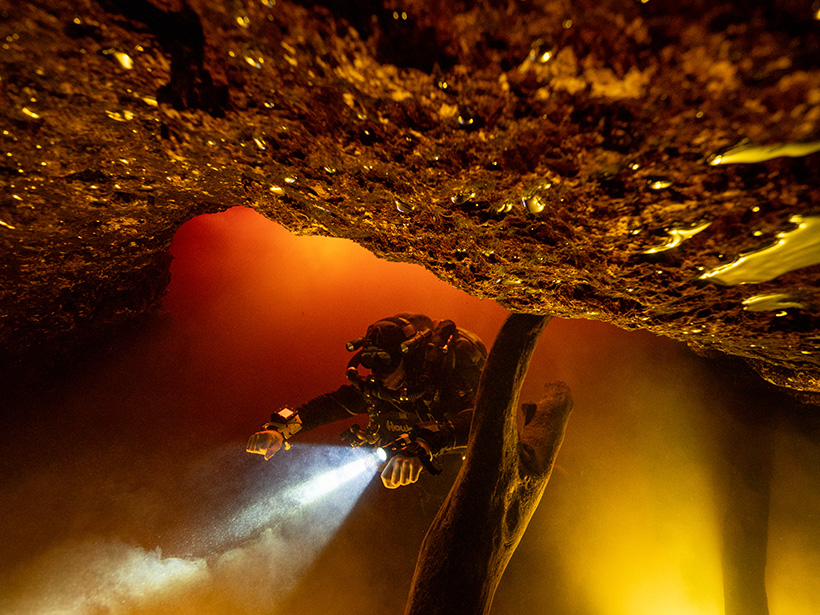
A scuba diver swims and shines a flashlight through brownish river water in a cave.
Posted inScience Updates

A New Focus on the Neglected Carbonate Critical Zone

by J. B. Martin, P. C. De Grammont, M. D. Covington and L. Toran 20 September 202128 January 2022

Studies of Earth’s critical zone have largely focused on areas underlain by silicate bedrock, leaving gaps in our understanding of widespread and vital carbonate-dominated landscapes.
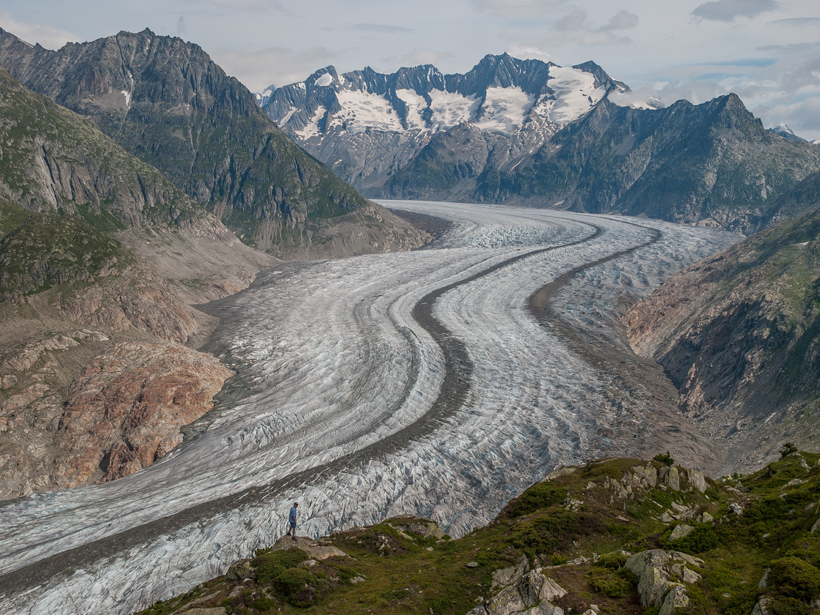
Photograph of the Grosser Aletschgletscher, the largest glacier in the European Alps
Posted inEditors' Vox

Glacier Structures: History Written in the Ice

by S. J. A. Jennings and M. J. Hambrey 8 September 20211 October 2021

As Earth’s climate heats up, glacier structures are being revealed in unprecedented detail, allowing glaciologists to understand how the behavior of glaciers has changed over centuries to millennia.
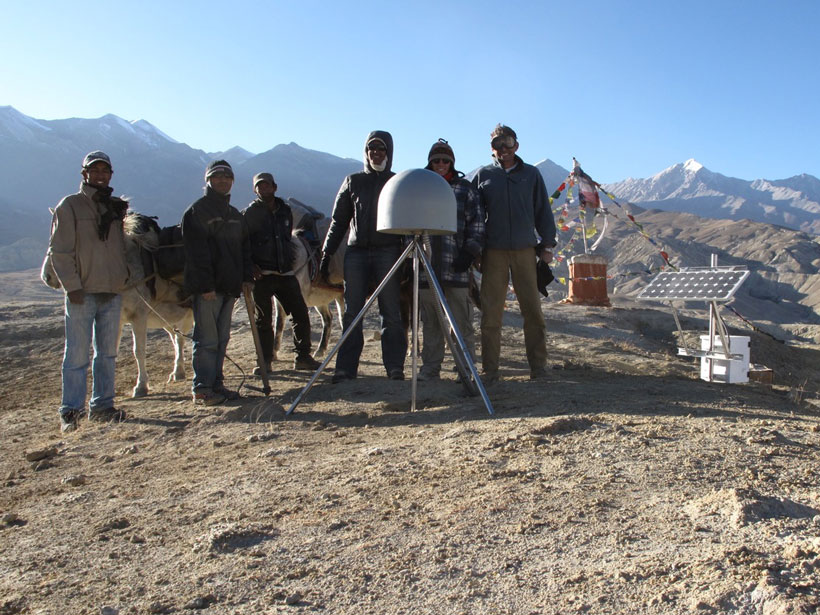
Research scientists pose in the Himalayas with a GNSS station.
Posted inFeatures

Kristel Chanard: Trekking and Tracking Mountains

Kate Wheeling, freelance science writer by Kate Wheeling 24 August 202123 March 2023

Researcher has the “coolest job” studying solid Earth and climate.

In the center of a cross-polarized image, a purple-pink grain of muscovite with dark asymmetric kink bands lies within a matrix of much finer grained, rainbow-colored micas, as well as small black, white, and gray feldspar and quartz grains.
Posted inNews

Tiny Kinks Record Ancient Quakes

by Alka Tripathy-Lang 19 July 202114 September 2022

As Earth ruptures, micas kink. These kink bands hide in rocks millions of years old, preserving evidence of past quakes.

Graphic by Rene Gauthier-Butterfield
Posted inEditors' Vox

Call for Papers on Machine Learning and Earth System Modeling

by J. Yuval, M. Pritchard, P. Gentine, L. Zanna and Jiwen Fan 15 July 20219 February 2022

Contributions are invited to a new journal special collection on the use of new machine learning methodologies and applications of machine learning to Earth system modeling.

Posted inAGU News

Willenbring Receives 2020 Earth and Planetary Surface Processes Marguerite T. Williams Award

by AGU 2 July 20213 November 2022

Jane K. Willenbring received the inaugural Marguerite T. Williams Award at AGU’s virtual Fall Meeting 2020. The award is given in recognition of “significant contributions to research and community-building by a mid-career scientist in the field of Earth and planetary surface processes.”

Muchos ecosistemas a lo largo de América Latina no están representados por las redes de observatorios ambientales.
Posted inResearch Spotlights

Las brechas en las redes ambientales en América Latina

Kate Wheeling, freelance science writer by Kate Wheeling 25 June 20216 March 2023

A pesar de su notable influencia en los ciclos globales del carbono y el agua, América Latina representa una proporción relativamente pequeña de sitios FLUXNET, lo que limita la representatividad de la red en la región.
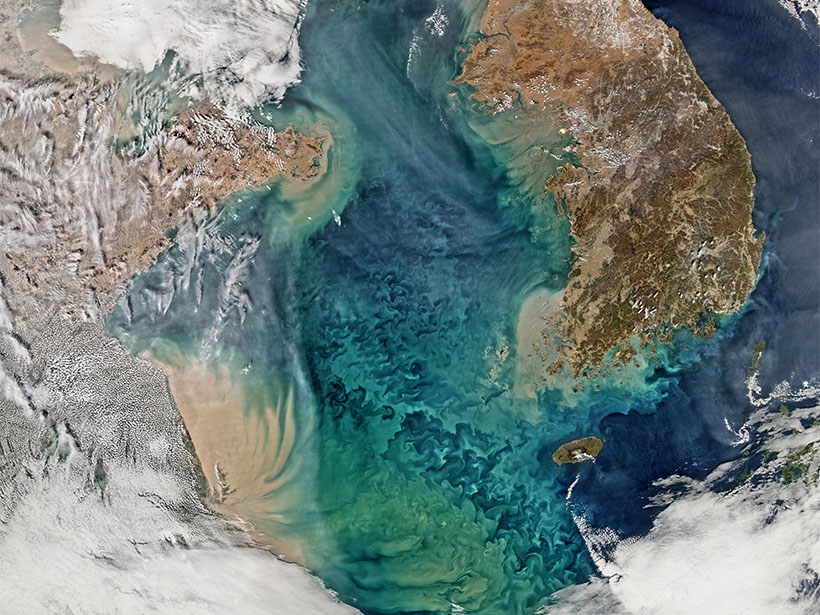
Image of remote sensing of ocean color in the Yellow Sea.
Posted inEditors' Vox

The Earth in Living Color: Monitoring Our Planet from Above

by D. Schimel and Benjamin Poulter 9 June 202111 September 2023

A new special collection invites papers on a new era of remote sensing missions and instruments that will provide insights into human and climate driven changes on planet Earth.

Posts pagination

Newer posts 1 … 135 136 137 138 139 … 160 Older posts
Over a dark blue-green square appear the words Special Report: The State of the Science 1 Year On.

Features from AGU Publications

Research Spotlights

The Speedy Particles That Could Help Us Learn More About Uranus

18 June 202618 June 2026
Editors' Highlights

Where Methane is Emitted Matters for Global Burden

18 June 202616 June 2026
Editors' Vox

Small-Scale Indian Ocean Dynamics Underpin Marine Ecology and Climate

4 June 20263 June 2026
Eos logo at left; AGU logo at right

About Eos
ENGAGE
Awards
Contact

Advertise
Submit
Career Center
Sitemap

© 2026 American Geophysical Union. All rights reserved Powered by Newspack