• About
  • Sections
  • Topics
    • Climate
    • Earth Science
    • Oceans
    • Space & Planets
    • Health & Ecosystems
    • Culture & Policy
    • Education & Careers
    • Opinions
  • Projects
    • ENGAGE
    • Editors’ Highlights
    • Editors’ Vox
    • Eos en Español
    • Eos 简体中文版
    • Print Archive
  • Science Policy Tracker
  • Blogs
    • Research & Developments
    • The Landslide Blog
  • Newsletter
  • Submit to Eos
  • AGU.org
  • Career Center
  • Join AGU
  • Give to AGU
  • About
  • Sections
  • Topics
    • Climate
    • Earth Science
    • Oceans
    • Space & Planets
    • Health & Ecosystems
    • Culture & Policy
    • Education & Careers
    • Opinions
  • Projects
    • ENGAGE
    • Editors’ Highlights
    • Editors’ Vox
    • Eos en Español
    • Eos 简体中文版
    • Print Archive
  • Science Policy Tracker
  • Blogs
    • Research & Developments
    • The Landslide Blog
  • Newsletter
  • Submit to Eos
Skip to content
  • AGU.org
  • Career Center
  • Join AGU
  • Give to AGU
Eos

Eos

Science News by AGU

Support Eos
Sign Up for Newsletter
  • About
  • Sections
  • Topics
    • Climate
    • Earth Science
    • Oceans
    • Space & Planets
    • Health & Ecosystems
    • Culture & Policy
    • Education & Careers
    • Opinions
  • Projects
    • ENGAGE
    • Editors’ Highlights
    • Editors’ Vox
    • Eos en Español
    • Eos 简体中文版
    • Print Archive
  • Science Policy Tracker
  • Blogs
    • Research & Developments
    • The Landslide Blog
  • Newsletter
  • Submit to Eos

Geophysical Research Letters

Visit the journal.

Researchers identify the role of plasma waves where the magnetic fields of Earth and the Sun interact.
Posted inResearch Spotlights

Plasma Waves Pinpointed at the Site of Magnetic Reconnection

by Mark Zastrow 17 February 201718 July 2023

When the Earth's and the Sun's magnetic fields meet, they realign in explosive and mysterious reconnections. Data suggest that plasma waves called kinetic Alfvén waves play a key role.

A new model reveals the role of Antarctic Circumpolar Current eddies in moving high volumes of water.
Posted inResearch Spotlights

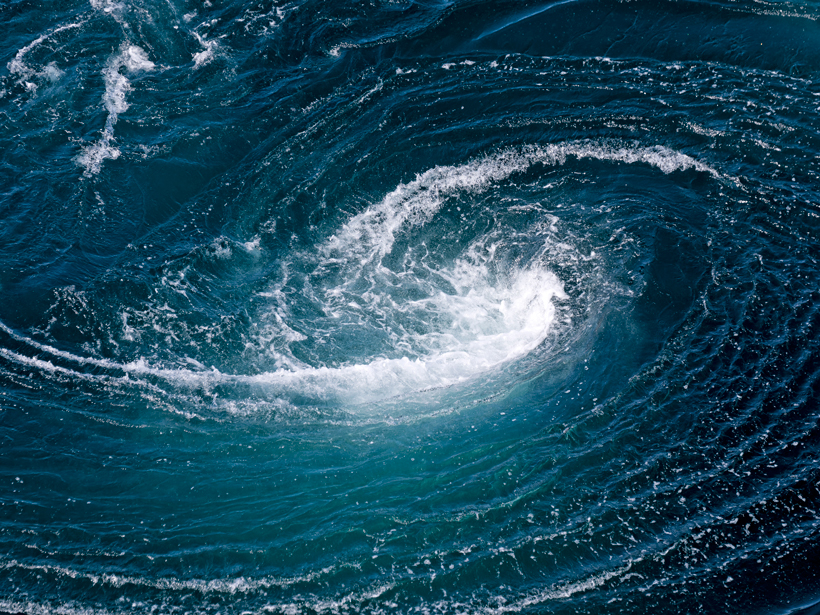
Swirling Eddies in the Antarctic May Have Global Impacts

by L. Strelich 10 February 201722 December 2021

A new model examines how eddies in the Antarctic Circumpolar Current affect volume transport of the world's strongest current.

Researchers investigate the layers of ice and dust at Mars’s north pole.
Posted inResearch Spotlights

How Mars Got Its Layered North Polar Cap

by E. Underwood 8 February 20178 August 2022

Orbital wobbling shaped the dome of ice and dust at the planet's north pole.

Researcher track variations in the pace of thinning in Amundsen Sea glaciers
Posted inResearch Spotlights

A Comparison of Surface Thinning in West Antarctic Glaciers

by Terri Cook 24 January 20177 February 2023

An uninterrupted 24-year altimetry record of Amundsen Sea Embayment glaciers indicates the initiation and pace of thinning have been inconsistent across the region.

Posted inResearch Spotlights

River's Rise Linked to Oklahoma's Largest Earthquake

by S. Witman 13 January 20179 May 2022

As human-induced earthquakes increase in frequency and magnitude, researchers race to uncover their effects on surface water and groundwater.

Scientists identify a crack in the Pine Island Glacier as the culprit behind an iceberg that broke off in 2015
Posted inResearch Spotlights

West Antarctic Ice Shelf Breaking Up from the Inside Out

by Lauren Lipuma 4 January 20177 February 2023

Researchers trace the origin of a 2015 iceberg to a crack that formed deep beneath the ice.

A remote-controlled robot offers insight into open ocean typhoons.
Posted inResearch Spotlights

Wave Gliding in the Eye of the Storm

Alexandra Branscombe by A. Branscombe 29 December 201631 March 2022

Scientists use a new remote-controlled robot to capture data from the middle of an open ocean typhoon.

Oil spills can have bigger impacts on coastal wetlands than hurricanes.
Posted inResearch Spotlights

Oil Residues Accelerate Coastal Wetland Losses

Elizabeth Thompson by E. Jacobsen 28 December 201618 May 2022

Coastal wetland loss after an oil spill can be more extensive than after a hurricane.

New research indicates the Antarctic Circumpolar Current is more powerful than scientists realized.
Posted inResearch Spotlights

Notorious Ocean Current Is Far Stronger Than Previously Thought

by E. Underwood 27 December 201612 January 2022

The Antarctic Circumpolar Current is the only ocean current to circle the planet and the largest wind-driven current on Earth. It's also 30% more powerful than scientists realized.

Changes in cloud organization due to increasing temperatures may lead to more extreme precipitation events.
Posted inResearch Spotlights

How Global Warming's Effect on Clouds May Make It Rain Harder

by E. Underwood 22 December 201628 February 2023

More clustering of clouds due to higher temperatures increases the likelihood of heavy downpours.

Posts pagination

Newer posts 1 … 41 42 43 44 45 … 59 Older posts
A view of a bridge, with the New Orleans skyline visible in the distance between the bridge and the water. A purple tint, a teal curved line representing a river, and the text “#AGU25 coverage from Eos” overlie the photo.

Features from AGU Publications

Research Spotlights

An Ecosystem Never Forgets

19 December 202519 December 2025
Editors' Highlights

Frictional Properties of the Nankai Accretionary Prism

11 December 20259 December 2025
Editors' Vox

Hydrothermal Circulation and Its Impact on the Earth System

3 December 20253 December 2025
Eos logo at left; AGU logo at right

About Eos
ENGAGE
Awards
Contact

Advertise
Submit
Career Center
Sitemap

© 2025 American Geophysical Union. All rights reserved Powered by Newspack