• About
  • Special Reports
  • Topics
    • Climate
    • Earth Science
    • Oceans
    • Space & Planets
    • Health & Ecosystems
    • Culture & Policy
    • Education & Careers
    • Opinions
  • Projects
    • Postcards From the Field
    • ENGAGE
    • Editors’ Highlights
    • Editors’ Vox
    • Eos en Español
    • Eos 简体中文版
    • Print Archive: 2015–2025
  • Policy Tracker
  • Blogs
    • Research & Developments
    • The Landslide Blog
  • Newsletter
  • Submit to Eos
  • AGU.org
  • Career Center
  • Join AGU
  • Give to AGU
  • About
  • Special Reports
  • Topics
    • Climate
    • Earth Science
    • Oceans
    • Space & Planets
    • Health & Ecosystems
    • Culture & Policy
    • Education & Careers
    • Opinions
  • Projects
    • Postcards From the Field
    • ENGAGE
    • Editors’ Highlights
    • Editors’ Vox
    • Eos en Español
    • Eos 简体中文版
    • Print Archive: 2015–2025
  • Policy Tracker
  • Blogs
    • Research & Developments
    • The Landslide Blog
  • Newsletter
  • Submit to Eos
Skip to content
  • AGU.org
  • Career Center
  • Join AGU
  • Give to AGU
Eos

Eos

Science News by AGU

Support Eos
Sign Up for Newsletter
  • About
  • Special Reports
  • Topics
    • Climate
    • Earth Science
    • Oceans
    • Space & Planets
    • Health & Ecosystems
    • Culture & Policy
    • Education & Careers
    • Opinions
  • Projects
    • Postcards From the Field
    • ENGAGE
    • Editors’ Highlights
    • Editors’ Vox
    • Eos en Español
    • Eos 简体中文版
    • Print Archive: 2015–2025
  • Policy Tracker
  • Blogs
    • Research & Developments
    • The Landslide Blog
  • Newsletter
  • Submit to Eos

groundwater

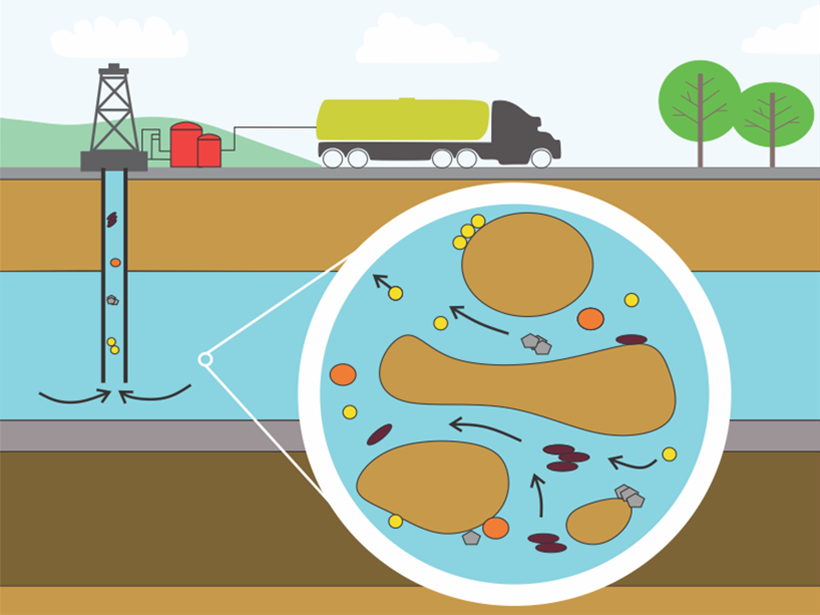
An illustration showing microscopic colloidal particles adhered to sand grains in an aquifer from which groundwater is being pumped to the surface via a well.
Posted inResearch Spotlights

Treating Colloids as Clusters Better Predicts Their Behavior

by Terri Cook 25 July 20196 February 2023

New research suggests that an accurate prediction of colloidal particle mobilization in the environment should account for the effect of clustering.
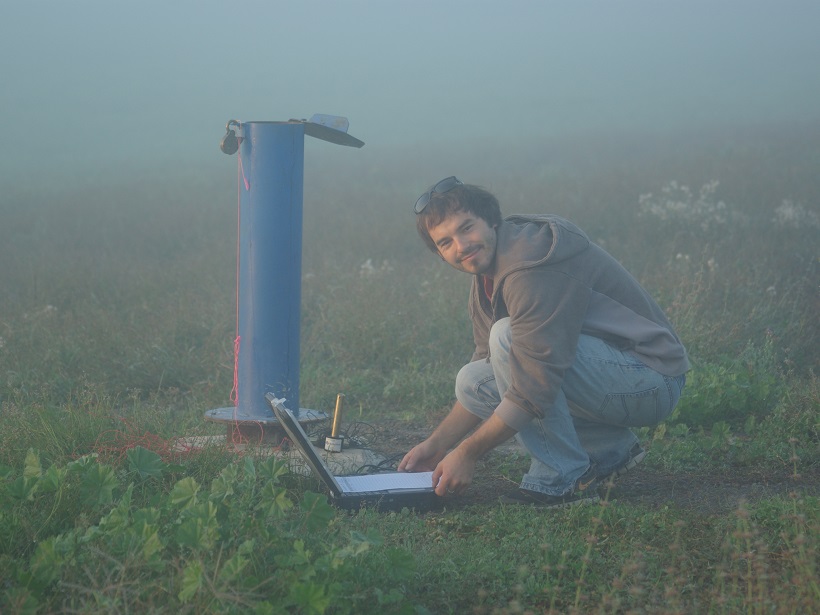
Scientist downloading groundwater level and barometric pressure data from a borehole
Posted inEditors' Vox

Unlocking a Treasure Trove for Subsurface Characterization

by T. McMillan and Gabriel Rau 12 July 201928 October 2021

Earth and atmospheric tide signatures embedded in groundwater levels are a potential game changer in the monitoring of confined aquifers.
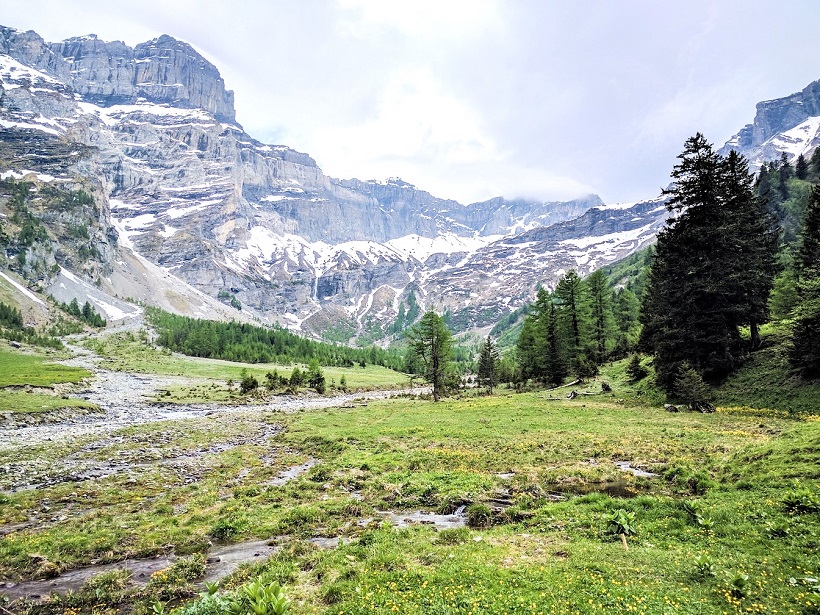
Mountainous head-water in the Swiss Alps
Posted inEditors' Vox

How Diverse Observations Improve Groundwater Models

by O. S. Schilling, P. Cook and P. Brunner 5 July 201919 July 2022

Including diverse observations of exchange fluxes, tracer concentrations and residence times in groundwater model calibration results in more robust predictions than using only classical observations.

Man collects water from a pipe to put in a test tube.
Posted inNews

Ancient Water Underlies Arid Egypt

Mary Caperton Morton, Science Writer by Mary Caperton Morton 18 June 20196 February 2023

A hidden trove of groundwater is left over from the last ice age.
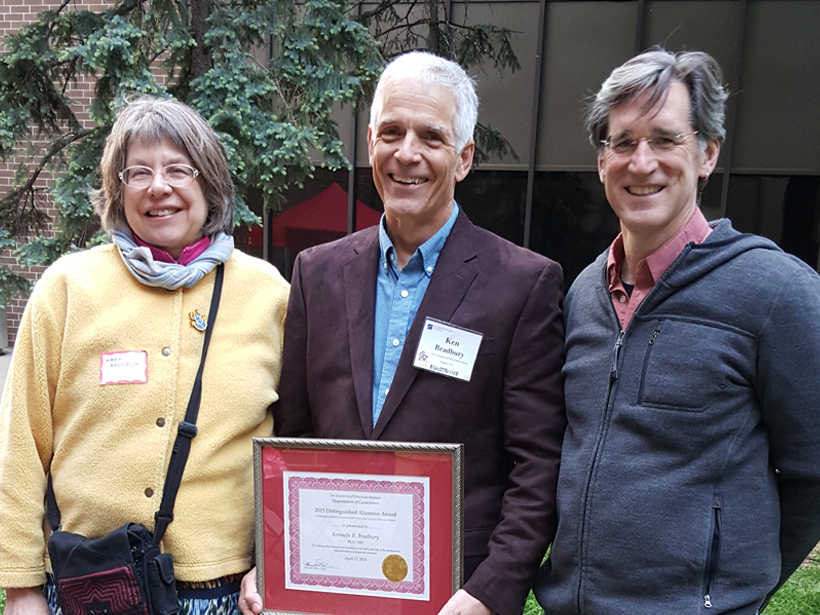
Geologists Mary Anderson, Ken Bradbury, and Harold Tobin smile for the cameras
Posted inFeatures

“Legendary” Mentor Follows the Groundwater

Katherine Kornei, Science Writer by Katherine Kornei 8 April 20195 October 2021

Mary Pikul Anderson, a lauded hydrogeologist, has advised more than 50 graduate students.
Posted inEditors' Highlights

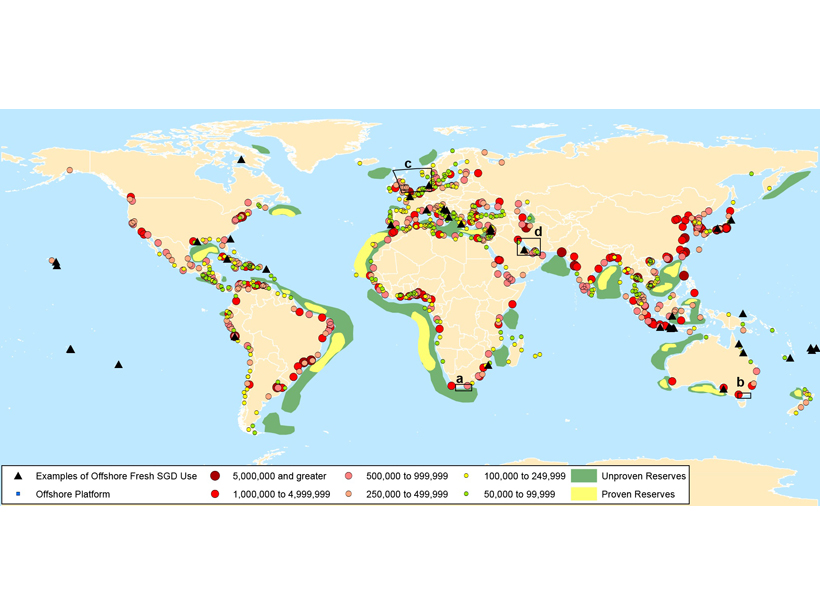
Pumping Offshore Groundwater Resources Has Consequences on Land

by M. Bayani Cardenas 22 March 201917 June 2025

While vast volumes of fresh groundwater are located offshore, pumping these reserves can also deplete on-shore aquifers and cause land subsidence.
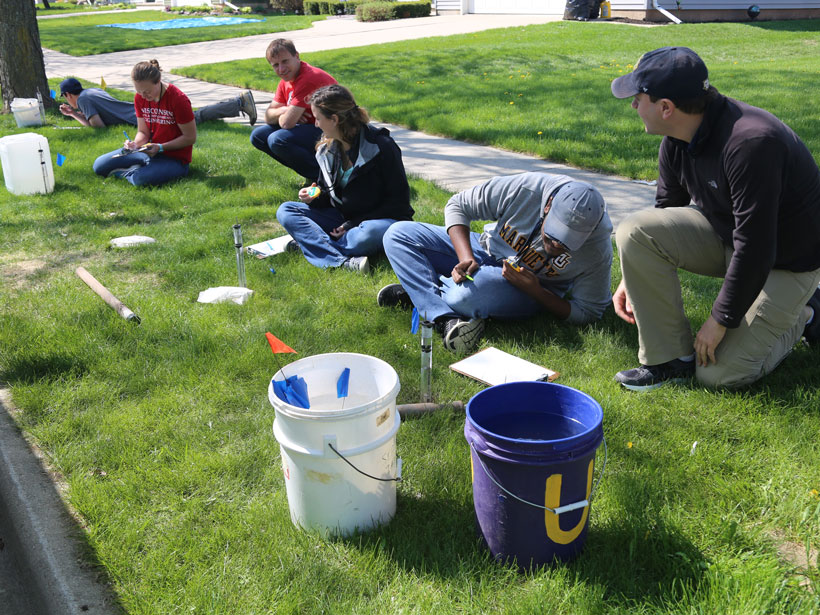
Researchers measure soil infiltration capacity outside a private residence
Posted inResearch Spotlights

Strategies to Improve Urban Hydrology

Aaron Sidder, freelance science writer by Aaron Sidder 18 March 201930 March 2023

Cities can reduce surface runoff and increase groundwater recharge by encouraging their residents to implement simple, hydrologic modifications on individual buildings and single-family parcels.
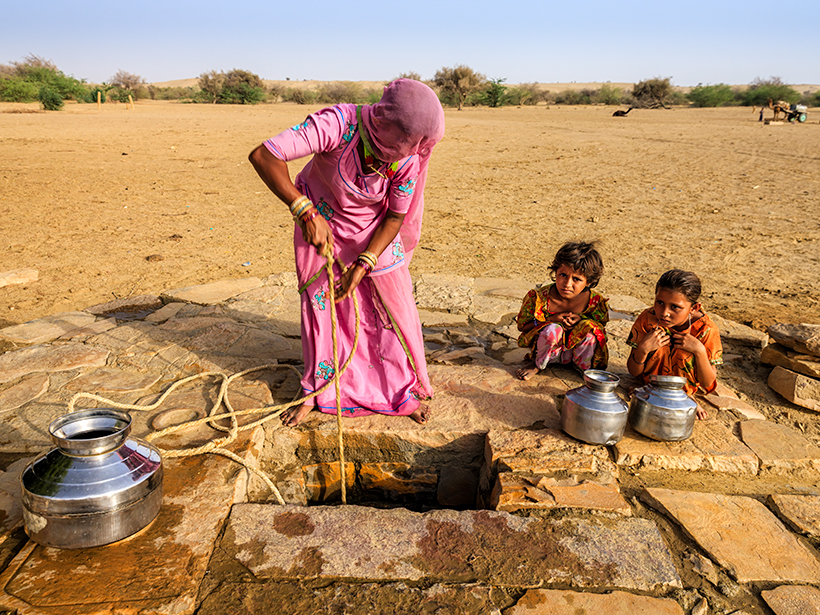
A woman draws water from a well in northern India, where unsustainable aquifers are vulnerable to drought conditions.
Posted inResearch Spotlights

A Closer Look at the Sustainability of Our Groundwater Aquifers

by L. Strelich 19 October 20186 February 2023

Researchers use a new approach to assessing the world’s largest aquifers in hopes of improving groundwater management during drought periods.

Posted inEditors' Highlights

Bulging, Shrinking, and Deformation of Land by Hydrologic Loading

by P. A. Dirmeyer 19 June 20181 November 2021

The deformation of continents by groundwater can be measured locally by GPS or detected from satellites, but more precisely monitored when measurements are combined with a hydrologic model.

Lab-built streams reveal new insights into turbulence-driven transport in gravel streambeds
Posted inResearch Spotlights

A Closer Look at Turbulent Transport in Gravel Streambeds

Sarah Stanley, Science Writer by Sarah Stanley 15 June 20186 February 2023

Lab-built streams reveal new insights into turbulence-driven exchange of dissolved substances between stream water and sediments below.

Posts pagination

Newer posts 1 … 11 12 13 14 15 16 Older posts
Over a dark blue-green square appear the words Special Report: The State of the Science 1 Year On.

Features from AGU Publications

Research Spotlights

Io’s Hidden Heat Revealed for the First Time

24 July 202623 July 2026
Editors' Highlights

Redesigning Farmland Through Community Collaboration in California

22 July 202621 July 2026
Editors' Vox

Why Healthy Soils Matter More Than Ever

22 July 202622 July 2026
Eos logo at left; AGU logo at right

About Eos
ENGAGE
Awards
Contact

Advertise
Submit
Career Center
Sitemap

© 2026 American Geophysical Union. All rights reserved Powered by Newspack