• About
  • Special Reports
  • Topics
    • Climate
    • Earth Science
    • Oceans
    • Space & Planets
    • Health & Ecosystems
    • Culture & Policy
    • Education & Careers
    • Opinions
  • Projects
    • Postcards From the Field
    • ENGAGE
    • Editors’ Highlights
    • Editors’ Vox
    • Eos en Español
    • Eos 简体中文版
    • Print Archive: 2015–2025
  • Policy Tracker
  • Blogs
    • Research & Developments
    • The Landslide Blog
  • Newsletter
  • Submit to Eos
  • AGU.org
  • Career Center
  • Join AGU
  • Give to AGU
  • About
  • Special Reports
  • Topics
    • Climate
    • Earth Science
    • Oceans
    • Space & Planets
    • Health & Ecosystems
    • Culture & Policy
    • Education & Careers
    • Opinions
  • Projects
    • Postcards From the Field
    • ENGAGE
    • Editors’ Highlights
    • Editors’ Vox
    • Eos en Español
    • Eos 简体中文版
    • Print Archive: 2015–2025
  • Policy Tracker
  • Blogs
    • Research & Developments
    • The Landslide Blog
  • Newsletter
  • Submit to Eos
Skip to content
  • AGU.org
  • Career Center
  • Join AGU
  • Give to AGU
Eos

Eos

Science News by AGU

Support Eos
Sign Up for Newsletter
  • About
  • Special Reports
  • Topics
    • Climate
    • Earth Science
    • Oceans
    • Space & Planets
    • Health & Ecosystems
    • Culture & Policy
    • Education & Careers
    • Opinions
  • Projects
    • Postcards From the Field
    • ENGAGE
    • Editors’ Highlights
    • Editors’ Vox
    • Eos en Español
    • Eos 简体中文版
    • Print Archive: 2015–2025
  • Policy Tracker
  • Blogs
    • Research & Developments
    • The Landslide Blog
  • Newsletter
  • Submit to Eos

Modeling

Diagram of oxygen concentrations at 350 meters depth that shows the oxygen deficient zone, or shadow zone, in the eastern tropical North Pacific Ocean
Posted inResearch Spotlights

How the Ocean’s “Shadow Zone” Breathes

by E. Underwood 28 August 201922 December 2021

A new study uses Argo floats and an ocean circulation model to track the sources supplying pulses of oxygen to the deep North Pacific.

A view from orbit of part of Earth’s surface
Posted inResearch Spotlights

Past Climate Sensitivity Not Always Key to the Future

by Terri Cook 13 August 201924 March 2023

New research suggests that changes in continental configuration, solar brightness, and background atmospheric carbon dioxide levels all conspire to drive Earth’s climate sensitivity over geologic time.

Aerial photo of an erupting volcano
Posted inNews

Crystal Clocks Serve as Stopwatch for Magma Storage and Travel Times

Mary Caperton Morton, Science Writer by Mary Caperton Morton 12 August 201910 October 2021

Magma stored for 1,000 years in an Icelandic volcano journeyed to the surface in just 4 days.

Snow blankets East Gros Ventre Butte, just west of Jackson, Wyo., in the Upper Snake River Basin
Posted inResearch Spotlights

Capturing Snowmelt Patterns from Cloudy Satellite Images

Sarah Stanley, Science Writer by Sarah Stanley 2 August 201925 October 2022

A new modeling strategy could improve streamflow predictions in places where mountain snow is a critical source of water.

Arctic melt ponds on sea ice
Posted inNews

A Nearly 100-Year-Old Physics Model Replicates Modern Arctic Ice Melt

Rachel Crowell, Science Writer by Rachel Crowell 2 August 20195 January 2022

The model was previously used to describe the behavior of ferromagnets in the presence of external magnetic fields.

A river and snowy mountains on a sunny day
Posted inNews

Bringing Climate Projections Down to Size for Water Managers

Kimberly M. S. Cartier, News Writing and Production Intern for Eos.org by Kimberly M. S. Cartier 26 July 20193 April 2023

Hydrologists are creating watershed-scale projections for water resources managers and tools that managers can use to plan for the effects of climate change.

An illustration showing microscopic colloidal particles adhered to sand grains in an aquifer from which groundwater is being pumped to the surface via a well.
Posted inResearch Spotlights

Treating Colloids as Clusters Better Predicts Their Behavior

by Terri Cook 25 July 20196 February 2023

New research suggests that an accurate prediction of colloidal particle mobilization in the environment should account for the effect of clustering.

Figuring showing thickness of the crust in the High Arctic and Circum-Arctic regions
Posted inEditors' Highlights

Revealing the Arctic Crust

by Claudio Faccenna 25 July 201924 March 2023

A new model, ArcCRUST, reveals with unprecedent resolution the geometry and the thermal state of the oceanic crust of the High Arctic and Circum-Arctic domain.

Painting of a winter landscape in Europe circa 1608 by Hendrick Avercamp
Posted inNews

The Little Ice Age Wasn’t Global, but Current Climate Change Is

Javier Barbuzano, Science Writer by Javier Barbuzano 24 July 20197 February 2022

None of the cold and warm epochs from the past 2,000 years were global events, but the current period of climate change is more intense and is happening simultaneously across the entire planet.

Cumulus congestus clouds like these are usually a sign of incoming rain.
Posted inResearch Spotlights

One Step Closer to a Milestone in Climate Modeling

by David Shultz 24 July 20196 March 2023

A pair of revisions to the Energy Exascale Earth System Model improves its ability to capture late afternoon and nocturnal rainfall as well as the timing and movement of convection.

Posts pagination

Newer posts 1 … 75 76 77 78 79 … 114 Older posts
Over a dark blue-green square appear the words Special Report: The State of the Science 1 Year On.

Features from AGU Publications

Research Spotlights

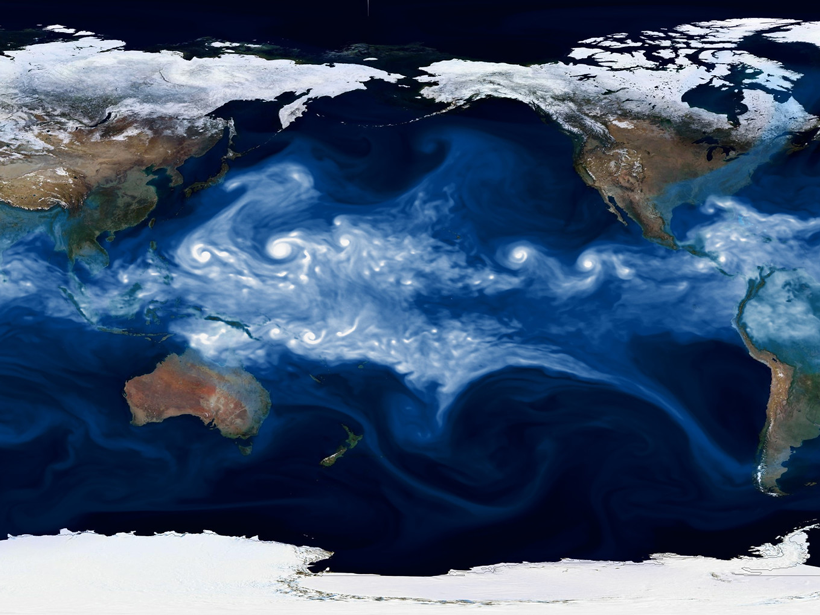
How Internal Waves Transport Energy Thousands of Miles Across the Ocean

26 March 202626 March 2026
Editors' Highlights

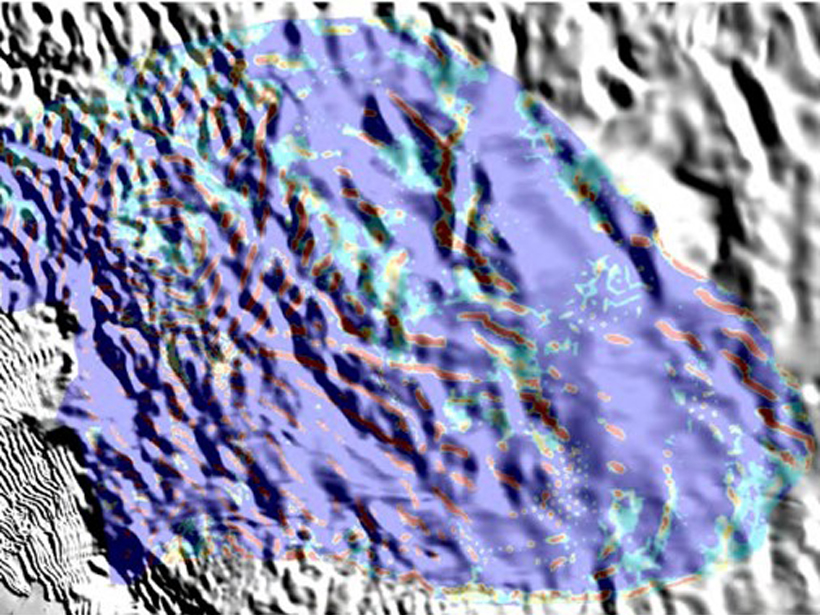
An Ancient Landscape Beneath the East Antarctic Ice Sheet

8 April 20266 April 2026
Editors' Vox

The Future of Earth’s Future

24 March 202624 March 2026
Eos logo at left; AGU logo at right

About Eos
ENGAGE
Awards
Contact

Advertise
Submit
Career Center
Sitemap

© 2026 American Geophysical Union. All rights reserved Powered by Newspack