• About
  • Special Reports
  • Topics
    • Climate
    • Earth Science
    • Oceans
    • Space & Planets
    • Health & Ecosystems
    • Culture & Policy
    • Education & Careers
    • Opinions
  • Projects
    • Postcards From the Field
    • ENGAGE
    • Editors’ Highlights
    • Editors’ Vox
    • Eos en Español
    • Eos 简体中文版
    • Print Archive: 2015–2025
  • Policy Tracker
  • Blogs
    • Research & Developments
    • The Landslide Blog
  • Newsletter
  • Submit to Eos
  • AGU.org
  • Career Center
  • Join AGU
  • Give to AGU
  • About
  • Special Reports
  • Topics
    • Climate
    • Earth Science
    • Oceans
    • Space & Planets
    • Health & Ecosystems
    • Culture & Policy
    • Education & Careers
    • Opinions
  • Projects
    • Postcards From the Field
    • ENGAGE
    • Editors’ Highlights
    • Editors’ Vox
    • Eos en Español
    • Eos 简体中文版
    • Print Archive: 2015–2025
  • Policy Tracker
  • Blogs
    • Research & Developments
    • The Landslide Blog
  • Newsletter
  • Submit to Eos
Skip to content
  • AGU.org
  • Career Center
  • Join AGU
  • Give to AGU
Eos

Eos

Science News by AGU

Support Eos
Sign Up for Newsletter
  • About
  • Special Reports
  • Topics
    • Climate
    • Earth Science
    • Oceans
    • Space & Planets
    • Health & Ecosystems
    • Culture & Policy
    • Education & Careers
    • Opinions
  • Projects
    • Postcards From the Field
    • ENGAGE
    • Editors’ Highlights
    • Editors’ Vox
    • Eos en Español
    • Eos 简体中文版
    • Print Archive: 2015–2025
  • Policy Tracker
  • Blogs
    • Research & Developments
    • The Landslide Blog
  • Newsletter
  • Submit to Eos

NOAA

AccuWeather CEO Barry Myers, who will be the Trump administration’s nominee to head NOAA, according to a Wednesday announcement.
Posted inNews

White House Will Nominate AccuWeather’s Barry Myers to Lead NOAA

by Randy Showstack 12 October 201725 May 2022

While some observers say Myers is a good fit, critics express concern about his lack of a science background and potential conflicts of interest.

Posted inNews

Largest Flare of Past 9 Years Erupts from Sun

Kimberly M. S. Cartier, News Writing and Production Intern for Eos.org by Kimberly M. S. Cartier 8 September 201727 March 2023

A massive flare and blast of charged particles toward Earth may disrupt satellites and communications and push auroras toward lower latitudes through tomorrow, according to space weather experts.
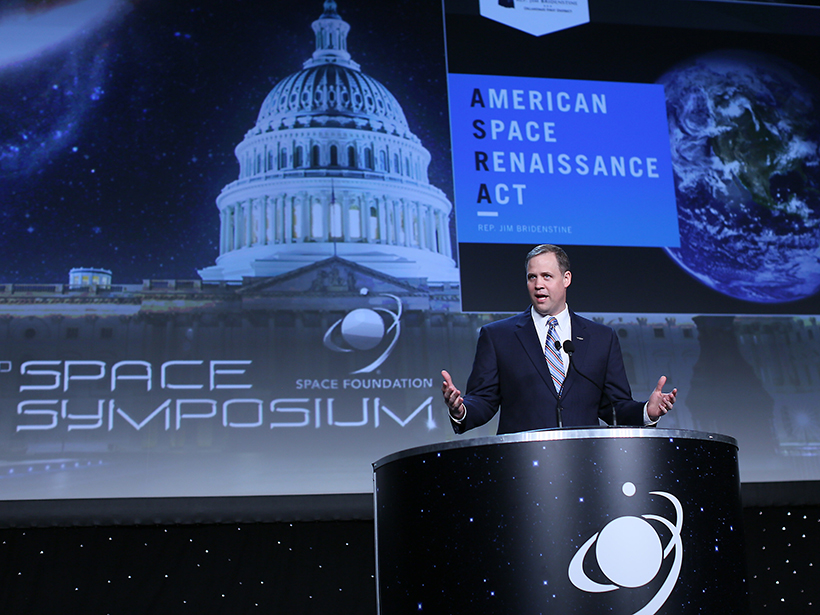
U.S. Rep. Jim Bridenstine at the 32nd Space Symposium in 2016.
Posted inNews

White House Announces Picks for NASA Chief and NOAA Deputy Head

by Randy Showstack 5 September 201719 October 2021

If the administration’s selection of Rep. Jim Bridenstine to lead NASA is confirmed, the congressman would be the first politician to head the agency.

Winds of more than 100 mph stream through palm trees as Hurricane Wilma makes landfall at Miami Beach, Fla., in 2005.
Posted inOpinions

Proposed Federal Budget Heightens Hurricane Risk

Chris McEntee, executive director and CEO of AGU by Chris McEntee 1 June 201727 October 2022

The health, welfare, and livelihood of millions depend upon our elected officials’ continued and robust support for hurricane research.

Tropical storm Arlene
Posted inNews

Scientists Predict Active Hurricane Season

JoAnna Wendel, freelance science writer and illustrator by JoAnna Wendel 26 May 201712 December 2022

A combination of warm sea surface temperatures and a weak or absent El Niño may create conditions conducive to tropical storm formation.

Palm trees blow sideways in tropical storm.
Posted inNews

NOAA Officials Stress Hurricane Danger and Storm Safety

by Randy Showstack 12 May 201716 September 2022

Agency scientists on a Hurricane Awareness Tour showcase NOAA research capabilities and warn that although winds can cause severe damage, the biggest killers are storm surges and inland flooding.

NOAA’s former chief scientist shared insights on his time at the agency and concerns for scientific endeavors.
Posted inNews

Former NOAA Chief Scientist Warns of Threats to Science

by Randy Showstack 14 April 201714 April 2023

Rick Spinrad frets about threats to science from the current administration's attitudes and budget priorities but remains hopeful that things can be turned around.

Evacuees flee a wildfire that threatened Fort McMurray, Alberta, Canada, in May 2016.
Posted inScience Updates

Meteorologists Track Wildfires Using Satellite Smoke Images

by A. K. Huff and S. Kondragunta 4 April 20173 November 2022

Enhancements to the National Oceanic and Atmospheric Administration's decision support system give forecasters new capabilities for tracking smoke from fires using satellite data.

Global lightning detection
Posted inNews

GOES-16 Satellite Lights Up Lightning Flashes in New Video

JoAnna Wendel, freelance science writer and illustrator by JoAnna Wendel 9 March 201713 March 2023

The satellite's lightning mapper instrument will help scientists forecast extreme weather.

Artist’s rendering of NOAA’s Joint Polar Satellite System 2 (JPSS-2), scheduled to launch in 2021.
Posted inNews

Possible Deep Cuts to NOAA Funding Worry Agency Supporters

by Randy Showstack 8 March 201720 April 2023

The agency's acting administrator characterized the budget figures as preliminary and said NOAA is not being targeted.

Posts pagination

Newer posts 1 … 6 7 8 9 10 11 Older posts
Over a dark blue-green square appear the words Special Report: The State of the Science 1 Year On.

Features from AGU Publications

Research Spotlights

Carbon-Rich Rocks May Have Cooled the Ancient Martian Atmosphere

28 May 202628 May 2026
Editors' Highlights

From Grains to Bands: Modeling Deformation in Porous Rocks

26 May 202621 May 2026
Editors' Vox

From Volcanic Vents to Safer Skies

27 May 202627 May 2026
Eos logo at left; AGU logo at right

About Eos
ENGAGE
Awards
Contact

Advertise
Submit
Career Center
Sitemap

© 2026 American Geophysical Union. All rights reserved Powered by Newspack