
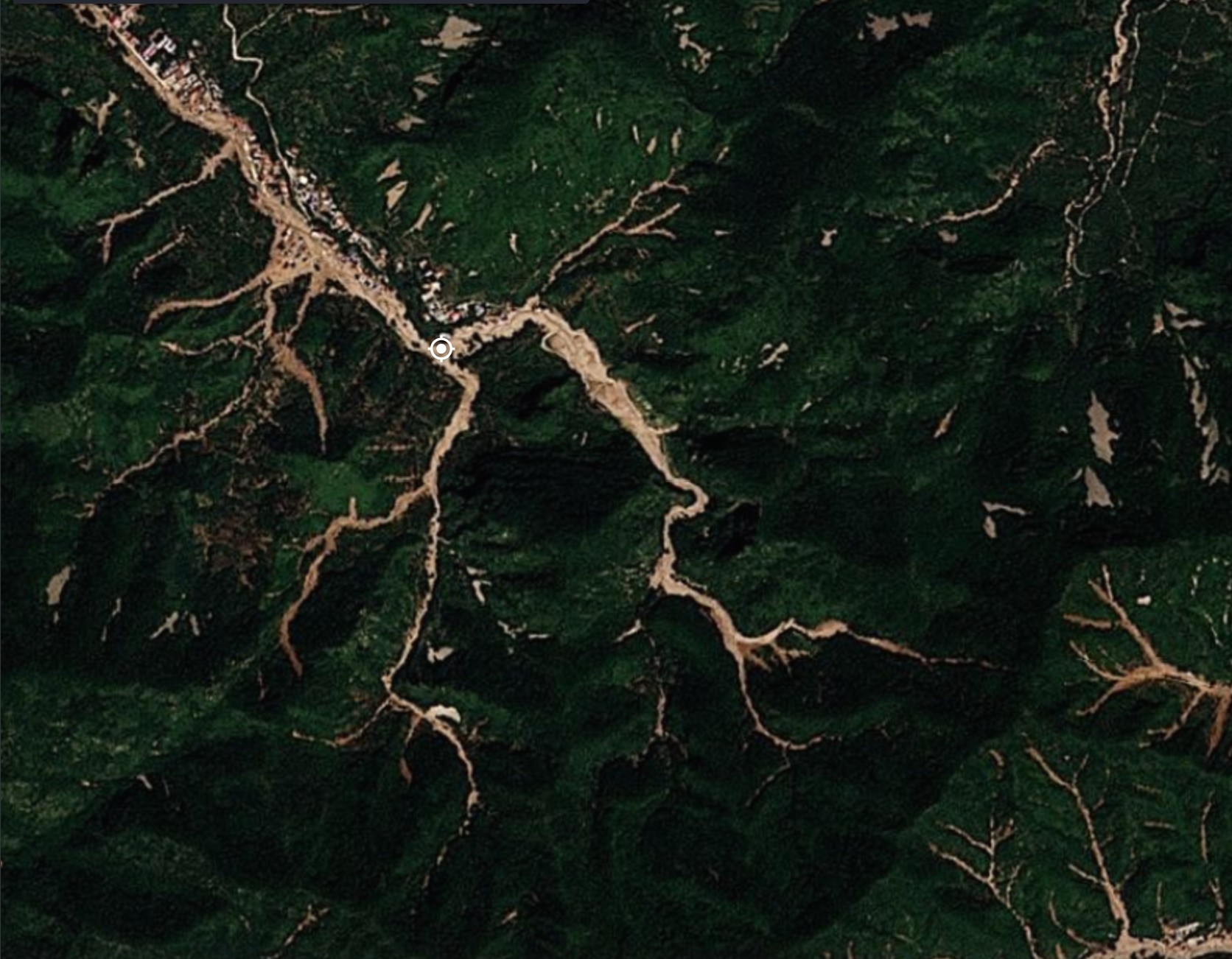
Extreme rainfall in July 2025 triggered numerous landslides and debris flows that killed over 60 people.
Between 23 and 29 July 2025, the Yanshan (Yan Mountain) [41.0, 120.0] area of Hebei Province in China suffered extreme rainfall that triggered extensive flooding and landslides. As is so often the case in China, I found it difficult to get good information about this event at the time, but a good new paper (Xie et al. 2026) in the journal Landslides has provided a detailed review of this event. The paper is behind a paywall, but at the time of writing this link should give readers access.
Xie et al. (2026) have analysed the rinfall that triggered these landsldies, conckuding that it was in the order of 549.6 mm – a very substantial total. Daily rainfall totals were as high as 285.1 mm.
This rainfall triggered multiple shallow landslides and debris flows, causing over 60 fatalities. Xie et al. (2026) provide some detailed examples, one of which is at the Xiaomiaohougou catchment in Yangjiatai Village, Xinglong County. This is located at [40.37591, 117.24141]. The Planet Labs image below, collected on 22 June 2025, shows the site:-
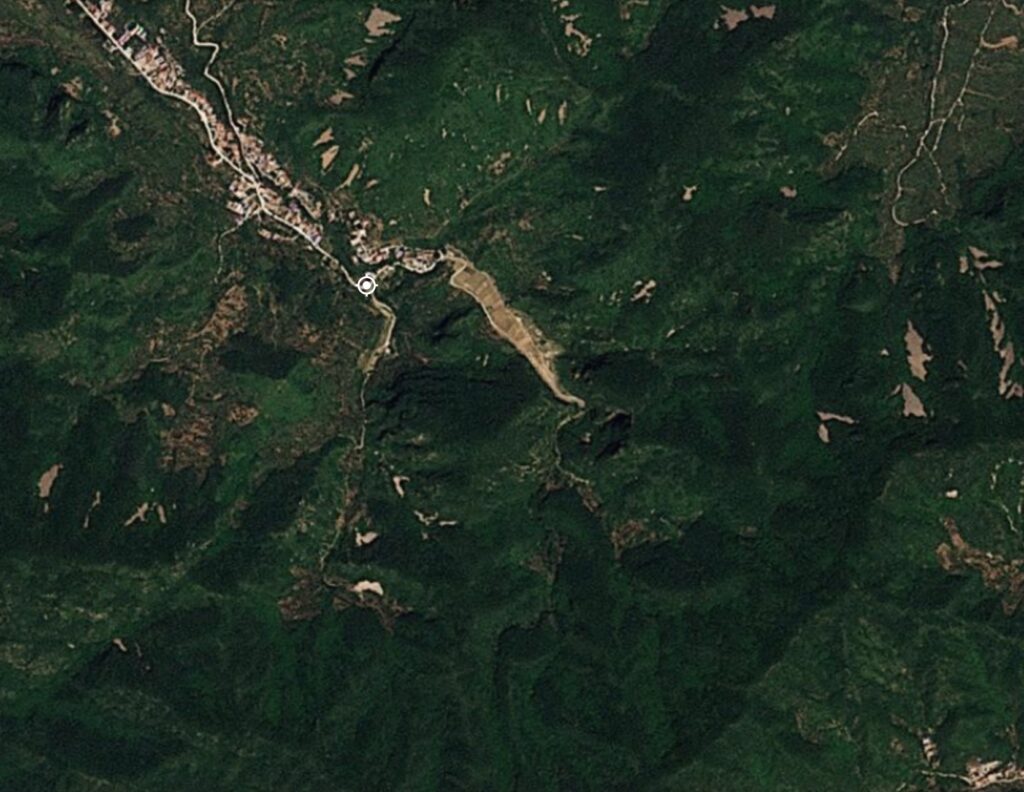
This is the same area of Yangshan after the rainfall and landslides:-
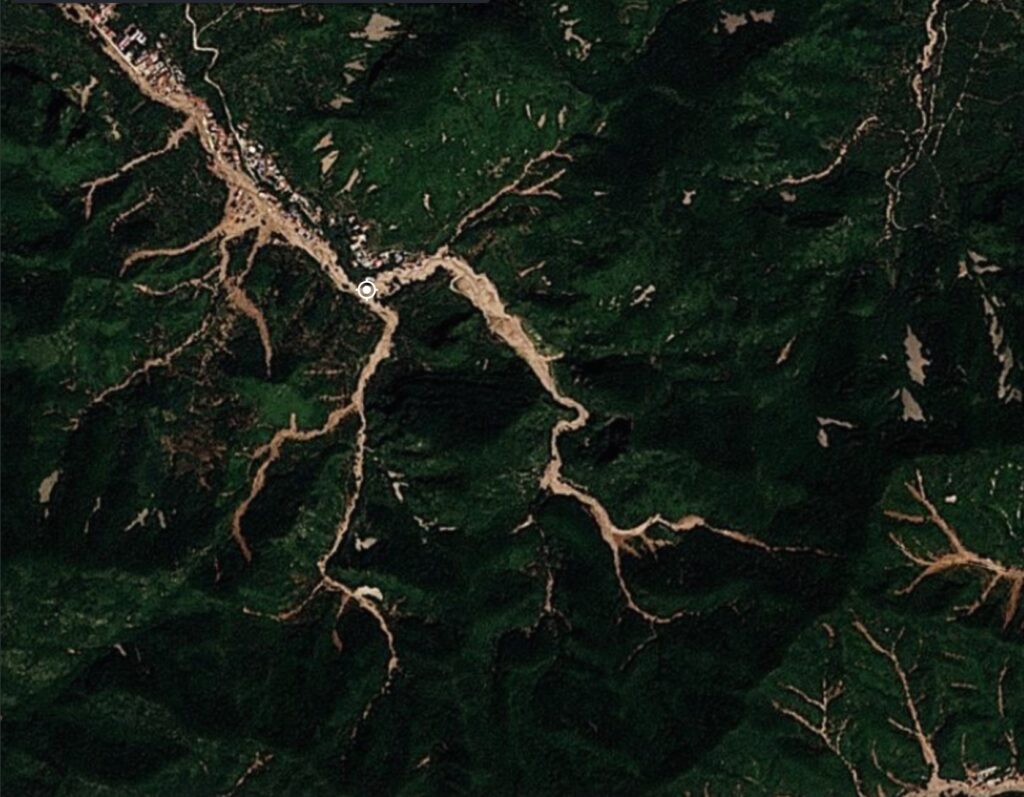
And here is an image compare:-


Xie et al. (2026) describe this site as follows:-
“The catchment exhibits steep hillslopes, high local relief, and well-developed gully systems, which promote efficient runoff concentration and rapid sediment transport during the extreme rainfall event. Field investigations indicated that sediment was primarily supplied by channel-bank failures and shallow hillslope failures, with sediment-source areas widely distributed throughout the catchment. Despite the relatively high vegetation coverage, prolonged extreme rainfall triggered rapid sediment mobilization and severe channel erosion. The resulting debris flow caused numerous fatalities and widespread damage to infrastructure.”
The multiple channelised debris flows are clear in the satellite images, as is the severe damage to the communities in the valley. This was replicated across a wide area.
Interestingly, the analyses by Xie et al. (2026) highlight the availability of large amounts of loose sediment in the Yangshan, and that “anthropogenic slope modification substantially altered sediment availability and intensified debris-flow activity under extreme rainfall conditions.” They particularly highlight the role of terracing of slopes in inducing an increase in landslide susceptibility.
Thus, they highlight the need for an increased focus on terrace modification, roadcuts and and village construction on landslide susceptibility. This is good advice application more widely, in mountain areas as we continue to see an increase in rainfall intensity associated with climate change.
Reference and acknowledgement
Xie, C., Xu, C., Yang, Z. et al. 2026. Characteristics and formation mechanisms of catastrophic geological hazards triggered by extreme rainfall in the Yanshan Mountains, China, in July 2025. Landslides. https://doi.org/10.1007/s10346-026-02829-3.
Thanks as always to the kind people at Planet Labs for making the satellite imagery available.