
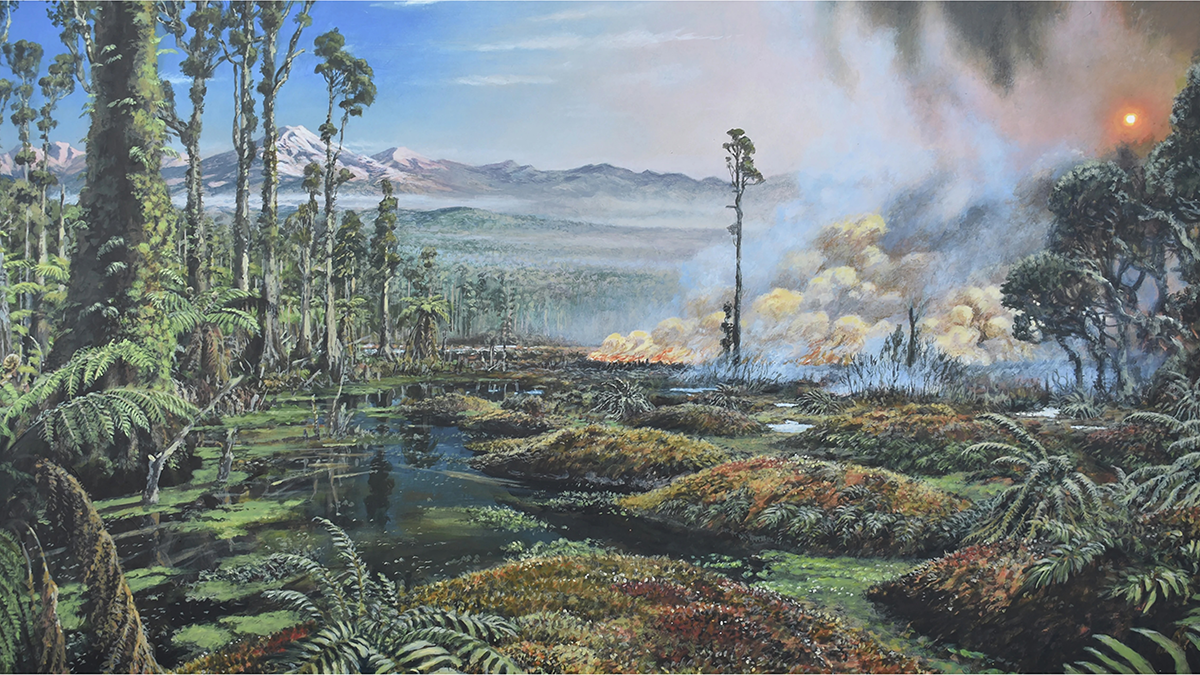
Written into an approximately 30-meter-long (100-foot-long) core sample drilled from the seafloor near West Antarctica is a history that might seem impossible if it weren’t so clearly documented. From fossilized pollen grains and preserved plant roots in the core sample, scientists found that during the Cretaceous period around 90 million years ago, Antarctica was a humid, swampy rainforest. When scientists published the results in 2020, it became the southernmost forest ever recorded.
Now, in a new study published in Communications Earth and Environment, the same scientists report that the original core sample, drilled roughly 900 kilometers (560 miles) from the South Pole, also holds evidence of the southernmost wildfires ever recorded. Those wildfires likely facilitated the transition of the landscape from rainforest into a sphagnum moss–dominated peat bog that experienced low-level fires. According to the scientists, the discovery reveals a fire regime that is remarkably similar to that of modern-day peat bogs.
A Changing Landscape
When the scientists were studying the core sediment for traces of ancient forests, they used strong acids that dissolve away everything except organic material. At first, they were interested in the pollen and spores that remained, aiming to get an idea of the flora that grew on the landscape, but they also noticed another interesting organic material in the mix.
“We spotted these tiny pieces of charcoal,” evidence of burnt material, said Johann Klages, a sedimentologist at the Alfred Wegener Institute.
“It’s the southernmost evidence for wildfires on the planet so far.”
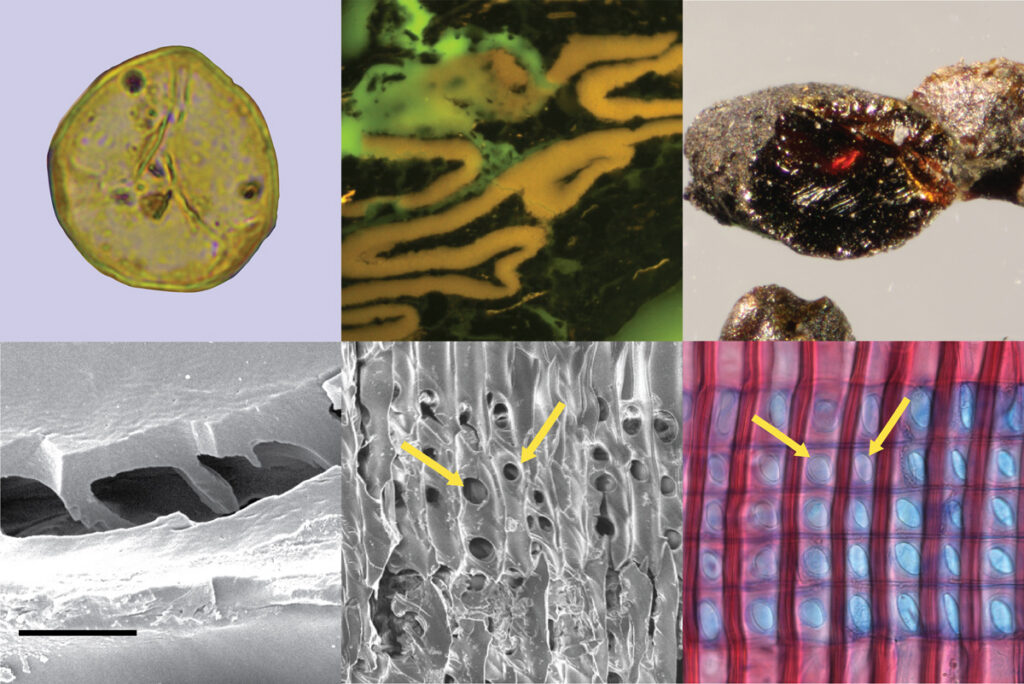
For the new study, the scientists took a variety of approaches to confirm they were looking at remnants of ancient blazes. First, they examined the charcoal fragments using high-powered microscopes and saw plant cell walls, indicating the fragments were burnt plant material. Partially burnt plants also leave behind specific chemical residues, which the scientists identified in the core sediment using spectrometry. The presence of amber, which is fossilized tree resin, was another clue.
“We saw, in some instances, that the amber was covering the bark of a former tree,” Klages said. “That usually happens when the tree gets injured by some kind of external force,” such as a fire. On the basis of the way that light reflected off the burnt particles in the sediment core, the scientists were even able to determine that the fires were lower-temperature surface fires, as opposed to underground fires that can occur in peatlands or crown fires that burn the tree canopy.
Taken together, “it’s the southernmost evidence for wildfires on the planet so far,” Klages said.
The story broadened when the scientists tracked changes to the fire history and ecosystem over time. By investigating the chemical signatures further and assessing the different types of fossilized pollen and spores, the researchers recorded a landscape full of conifers representative of a temperate rainforest in the lower, earlier sections of the Cretaceous. Higher up in the sample, later in the Cretaceous, they saw a sharp increase in ferns and sphagnum moss, commonly found in peat bogs. Peat bogs are also acidic environments, and the scientists saw in tests that the pH in the core dropped during the transition.
“It was just spectacular to have slightly different ways of looking at the geologic record and looking at fire histories. And by putting them all together, you understand more than you would with just one proxy.”
The transition from rainforest to peat bog paralleled an increase in fire occurrence. “We see an evolution of fire going on,” said Ulrich Salzmann, a paleoecologist at Northumbria University. The scientists speculate that more frequent fires helped sustain the shift to peat bogs by keeping the landscape more open. “You basically see the peat spores increasing at the same time that fire goes up,” Salzmann said. He noted that similar links between fire and peat bogs are seen in the high Arctic today.
“It was just spectacular to have slightly different ways of looking at the geologic record and looking at fire histories. And by putting them all together, you understand more than you would with just one proxy,” said Ellen Currano, a paleoecologist at the University of Wyoming who wasn’t involved in the study.
Peat Bogs, Then and Now
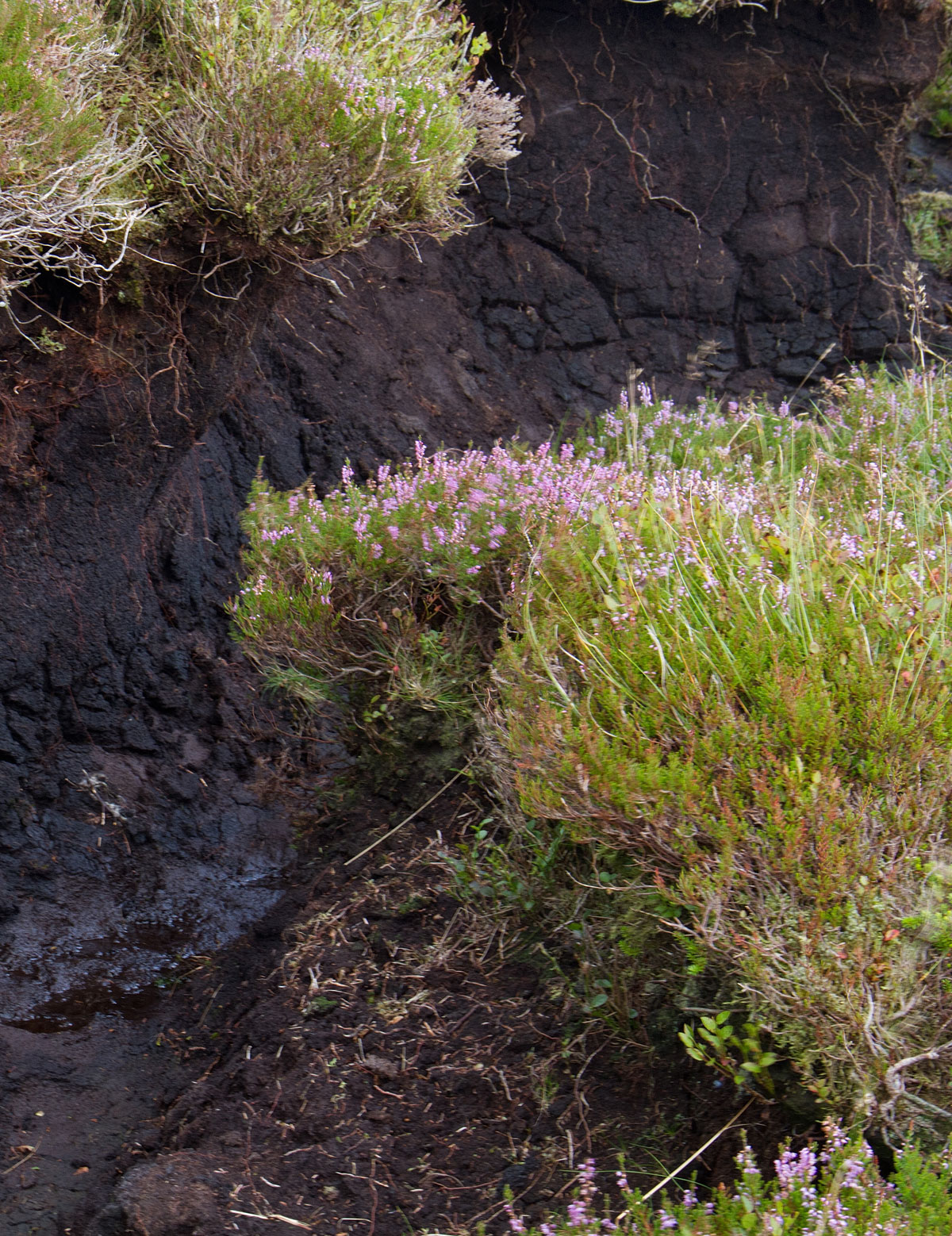
Antarctica’s peat bogs show similarities to peat bogs throughout history all the way up to present day. Salzmann said that when he looks at the 90-million-year-old sphagnum spores from the study and compares them to ones from the past 10,000 years in Scotland, they look remarkably similar. “I find it so amazing,” he said. Peat bogs today also experience low-intensity, surface fires like those they documented in ancient Antarctica. Though the Cretaceous had a climate dramatically different from today’s, with warmer temperatures and higher carbon dioxide and oxygen levels, the findings reflect that fire can be a part of healthy peatlands as long as they aren’t drained or dried.
“One of the greatest powers of the fossil record is it teaches us that the present is just one data point for how Earth works,” Currano said. “By looking at the Late Cretaceous and seeing a time period when you have much warmer temperatures, we can see other ways that Earth works, and maybe even a little bit about where we might be heading in the future.”
—Andrew Chapman (@andrewgchapman.bsky.social), Science Writer