

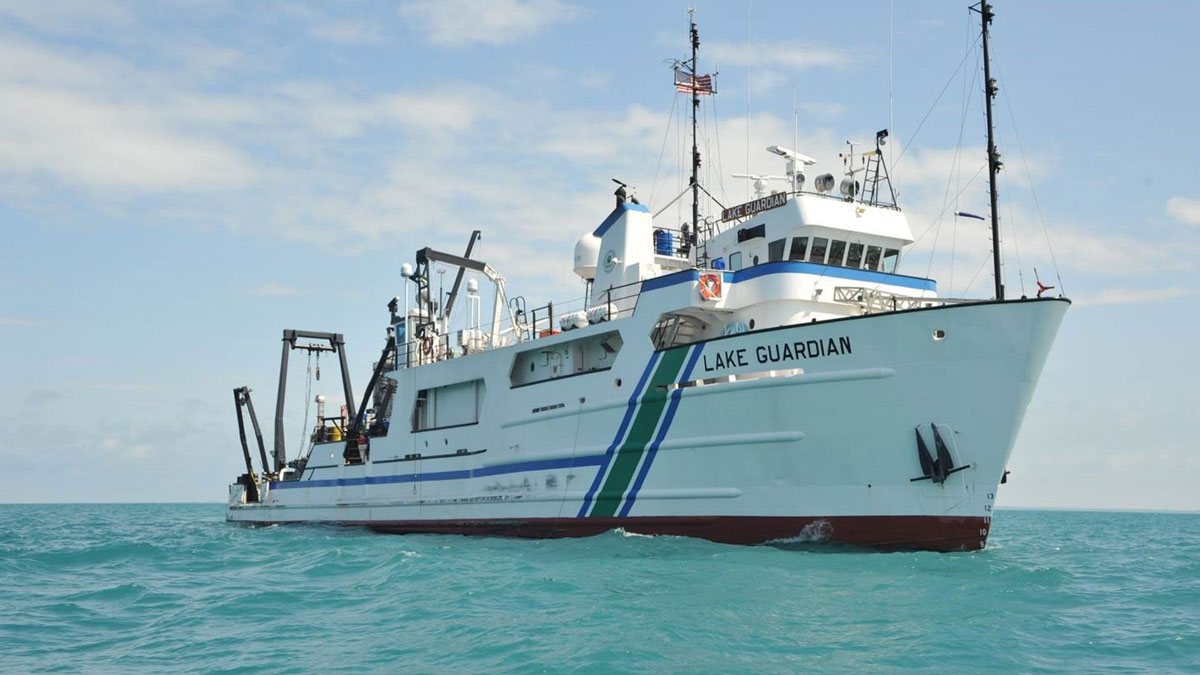
On board the EPA research vessel Lake Guardian, every scientist works a 12-hour shift. From 4:00 p.m. to 4:00 a.m. or vice versa, researchers survey and sample the Great Lakes to better assess water quality and food web conditions.
“We sample day or night, 24/7,” said Anne Scofield, a physical scientist at the EPA’s Great Lakes National Program Office, technical lead for the office’s Biology Monitoring Program, and one of the researchers on board the Lake Guardian during the office’s 43rd annual summer survey, conducted this August.
The annual summer surveys take about a month to traverse all five Great Lakes. Another annual survey in the springtime monitors lakes when their water temperatures are at their coldest. Since April, the Lake Guardian has traveled more than 12,500 nautical miles (23,150 kilometers) and sampled 282 locations. The vessel will travel for one more survey in Lake Superior and one more survey in Lake Erie before the end of the year.
“It really does remind me of being in the ocean, because the lakes are just so huge,” Scofield said.
Data from Lake Guardian surveys help scientists and natural resource managers track how stressors like nutrient pollution, chemical contaminants, and invasive species affect the ecology of the Great Lakes over time.
“It’s one of the foundational datasets that all the scientists in the region use.”
The Lake Guardian also offers non-EPA scientists a chance to join the survey, collect data, and use those data in their own research. Each annual survey is funded by the Great Lakes Restoration Initiative, a multiagency fund meant to understand and mitigate the largest threats to Great Lakes ecosystems.
“We’re the only group out there that is measuring the same things in the same places in the same way year after year after year for all five of the Great Lakes,” Scofield said. “It’s one of the foundational datasets that all the scientists in the region use.”
Freshwater Finds
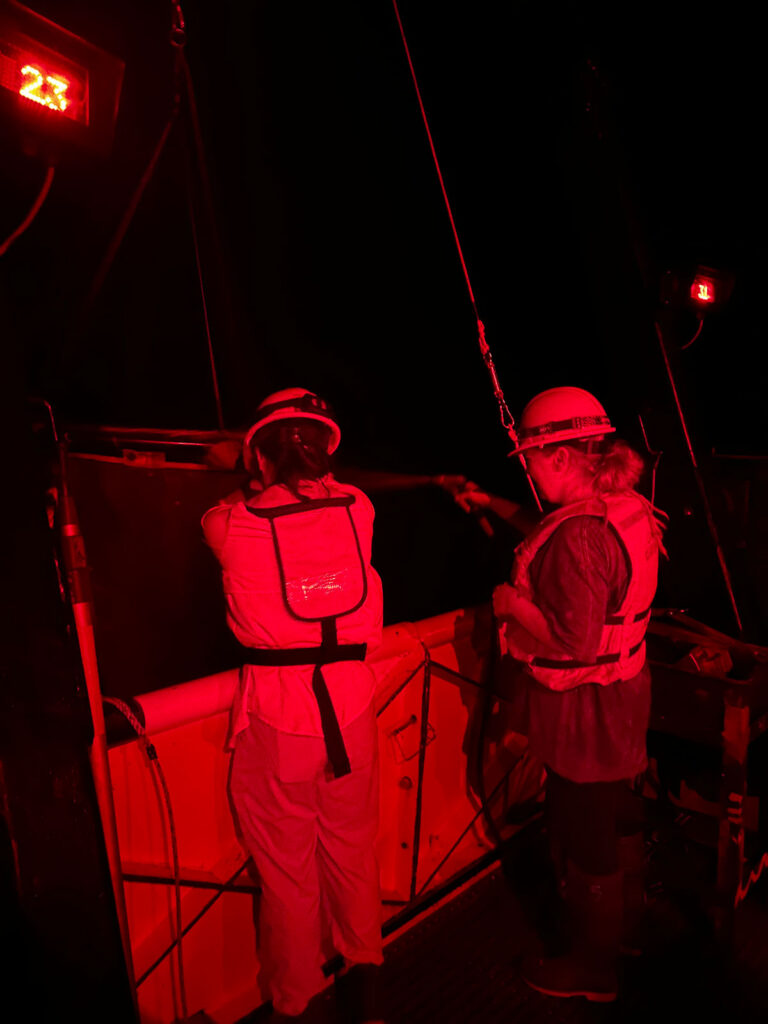
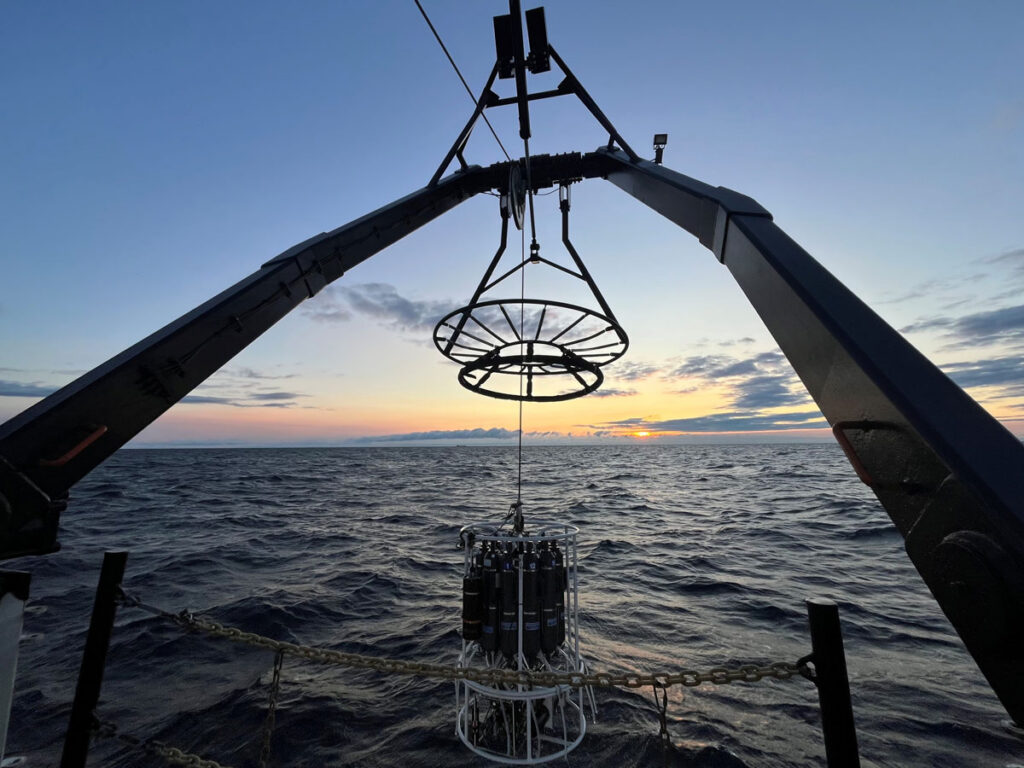
During their shifts on the Lake Guardian, scientists and crewmembers deploy sampling equipment and prepare samples for storage or analysis. At night, they deploy nets to collect mysids, the Great Lakes’ largest zooplankton and an important food source for fish.
The team uses water samples to monitor nutrient concentrations, algae, phytoplankton, zooplankton, and invertebrates living on the lake bed. They measure a suite of physical characteristics, too, such as turbidity, pH, and water clarity. And they drill sediment cores, which provide insight into how the chemistry and contaminants in the lakes have changed over time.
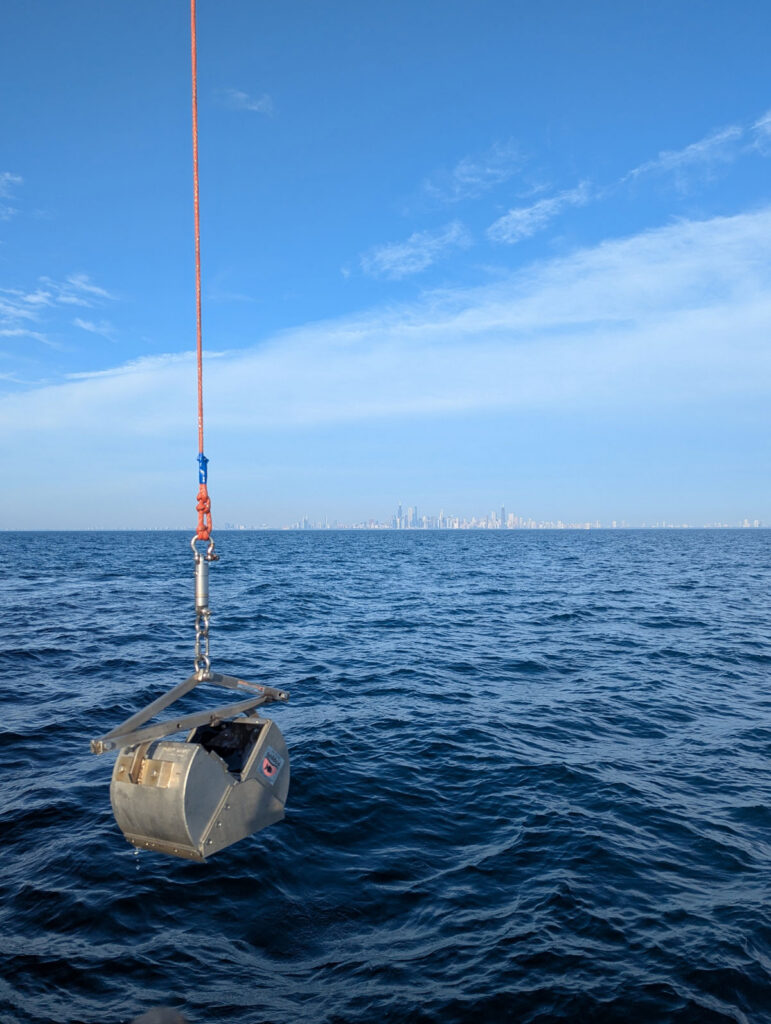
Every year, the Lake Guardian’s overall monitoring is supplemented by an in-depth study of one of the Great Lakes’ lake bed invertebrate communities. During those studies, an underwater video camera helps the team map the spatial distribution of invertebrates on the lake bed, and a giant claw collects chunks of sediment from the bottom of the lake for analysis.
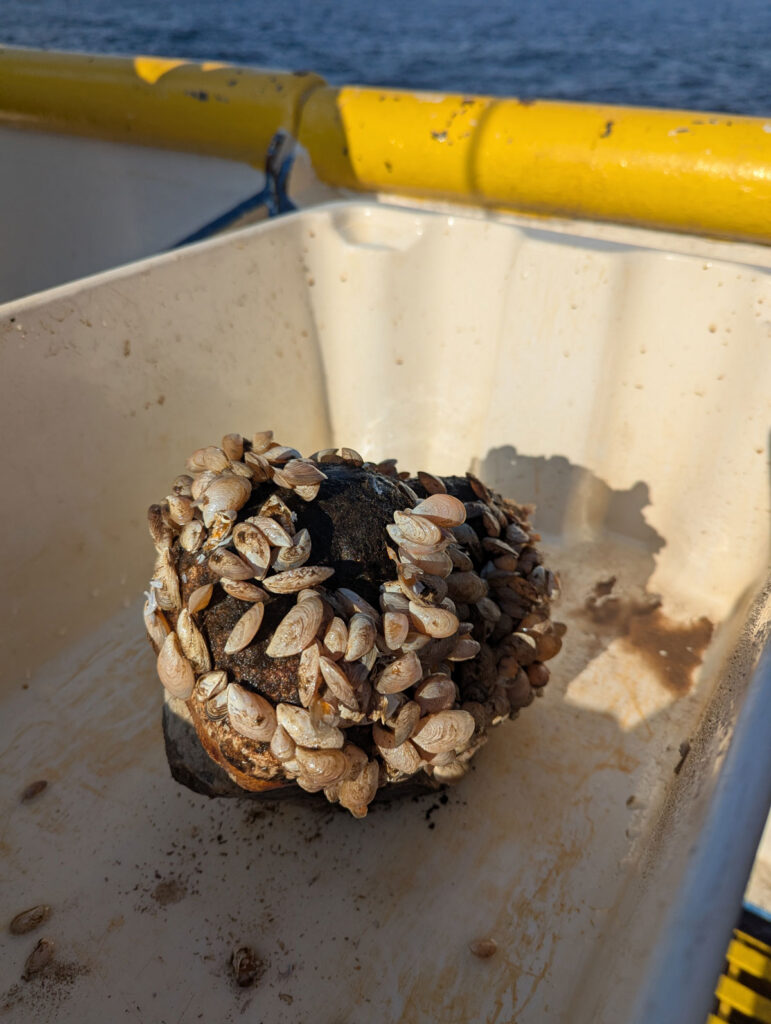
This in-depth approach allows the agency to track changes in lake bed ecology, particularly changes to populations of invasive mussels. “We’re trying to understand their trajectories and what that might mean for the lakes going forward,” Scofield said.
The in-depth survey for 2026 is ongoing in Lake Superior. Scientists on board are monitoring and mapping the distribution of lake bed organisms such as Diporeia, a tiny freshwater crustacean that serves as an important food source for fish.
Though scientists have not yet analyzed data from the 2026 summer survey, Scofield said she has already noticed interesting features of lake health. In Lake Michigan, for example, the team noticed few mysids, especially in the southern basin of the lake. This observation contributes to a consistent trend documenting decreasing populations of mysids since the early 2000s, she said, possibly because of a reduction in phytoplankton in the lake as well as increasing water clarity over time, which limits habitat for these light-sensitive organisms.
Managing the Great Lakes
Many of the data collected by the Lake Guardian team are used to update the EPA’s State of the Great Lakes reports, which are published every 3 years and provide a summary of the health of the Great Lakes, from water quality to fish population metrics. These reports are part of a collaboration between the EPA and the Canada Water Agency to support the Great Lakes Water Quality Agreement, a binational commitment signed in 1972 to protect the waters of the Great Lakes.
Scientists reference these reports in their research, and resource managers use the data to help make decisions. “Fishery managers, especially, are always wanting to connect with us to understand what’s going on with the lower food web,” Scofield said.
Vic Santucci, the Lake Michigan program manager in the Division of Fisheries at the Illinois Department of Natural Resources, is not involved in the Lake Guardian’s annual surveys but uses the data collected by the Lake Guardian team to make decisions about where, when, and how to manage Lake Michigan’s fisheries.
For example, in 2013 and 2016, Santucci used State of the Great Lakes report data on declines in lake productivity and the spread of invasive mussels to inform decisions to stock the lake with fewer salmon and trout.
“Long-term datasets are crucial for managing lakes the size of the Great Lakes,” Santucci wrote in an email.
—Grace van Deelen (@gvd.bsky.social), Staff Writer