
African savanna elephants (Loxodonta africana) are the world’s largest terrestrial animal, weighing an average of 5.4 metric tons, measuring 5.5–7.5 meters (19–24 feet) from tail to trunk, and standing 3.4 meters (11 feet) tall. But their size is only part of what makes these majestic giants so impressive. African savanna elephants have an outsized influence on the land they inhabit as well.
Elephants are ecosystem engineers: They knock down trees and spread seeds over long distances, actively shaping the landscape for themselves, other animals, and the rest of the living and nonliving parts of their environment. While elephants’ ecological importance during life is well-documented, questions remain about the legacy these massive creatures leave behind after death—how their carcasses affect ecosystems above and below ground.
In a new study published in the Proceedings of the National Academy of Sciences of the United States of America, researchers aimed to answer some of those questions by examining 40 elephant carcasses in South Africa’s Kruger National Park over a 2-year period. Some of the animals died as recently as a week before examination, while other remains were nearly 8 years old. Research focused on how the carcasses affected plant life, soil nutrients, and grazing patterns across the savanna for years after an elephant’s death.
“Each adult elephant is thousands of kilograms, which represents a huge amount of nitrogen and phosphorus and carbon. All these nutrients are in huge quantities within elephant bodies,” said Courtney Reed, a postdoctoral researcher in ecology and evolutionary biology at Princeton University and the study’s lead author. “We wanted to understand how those nutrients move through the ecosystem and the impacts those nutrients have.”
From Megafauna to Microbes
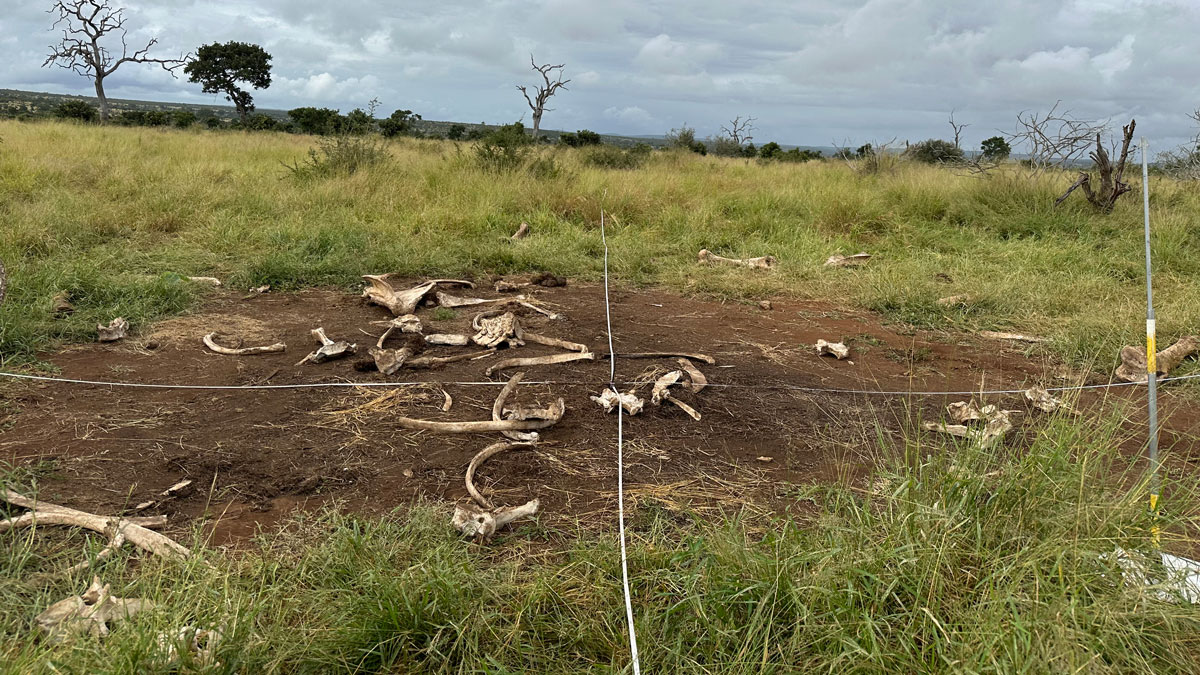
When an elephant dies, its carcass site undergoes a dramatic transformation. A carcass impact zone affects an area of about 80 square meters. Plants underneath the animal’s massive body are flattened. Lions, hyenas, and vultures eat the meat and scatter the bones, tearing up all surrounding vegetation and creating “this moonscape, a huge bare patch of dirt where the elephant has died. They’re really resetting that ecological community,” said Deron Burkepile, an ecologist at the University of California, Santa Barbara and one of the study’s authors.
The meat and bones that aren’t consumed by scavengers create a nutrient pulse in the soil, Burkepile explained, leaching ammonium, nitrate, and phosphorus into the ground. “It’s like pouring dozens of bags of fertilizer on this one small patch of savanna,” he said. “Not surprisingly, that has a big effect on both ‘the belowground’—the microbes, the bacteria, and the fungi—and then the plants that start to recolonize.”
The carcass site can transform the surrounding savanna for years after an elephant’s death. On average, soil ammonium concentrations were 31 times higher, nitrate 7 times higher, and phosphorus 3 times higher in carcass sites as compared to nearby locations. Although ammonium levels decreased as carcasses aged, nutrient levels remained elevated across the study’s carcass sites for more than 7 years.
These surplus soil nutrients can create a cold spot for species diversity, said Burkepile. “It’s like putting too much fertilizer on your tomatoes, right? It turns the leaves. It essentially poisons them.”
Certain plant, fungal, and bacterial species are able to tolerate the extreme conditions, however, and researchers found that while microbial diversity dropped, overall microbial activity increased.
“Even though you have really active soil microbial communities, their biodiversity is actually much lower. And the plant diversity is much lower at these elephant carcass sites as well, really favoring just the few species that can thrive in that environment and reducing the diversity of the rest,” said Reed.
Grazing herbivores were drawn to the fast-growing, nitrogen-rich grasses that were eventually able to grow at the carcass sites. Zebras, impalas, and African buffalo consumed the nutrient-rich grasses, further limiting plant diversity and keeping biomass low.
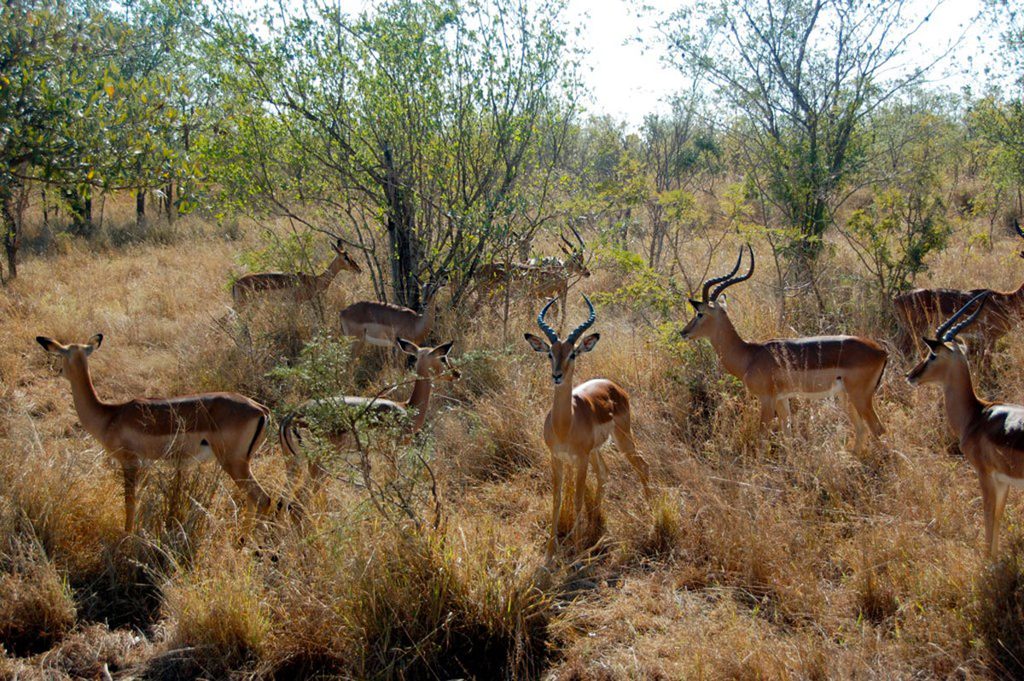
“That creates a second suppression of diversity. You’ve got the suppression from the nutrients, but then you also have the suppression from the herbivores coming in and grazing away the extra growth that the nutrient stimulates in the plants,” said Burkepile.
Elephants Affect the Savanna Across the Centuries
Kruger National Park is home to around 30,000 elephants, one of the largest concentrations of elephants on the continent. Today’s elephants offer a glimpse into how large herbivores have fit into their ecosystems over time.
“It’s this circle of life role, where [elephants are] engineering these ecosystems while they’re alive, but continuing to have these really strong impacts after they die. We really underappreciate the holistic role of a lot of these big species, because they’re now really rare.”
“Megafauna, these really large animals, have special ecosystem impacts. We know that they’re special in their lives, and this is, I think, the first paper that thinks about how they’re also special in their death,” said Andrew Davies, a landscape ecologist at Harvard University who was not involved in the study.
When elephants roamed more widely throughout Africa hundreds of years ago, or when Pleistocene-era mammoths and mastodons lumbered across North America 50,000 years ago, their ecological influence on their environment may have lasted far longer than their lifetimes.
Climate change and declining elephant populations today mean that understanding how these giants shape their environment even after death may be more important than ever.
“It’s this circle of life role, where they’re engineering these ecosystems while they’re alive, but continuing to have these really strong impacts after they die,” said Burkepile. “We really underappreciate the holistic role of a lot of these big species, because they’re now really rare.”
—Rebecca Owen (@beccapox.bsky.social), Science Writer