

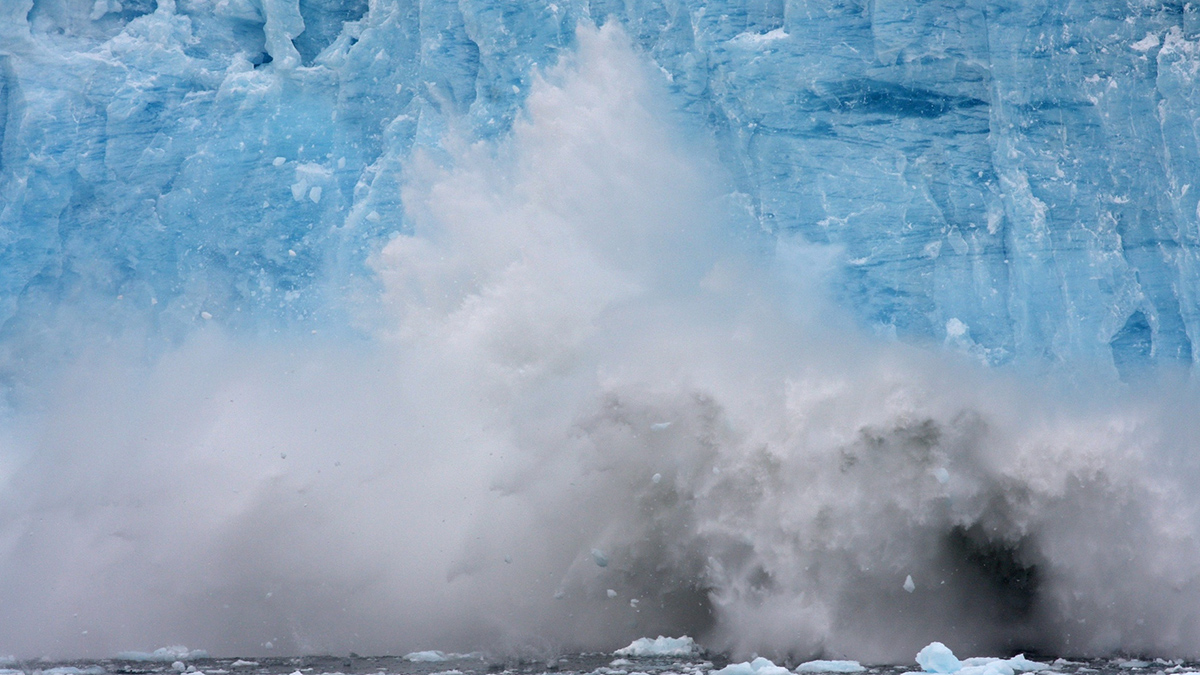
The rapid retreat of glaciers, an increasingly common phenomenon, could potentially lead to complex changes in ocean chemistry. A new study has revealed that sediment runoff from retreating glaciers is less nutritious for marine life than meltwater from stable glaciers. This finding has important implications for high-latitude marine ecosystems, such as the Gulf of Alaska, where trace metals like iron and manganese are essential for supporting microorganisms at the base of the food web.
Glacial runoff, which carries sediments produced by the relentless grinding of ice on the bedrock below, is an important source of trace metal micronutrients in the ocean. These nutrients, in turn, are essential for phytoplankton growth, which sustains the marine food web and plays a major role in absorbing atmospheric carbon dioxide.
Intrigued by the effects of climate change on nutrient availability, a team of researchers used two adjacent glaciers on Alaska’s Kenai Peninsula as a natural laboratory. One of them, Aialik Glacier, is stable and terminates on the sea, while the other, Northwestern Glacier, has retreated inland approximately 15 kilometers (9.3 miles) since 1950. Because both glaciers erode the same bedrock, the researchers knew the source material for their sediments would be nearly identical.
In late May 2022, as seasonal melting intensified, the team—led by marine chemist Kiefer Forsch, who conducted the research as a postdoctoral fellow at Scripps Institution of Oceanography and is now at the University of Southern California—collected samples from the fjords of both glaciers. Working from a small aluminum boat provided by Kenai Fjords National Park, they sampled and analyzed surface water, suspended sediments, and iceberg material, looking to analyze the concentration and bioavailability of metals like iron and manganese, as well as macronutrients such as phosphorus. (Bioavailability describes the proportion of nutrients that is readily usable by marine organisms.)
The analysis revealed important differences in the proportion of bioavailable metals in the sediment plumes. Sediments from the stable Aialik Glacier were substantially richer, with approximately 18% of the iron and 26% of the manganese in bioavailable forms. In contrast, the retreating Northwestern Glacier’s sediments contained only 13% bioavailable iron and 14%–15% bioavailable manganese. The researchers described their findings in Nature Communications.
Stale Nutrients
Researchers think this drop in bioavailable nutrients may be caused by the time lapse between when the sediments were produced and when they were released into the ocean. In the stable Aialik Glacier, which ends directly in the fjord, the sediments have a very short trip from the point of erosion to the ocean. This short distance results in fresh and labile—reactive—nutrients that microorganisms can readily use.
“The impact it could have on the ecology downstream might be muted quite a bit by its lower bioavailability.”
The retreating Northwestern Glacier’s erosive action has moved far inland. As its sediments are transported to the ocean by fluvial waters, they are chemically altered, transformed into less reactive compounds. By the time the runoff reaches the fjord, Forsch said, “it’s lost a lot of its nutritious value just by sitting there, chemically weathering.”
But that’s not the whole story. In absolute terms, the amount of bioavailable metals was similar in both fjords because the overall volume of sediment in the retreating glacier’s fjord was higher. Even if the runoff was less nutritious, researchers concluded, there seemed to be more of it.
Regardless, “the impact it could have on the ecology downstream might be muted quite a bit by its lower bioavailability,” Forsch said.
The Coast Is Not the Ocean
The implications for nutrient availability extend beyond trace metals. Glaciers that terminate in the ocean, called tidewater glaciers, provide an extra benefit by inducing powerful upwelling currents. Meltwater enters the ocean at depth and quickly rises, bringing with it deep ocean water loaded with macronutrients like nitrogen and phosphorus. Phytoplankton near the ocean surface consume these nutrients and can themselves become bioavailable to the fjord’s primary consumers like zooplankton and krill. This upwelling mechanism is what makes these fjords highly productive ecosystems.
“Losing this macronutrient supply [as tidewater glaciers retreat inland] is considered the more devastating impact for coastal ecosystems,” said Jon Hawkings, a glacial biogeochemist at the University of Pennsylvania. “There’s much more iron and manganese in these fjords than there is in the ocean by orders of magnitude; they’re limited by nitrogen mainly.”
“Once the upwelling mechanism is lost, the fjord starts to become less productive,” Forsch added.
Making things worse, when a glacier retreats onto land, its sediments are ultimately delivered at the ocean surface, creating a plume that blocks light, further inhibiting phytoplankton growth. In terms of the geochemistry and biology of these ecosystems, “it’s not really a dial, it’s a switch that occurs when a glacier retreats onto land,” he said.
While the loss of tidewater glaciers will likely lead to reduced productivity within fjords, the implications for the wider ocean are different. The Gulf of Alaska is home to very important fisheries, but its overall productivity is limited by micronutrients like iron, rather than macronutrients such as nitrogen and phosphorus. Glacial retreat might accelerate the delivery of more dissolved iron and manganese out of the fjords and onto the continental shelf, but at the same time these sediments will be less nutritious than they used to be.
In fact, Hawkings suggested, researchers might want to look “off the fjords.… This is probably where this work should go next, looking at these plumes as they exit the fjords into the Gulf of Alaska.”
The study “opens up a number of new questions,” Hawkings said, but much more research is needed to answer them. “What is the impact…for marine productivity? Is this just a one-off? Should we go back to the same place and test again? What about other places like Greenland, Alaska and Patagonia? … The jury is still out in my view.”
—Javier Barbuzano (@javibar.bsky.social), Science Writer