• About
  • Special Reports
  • Topics
    • Climate
    • Earth Science
    • Oceans
    • Space & Planets
    • Health & Ecosystems
    • Culture & Policy
    • Education & Careers
    • Opinions
  • Projects
    • Postcards From the Field
    • ENGAGE
    • Editors’ Highlights
    • Editors’ Vox
    • Eos en Español
    • Eos 简体中文版
    • Print Archive: 2015–2025
  • Policy Tracker
  • Blogs
    • Research & Developments
    • The Landslide Blog
  • Newsletter
  • Submit to Eos
  • AGU.org
  • Career Center
  • Join AGU
  • Give to AGU
  • About
  • Special Reports
  • Topics
    • Climate
    • Earth Science
    • Oceans
    • Space & Planets
    • Health & Ecosystems
    • Culture & Policy
    • Education & Careers
    • Opinions
  • Projects
    • Postcards From the Field
    • ENGAGE
    • Editors’ Highlights
    • Editors’ Vox
    • Eos en Español
    • Eos 简体中文版
    • Print Archive: 2015–2025
  • Policy Tracker
  • Blogs
    • Research & Developments
    • The Landslide Blog
  • Newsletter
  • Submit to Eos
Skip to content
  • AGU.org
  • Career Center
  • Join AGU
  • Give to AGU
Eos

Eos

Science News by AGU

Support Eos
Sign Up for Newsletter
  • About
  • Special Reports
  • Topics
    • Climate
    • Earth Science
    • Oceans
    • Space & Planets
    • Health & Ecosystems
    • Culture & Policy
    • Education & Careers
    • Opinions
  • Projects
    • Postcards From the Field
    • ENGAGE
    • Editors’ Highlights
    • Editors’ Vox
    • Eos en Español
    • Eos 简体中文版
    • Print Archive: 2015–2025
  • Policy Tracker
  • Blogs
    • Research & Developments
    • The Landslide Blog
  • Newsletter
  • Submit to Eos

CC-BY-NC 2016

Posted inResearch Spotlights

New Methods Measure How Vertical Land Motion Affects Sea Level

by L. Strelich 23 February 20161 November 2021

Researchers demonstrate the value of combining GPS and satellite data on vertical motion of the Earth's surface with tide gauge measurements to track rising sea levels.

Posted inResearch Spotlights

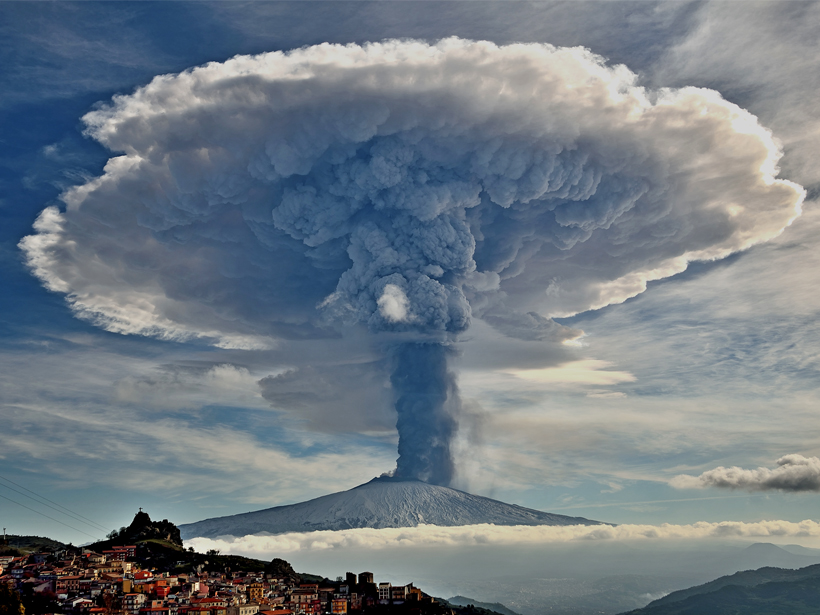
Can We Predict How Volcanic Ash Disperses After an Eruption?

by W. Yan 23 February 201615 March 2022

Researchers investigate what factors influence how particles from a plume spread following a volcanic eruption.
Posted inResearch Spotlights

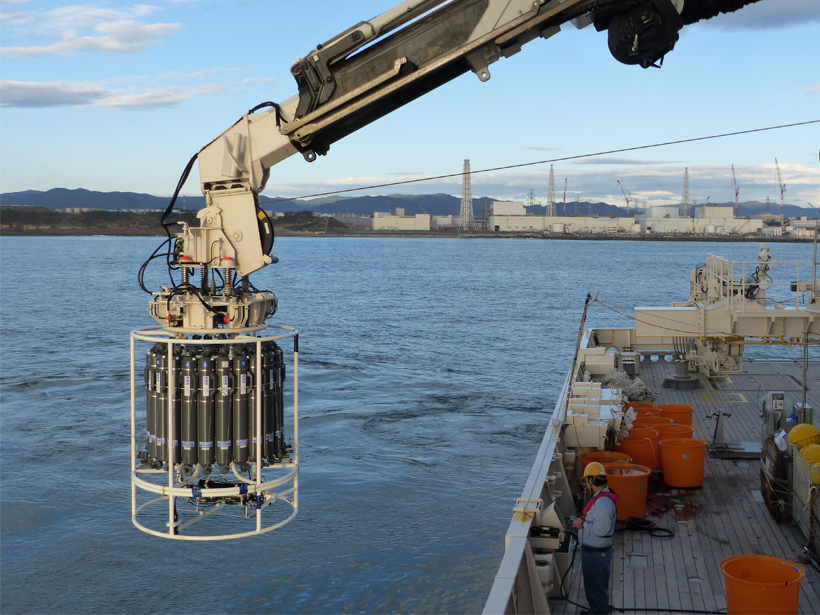
Tracking Radioactive Cesium Released During Fukushima Disaster

by David Shultz 23 February 201621 February 2023

Scientists probe the Pacific to determine how far the damage from one of the largest nuclear meltdowns in history extends.

Posted inAGU News

Exxon, AGU, and Corporate Support

by J. Buhrman 22 February 201625 April 2023

A letter signed by 100 members and other scientists was delivered to the American Geophysical Union on Monday, 22 February, calling on the organization to sever its ties with ExxonMobil.

Posted inNews

White House Showcases Earthquake Alerts, Federal Quake Readiness

by Randy Showstack 22 February 20165 December 2022

A prototype ShakeAlert early warning system approaches alert-ready status as the administration issues an executive order on federal earthquake standards.

Posted inNews

Climate Change Freezes Mountain Wildflower Reproduction

Cody Sullivan by C. Sullivan 22 February 20164 November 2022

New research provides evidence that plants that flower earlier in the year because of climate warming experience more frost damage and have less reproductive success.

Posted inNews

Honoring Earth and Space Scientists

by AGU 22 February 20166 September 2018

AGU members and others in the news

Posted inResearch Spotlights

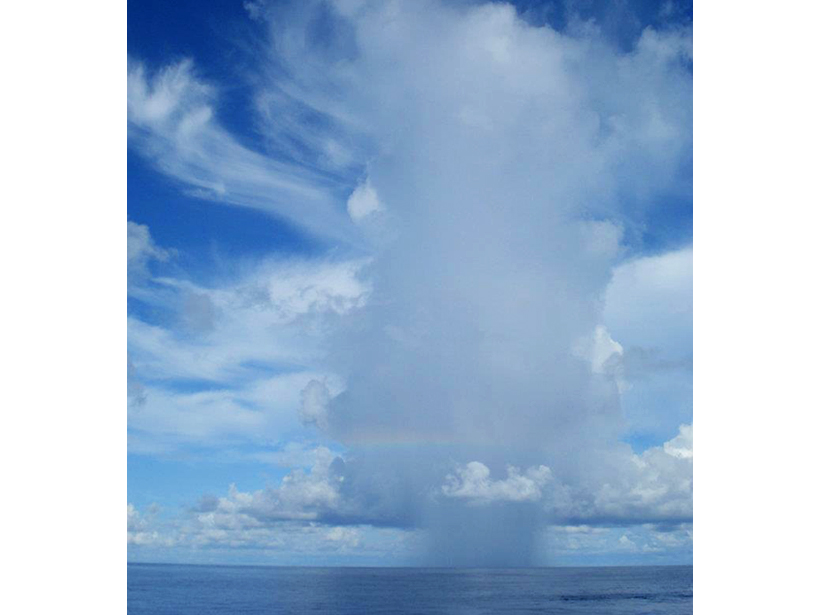
Radar Study Examines Pulsing Tropical Climate

by David Shultz 22 February 201617 August 2022

In the Madden-Julian Oscillation, shear forces caused by air layers slipping and sliding near the equator play a critical role in forming enormous thunderstorms and monsoons.

Posted inResearch Spotlights

Solar Storms Are More Predictable Than Hurricanes

by Mark Zastrow 22 February 201631 May 2022

An encouraging new study finds that solar storms don't propagate chaotically like hurricanes—their arrivals are more predictable, which should make it easier for our planet to prepare for them.
Posted inScience Updates

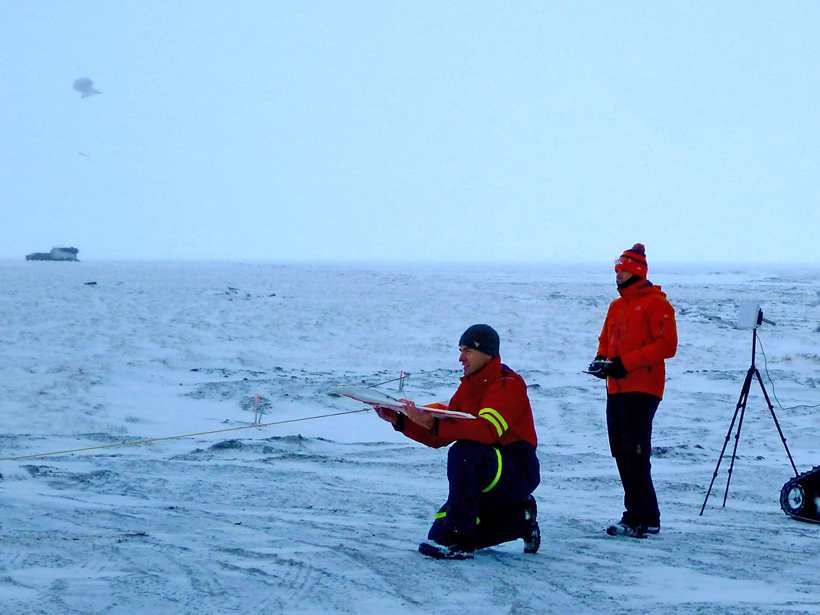
Unmanned Platforms Monitor the Arctic Atmosphere

by G. de Boer, M. D. Ivey, B. Schmid, S. McFarlane and R. Petty 22 February 20163 February 2022

In the Arctic, drones and tethered balloons can make crucial atmospheric measurements to provide a unique perspective on an environment particularly vulnerable to climate change.

Posts pagination

Newer posts 1 … 9 10 11 12 13 … 24 Older posts
Over a dark blue-green square appear the words Special Report: The State of the Science 1 Year On.

Features from AGU Publications

Research Spotlights

Improving Eddy Tower Evapotranspiration Estimates

20 May 202620 May 2026
Editors' Highlights

Recycled Rocks Reveal Subduction Zone Dynamics Off Baja California

21 May 202621 May 2026
Editors' Vox

The Impact of Advocacy: American Geophysical Union’s Days of Action

14 May 202613 May 2026
Eos logo at left; AGU logo at right

About Eos
ENGAGE
Awards
Contact

Advertise
Submit
Career Center
Sitemap

© 2026 American Geophysical Union. All rights reserved Powered by Newspack