
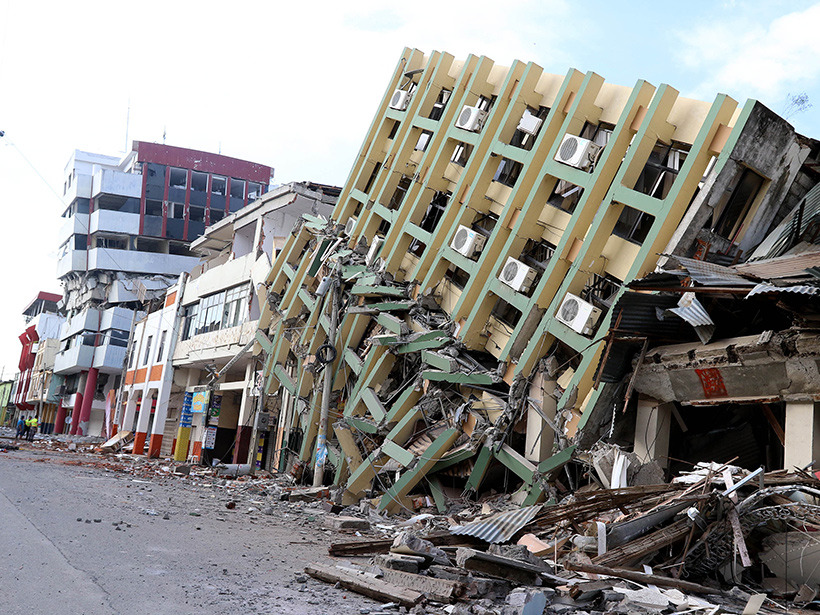

Scientists get one step closer to an updated seismic hazard map that could help Ecuador prepare for future tremors.
Research Spotlights
Research spotlights are plain-language summaries of recent articles published in AGU’s suite of 24 journals.
Posted inResearch Spotlights
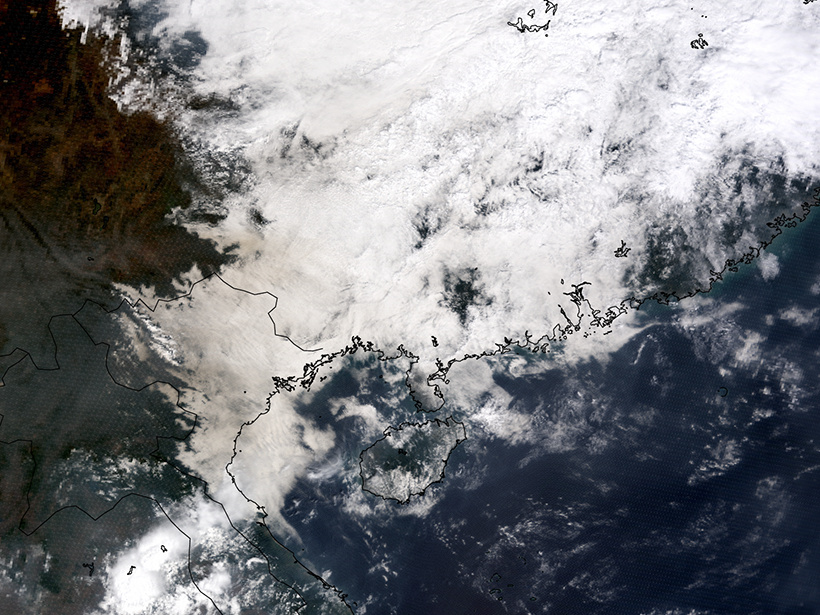
Measuring Atmospheric Aerosols Despite the Clouds
Researchers devise ways for remote sensors to integrate aerosol content above clouds into current methods of measurement.

Posted inResearch Spotlights
How Tropical Cyclones Influence Photosynthesis
A new modeling study gives insight into how tropical cyclones affected ecosystems in the southeastern United States between 2002 and 2012.

Posted inResearch Spotlights
Can Solar and Space Physics Students Find Research Careers?
Research shows that 80% of graduate students who received their Ph.D. between 2001 and 2009 continued to publish for at least 3 years, and 60% are still publishing.

Posted inResearch Spotlights
Chemical Boosts Ozone Production over Southern China

The presence of nitryl chloride in polluted urban air can enhance the production of ozone by up to 41%, according to a new modeling study constrained by ground-based measurements.
Posted inResearch Spotlights
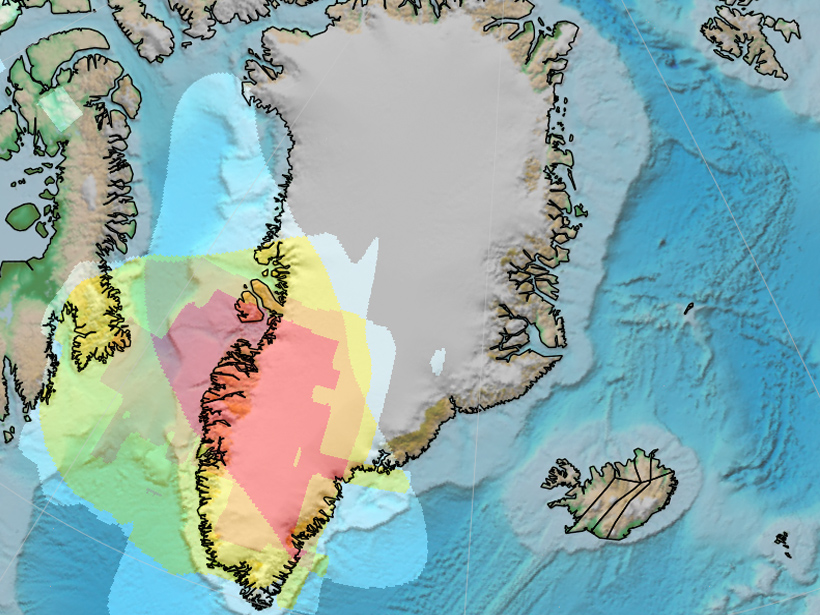
Evidence of an Extinct Ocean Basin Detected Beneath Greenland
An analysis of a seismic and gravity anomaly discovered in the middle mantle sheds new light on ancient oceans, the mantle's evolution, and ancient magmatism in the Arctic.

Posted inResearch Spotlights
Pluto's Interactions with the Solar Wind Are Unique
Space physicists say that Pluto's atmosphere interacts with the solar wind in a never-before-seen hybrid way, one that's both comet-like and planet-like.
Posted inResearch Spotlights
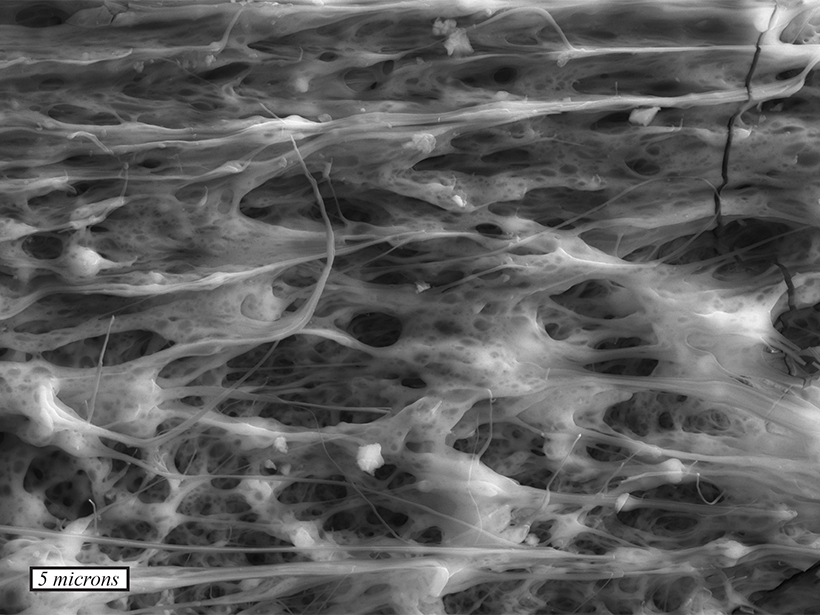
Flash Heating May Lubricate Rubbing Rock Faces in Earthquakes
A new laboratory study examines the small-scale physics at play as two pieces of granite are smashed together in a scaled-down version of a real earthquake.
Posted inResearch Spotlights
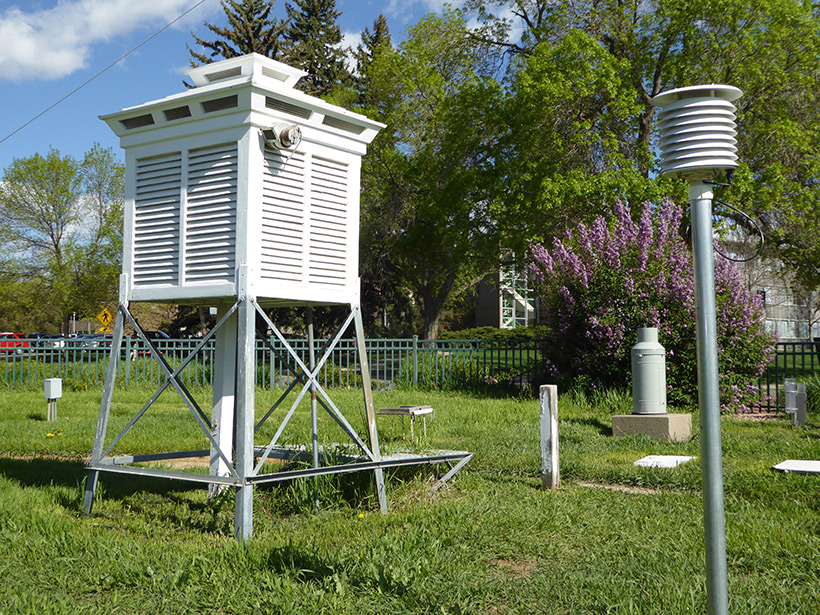
Toward a Reassessment of Daily Temperature Range Trends
To reduce the uncertainty associated with this important climate change index, recent studies have developed a new diurnal temperature range data set and compared the results to previous estimates.
Posted inResearch Spotlights
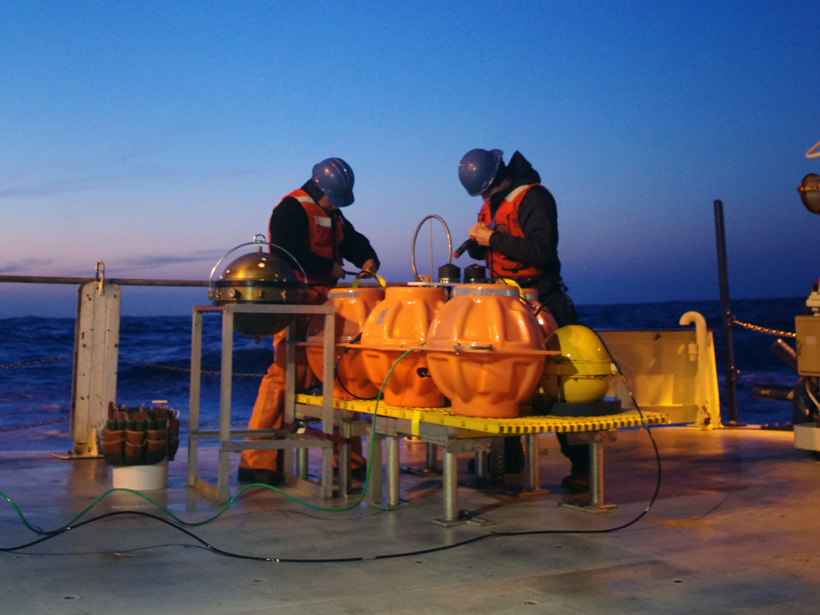
Streamlining Rapid Tsunami Forecasting
With enough sensors, traditional forecasting methods could be replaced by models continuously updated with real-time wave data.