• About
  • Special Reports
  • Topics
    • Climate
    • Earth Science
    • Oceans
    • Space & Planets
    • Health & Ecosystems
    • Culture & Policy
    • Education & Careers
    • Opinions
  • Projects
    • Postcards From the Field
    • ENGAGE
    • Editors’ Highlights
    • Editors’ Vox
    • Eos en Español
    • Eos 简体中文版
    • Print Archive: 2015–2025
  • Policy Tracker
  • Blogs
    • Research & Developments
    • The Landslide Blog
  • Newsletter
  • Submit to Eos
  • AGU.org
  • Career Center
  • Join AGU
  • Give to AGU
  • About
  • Special Reports
  • Topics
    • Climate
    • Earth Science
    • Oceans
    • Space & Planets
    • Health & Ecosystems
    • Culture & Policy
    • Education & Careers
    • Opinions
  • Projects
    • Postcards From the Field
    • ENGAGE
    • Editors’ Highlights
    • Editors’ Vox
    • Eos en Español
    • Eos 简体中文版
    • Print Archive: 2015–2025
  • Policy Tracker
  • Blogs
    • Research & Developments
    • The Landslide Blog
  • Newsletter
  • Submit to Eos
Skip to content
  • AGU.org
  • Career Center
  • Join AGU
  • Give to AGU
Eos

Eos

Science News by AGU

Support Eos
Sign Up for Newsletter
  • About
  • Special Reports
  • Topics
    • Climate
    • Earth Science
    • Oceans
    • Space & Planets
    • Health & Ecosystems
    • Culture & Policy
    • Education & Careers
    • Opinions
  • Projects
    • Postcards From the Field
    • ENGAGE
    • Editors’ Highlights
    • Editors’ Vox
    • Eos en Español
    • Eos 简体中文版
    • Print Archive: 2015–2025
  • Policy Tracker
  • Blogs
    • Research & Developments
    • The Landslide Blog
  • Newsletter
  • Submit to Eos

Bayesian analyses

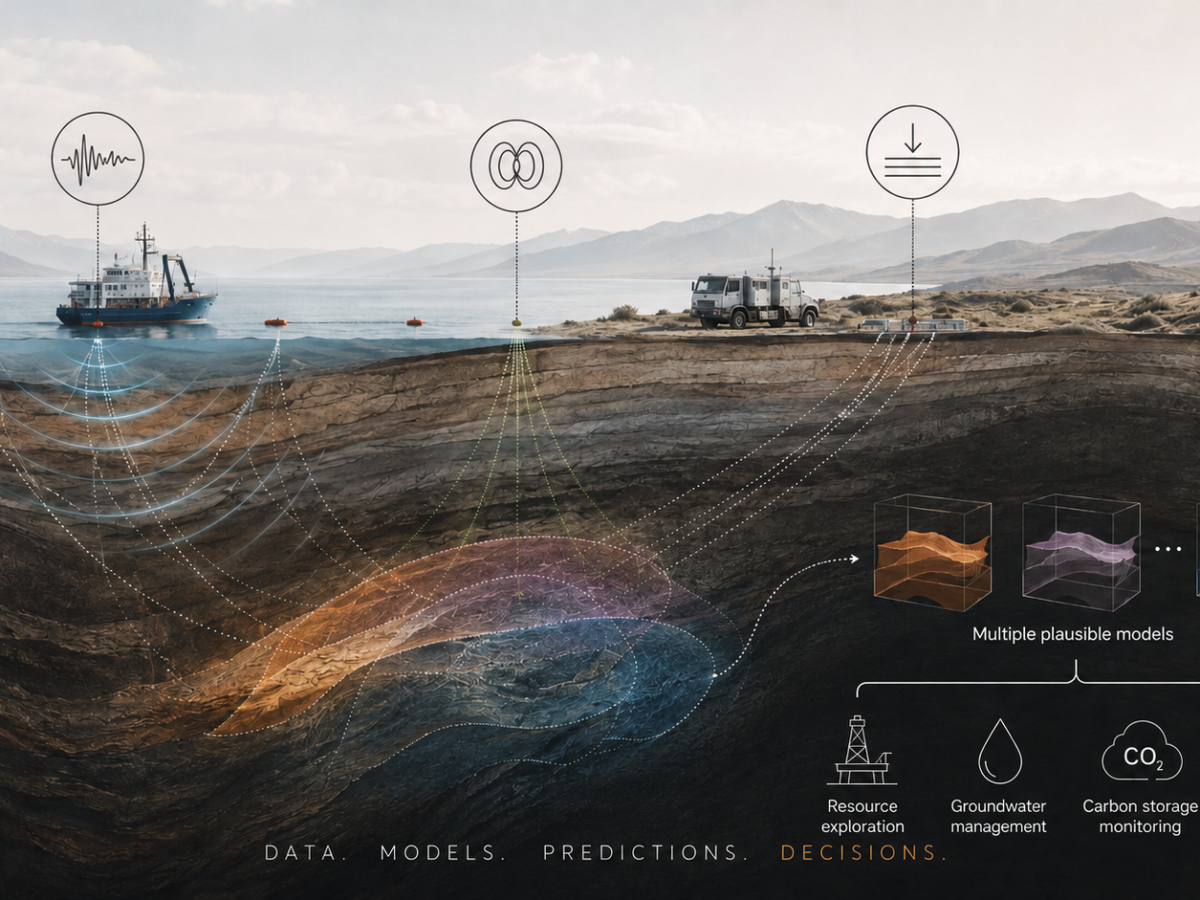
Depiction of geophysical measurements being taken on a cross section of Earth's crust.
Posted inEditors' Vox

How Can We Make Better Decisions About What Lies Underground?

by Mingliang Liu, Dario Grana, Klaus Mosegaard, Mrinal K. Sen, Minghui Xu and Tapan Mukerji 10 September 202615 September 2026

Geophysical data offer incomplete clues about the subsurface. Bayesian inversion turns them into plausible scenarios and shows which uncertainties matter for real-world decisions.
Posted inEditors' Highlights

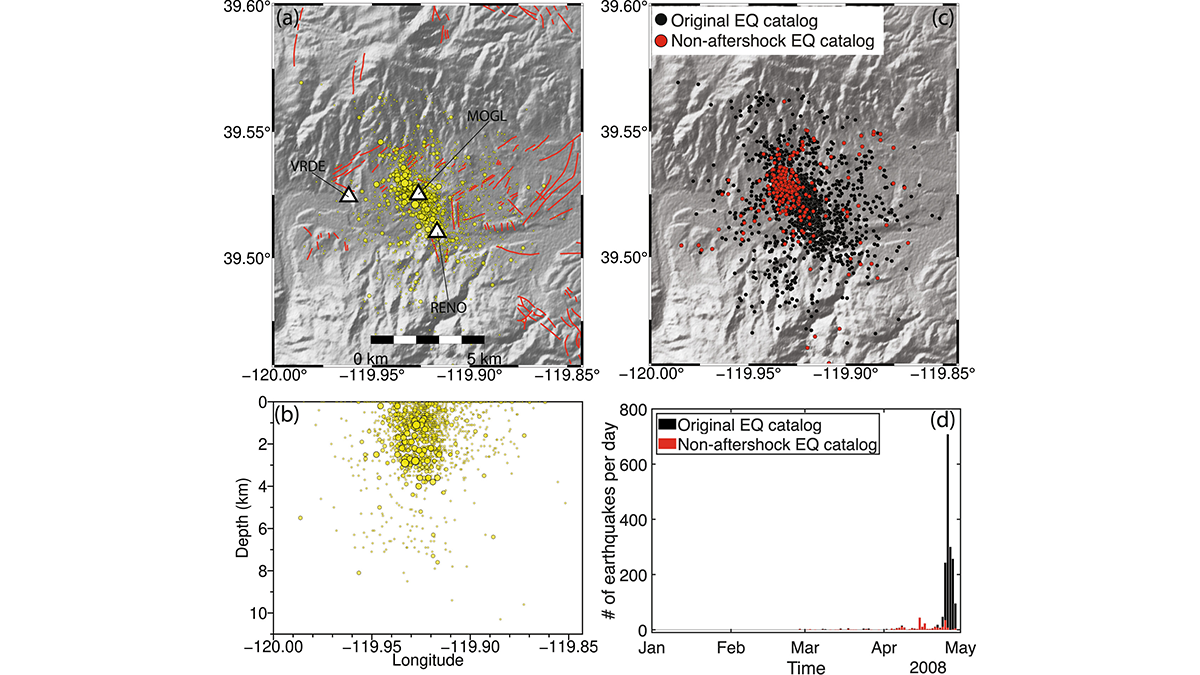
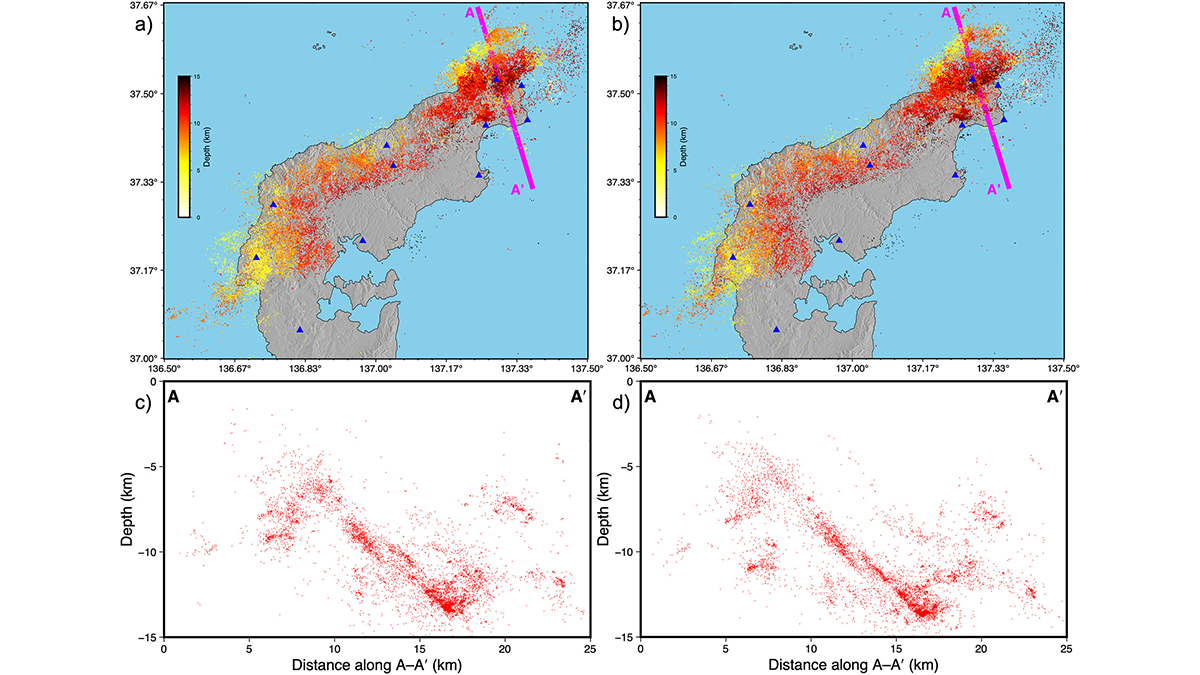
Taming the Seismicity Tsunami with a Scalable Bayesian Framework

by Hsin-Hua Huang 7 April 202615 September 2026

By combining the power of artificial intelligence with advanced physics simulations, a new framework called “SPIDER” allows us to map seismic activity with unprecedented clarity.
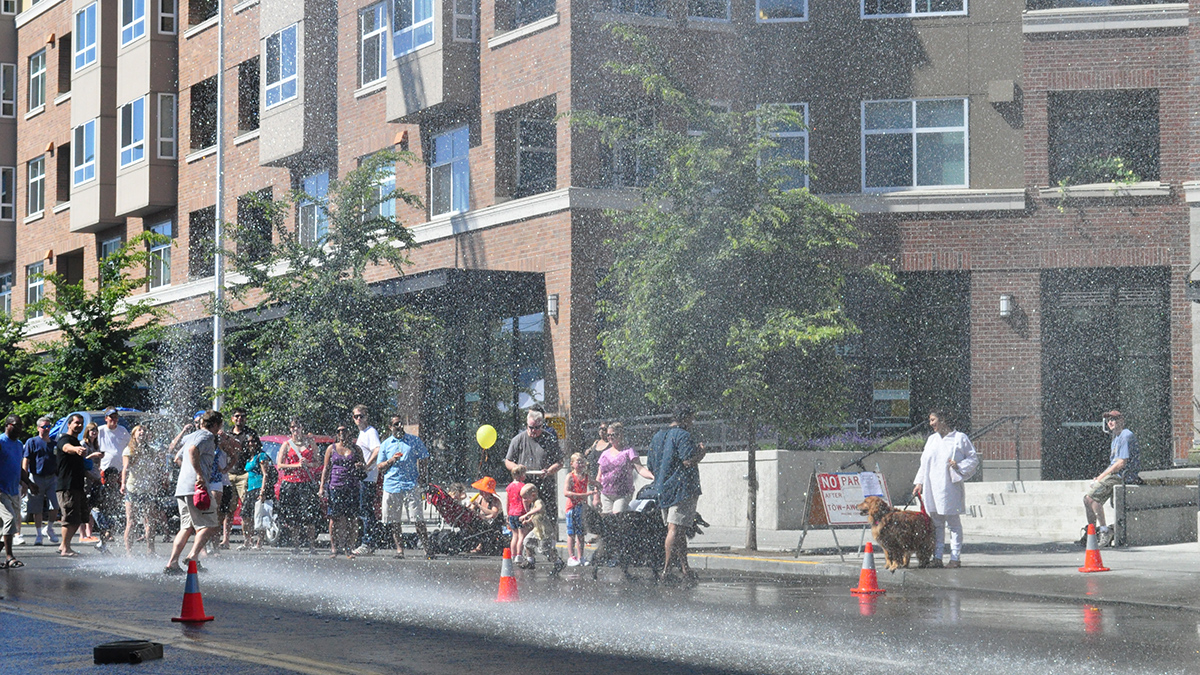
A spray of water droplets falls onto a city street on a sunny day in front of a brown, multistory building. A crowd of people and dogs watch and play in the spray.
Posted inResearch Spotlights

Extreme Heat in U.S. Cities Revealed at High Resolution

Sarah Stanley, Science Writer by Sarah Stanley 10 September 202515 September 2026

Data from personal weather stations power a novel way to detect urban heat islands.
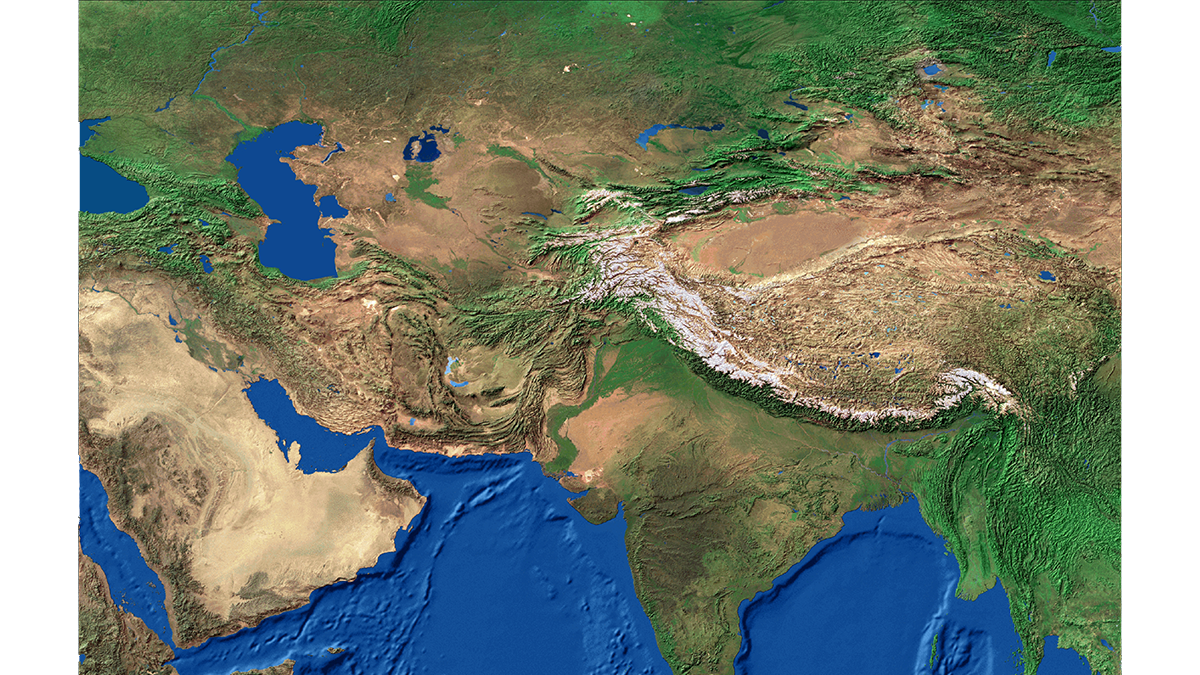
Remote sensing image of the Pan-Third Pole region
Posted inEditors' Vox

Harmonizing Theory and Data with Land Data Assimilation

by Xin Li and Feng Liu 7 May 202415 September 2026

Land data assimilation advances scientific understanding and serves as an engineering tool for land surface process studies, reflecting the trend of harmonizing theory and data in the big data era.
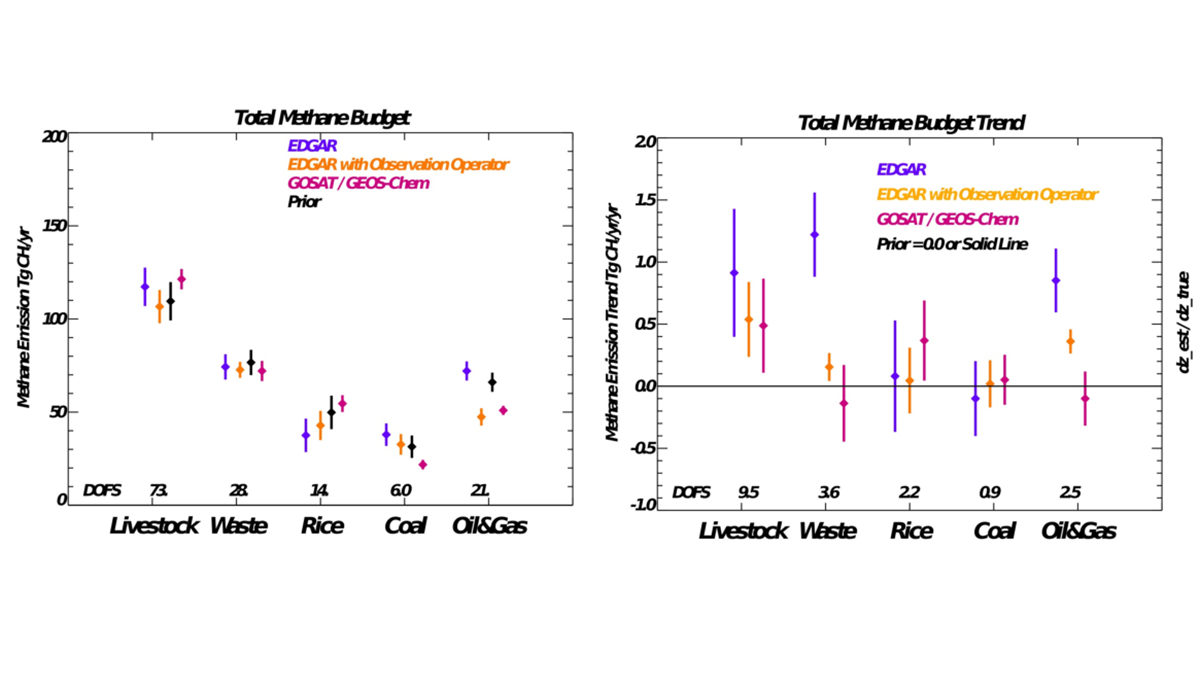
Two graphs from the paper.
Posted inEditors' Highlights

Using Bayesian Estimation to Improve Methane Inventories

by Donald Wuebbles 21 August 202315 September 2026

A Bayesian, optimal estimation evaluation of state-of-the-art methane inventory with satellite-based emissions from 2009 to 2018 finds substantial differences for livestock, rice, and coal emissions.
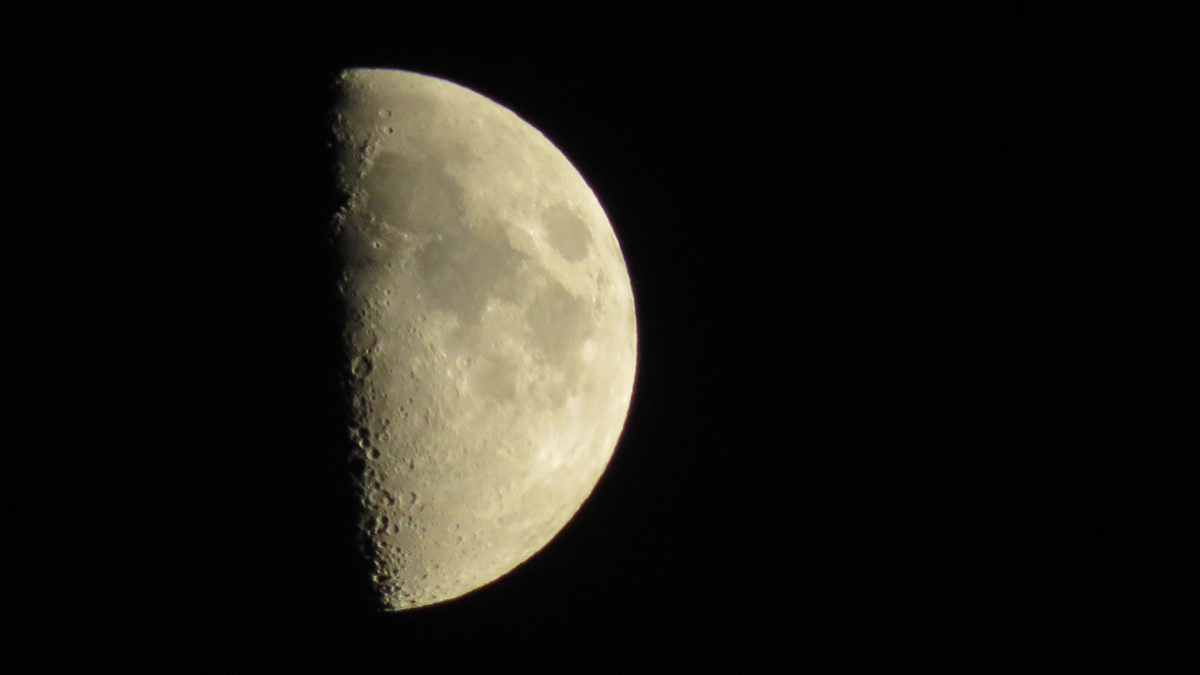
View of the half-illuminated Moon surrounded by black space
Posted inResearch Spotlights

Visualizing the Deep Insides of Planets and Moons

Sarah Stanley, Science Writer by Sarah Stanley 10 August 202315 September 2026

A novel method uses gravity data to determine where density anomalies lie inside planetary bodies.
Graphs from the paper
Posted inEditors' Highlights

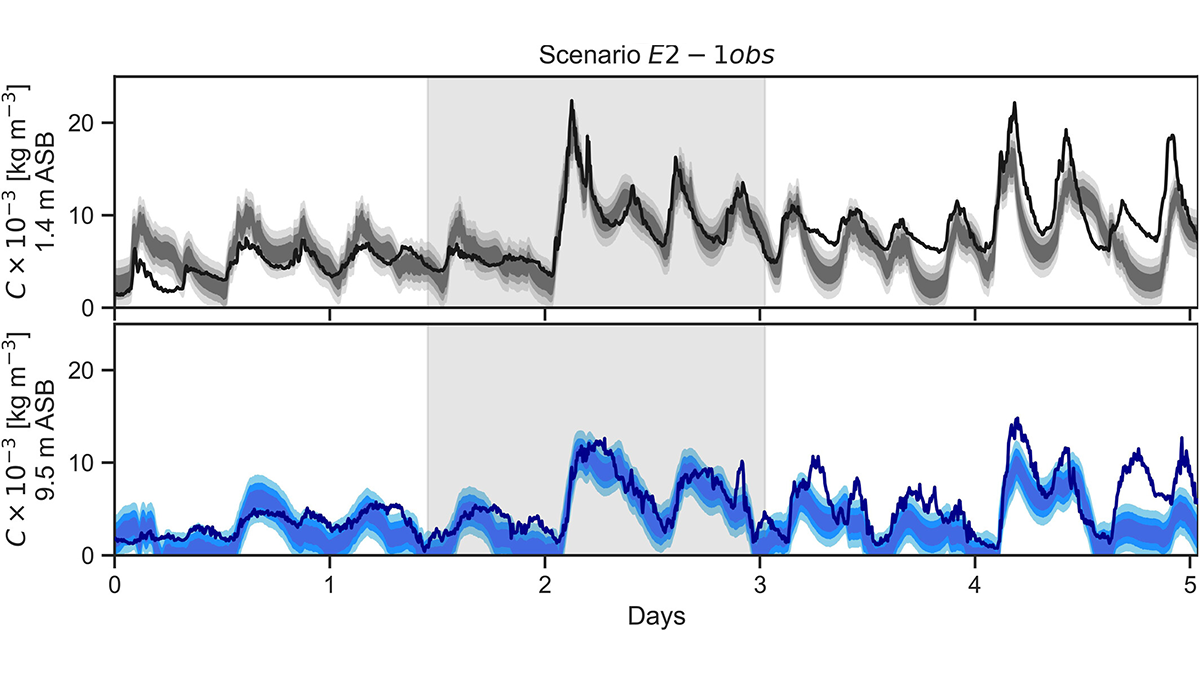
Using Bayesian Inference to Improve Sediment-Transport Models

by Terence O'Kane 6 July 202315 September 2026

A new Bayesian approach is used for the estimation and uncertainty quantification of unobservable parameters required to model tracer evolution in ocean sediment transport and tracer concentrations.

Diagram from the paper
Posted inEditors' Highlights

Tracking Human CO2 Emissions from Medium-Sized Cities

by Bo Zheng 28 June 202315 September 2026

Atmospheric inverse models, combined with observations, successfully tracked modest CO2 emission reductions in Salt Lake City during the first COVID-19 lockdown in 2020.

Graphs from the paper.
Posted inEditors' Highlights

Bayesian Inversion Used to Recover Geometry of Ruptured Fault

by Elisa Tinti 21 April 202315 September 2026

A new Bayesian inversion framework is used to solve non-planar geometry of a ruptured fault from spatially variable slip and rake measured with geodesy.

The Krafla geothermal power station in northern Iceland
Posted inResearch Spotlights

Innovative Model Elucidates Geothermal Energy Resource

Aaron Sidder, freelance science writer by Aaron Sidder 14 March 202215 September 2026

Data from deep wells and a Bayesian modeling framework shed new light on one of Iceland’s valuable geothermal reservoirs.

Posts pagination

1 2 Older posts
Over a dark blue-green square appear the words Special Report: The State of the Science 1 Year On.

Features from AGU Publications

Research Spotlights

How the 2024 Solar Superstorm Drained Earth’s Radiation Belt

14 September 202614 September 2026
Editors' Highlights

Extreme Equatorial Storms are Larger and More Persistent Under Warming

15 September 202614 September 2026
Editors' Vox

In Appreciation of AGU’s Outstanding Reviewers of 2025

14 September 202610 September 2026
Eos logo at left; AGU logo at right

About Eos
ENGAGE
Awards
Contact

Advertise
Submit
Career Center
Sitemap

© 2026 American Geophysical Union. All rights reserved Powered by Newspack