• About
  • Special Reports
  • Topics
    • Climate
    • Earth Science
    • Oceans
    • Space & Planets
    • Health & Ecosystems
    • Culture & Policy
    • Education & Careers
    • Opinions
  • Projects
    • Postcards From the Field
    • ENGAGE
    • Editors’ Highlights
    • Editors’ Vox
    • Eos en Español
    • Eos 简体中文版
    • Print Archive: 2015–2025
  • Policy Tracker
  • Blogs
    • Research & Developments
    • The Landslide Blog
  • Newsletter
  • Submit to Eos
  • AGU.org
  • Career Center
  • Join AGU
  • Give to AGU
  • About
  • Special Reports
  • Topics
    • Climate
    • Earth Science
    • Oceans
    • Space & Planets
    • Health & Ecosystems
    • Culture & Policy
    • Education & Careers
    • Opinions
  • Projects
    • Postcards From the Field
    • ENGAGE
    • Editors’ Highlights
    • Editors’ Vox
    • Eos en Español
    • Eos 简体中文版
    • Print Archive: 2015–2025
  • Policy Tracker
  • Blogs
    • Research & Developments
    • The Landslide Blog
  • Newsletter
  • Submit to Eos
Skip to content
  • AGU.org
  • Career Center
  • Join AGU
  • Give to AGU
Eos

Eos

Science News by AGU

Support Eos
Sign Up for Newsletter
  • About
  • Special Reports
  • Topics
    • Climate
    • Earth Science
    • Oceans
    • Space & Planets
    • Health & Ecosystems
    • Culture & Policy
    • Education & Careers
    • Opinions
  • Projects
    • Postcards From the Field
    • ENGAGE
    • Editors’ Highlights
    • Editors’ Vox
    • Eos en Español
    • Eos 简体中文版
    • Print Archive: 2015–2025
  • Policy Tracker
  • Blogs
    • Research & Developments
    • The Landslide Blog
  • Newsletter
  • Submit to Eos

faults

Posted inNews

Subtle Seismic Movements May Help Forecast Large Earthquakes

JoAnna Wendel, freelance science writer and illustrator by JoAnna Wendel 1 February 20166 October 2021

Where a plate of Earth's crust slides under another and when frequent episodes of plate slippage occur without noticeable earthquakes, large temblors will more likely strike, a new study finds.
Posted inResearch Spotlights

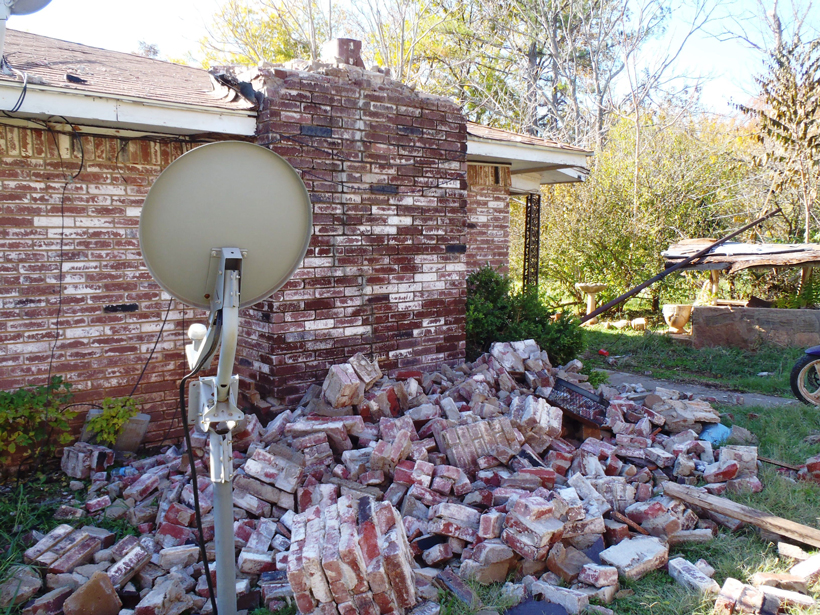
Oklahoma's Dormant Faults Hide Huge Seismic Risk Potential

by L. Strelich 15 January 20165 December 2022

Researchers look at induced seismicity data in Oklahoma to spot an increase of stress in faults that could cause even more damage than recent quakes.

Posted inNews

Active Mud Volcano Field Discovered off Southeast Alaska

by R. Berkowitz 30 November 20157 July 2025

A cruise to study landslide potential along an earthquake-prone fault found a surprising methane plume.

Posted inResearch Spotlights

Aftershocks of Old Quakes Still Shake New Madrid Seismic Zone

by L. Strelich 24 November 201518 October 2022

Geodetic data show that earthquakes in 1450 and 1811–1812 may be responsible for present-day seismic activity in the region.
Posted inResearch Spotlights

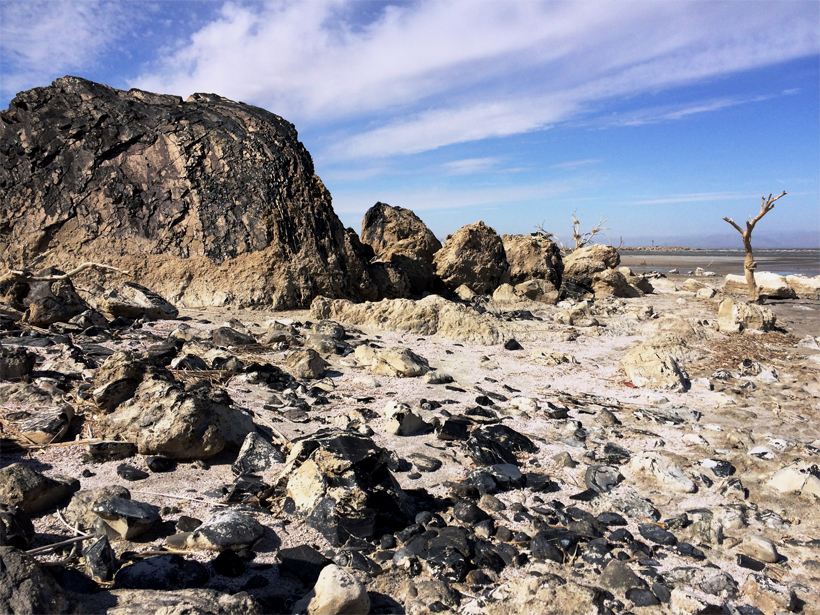
Dating Lava Domes in California's Salton Trough

by Terri Cook 10 November 20159 May 2023

Scientists use a trio of techniques to resolve the age and duration of rhyolite volcanism of the Salton Buttes.

Posted inResearch Spotlights

Extracting New Meaning from Seismological Data

by C. Minnehan 9 November 201511 May 2022

Scientists use noise data collected at the Long Beach dense array to measure elusive high-frequency surface waves.

Posted inResearch Spotlights

Cracks on Comets Most Likely Caused by Thermal Stress

by David Shultz 21 October 20156 October 2021

Networks of cracks in the surface of 67P/Churyumov-Gerasimenko may have originated from rapid heating and cooling of the comet's surface.

Posted inResearch Spotlights

Probing for Earthquakes' Origins

by J. Calderone 22 September 201524 March 2023

To better understand how earthquakes nucleate, scientists spy on the Alpine Fault in New Zealand.

Posted inResearch Spotlights

Surface Folds Hint at Magnitude of Slip Along Thrust Faults

by J. Rosen 1 May 201525 August 2022

The shape of deformed sediments at the surface may allow researchers to estimate the cumulative slip along thrust faults such as the Chelungpu fault in Taiwan.

Posted inAGU News

Fulton Receives 2014 Jason Morgan Early Career Award

by AGU 17 April 20155 May 2023

Patrick Fulton received the 2014 Jason Morgan Early Career Award at the 2014 American Geophysical Union Fall Meeting, held 15–19 December in San Francisco, Calif. The award is for significant early career contributions in tectonophysics.

Posts pagination

Newer posts 1 … 16 17 18 19 Older posts
Over a dark blue-green square appear the words Special Report: The State of the Science 1 Year On.

Features from AGU Publications

Research Spotlights

As Wildfires Increase in the West, So Does Suppression Spending

10 June 202610 June 2026
Editors' Highlights

Pre-Existing Structure and Stress Shape Geothermal-Induced Seismicity

2 June 20261 June 2026
Editors' Vox

Small-Scale Indian Ocean Dynamics Underpin Marine Ecology and Climate

4 June 20263 June 2026
Eos logo at left; AGU logo at right

About Eos
ENGAGE
Awards
Contact

Advertise
Submit
Career Center
Sitemap

© 2026 American Geophysical Union. All rights reserved Powered by Newspack