
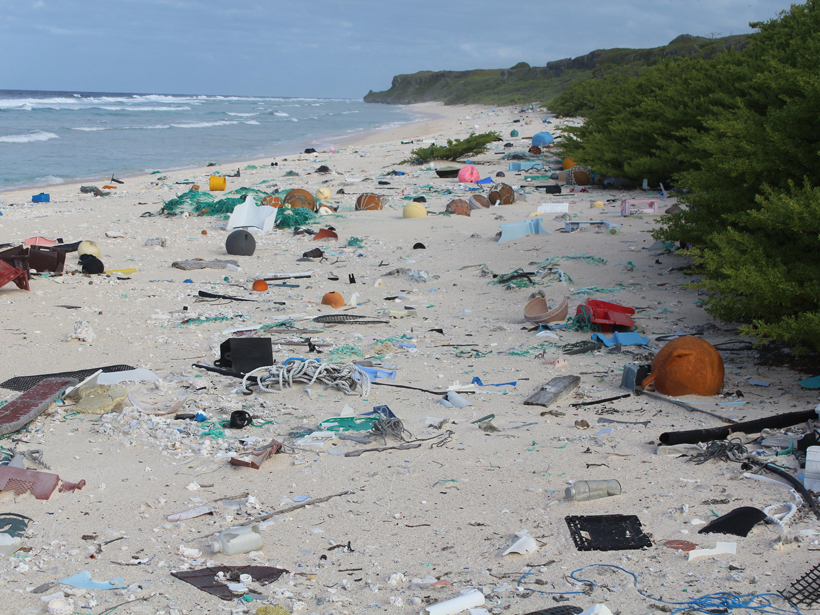

Despite the vastness of Earth’s oceans, human plastic pollution overwhelms even remote corners.
Hazards & Disasters
Posted inNews
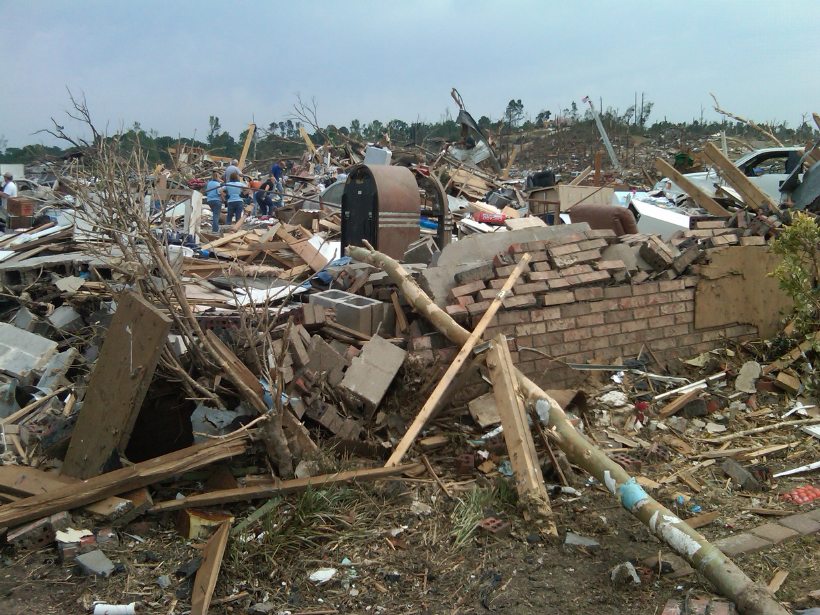
Tornado Casualties Depend More on Storm Energy Than Population

National Weather Service data from nearly 900 tornadoes and a principle of economics reveal the relationship between storm energy, population, and casualty count.

Posted inResearch Spotlights
Faulty Assumptions Impair Earthquake Hazard Assessment in Italy

Along faults in the Central Apennine Mountains, weather and landslides may cause rock exposure that is mistakenly attributed to earthquakes.
Posted inNews
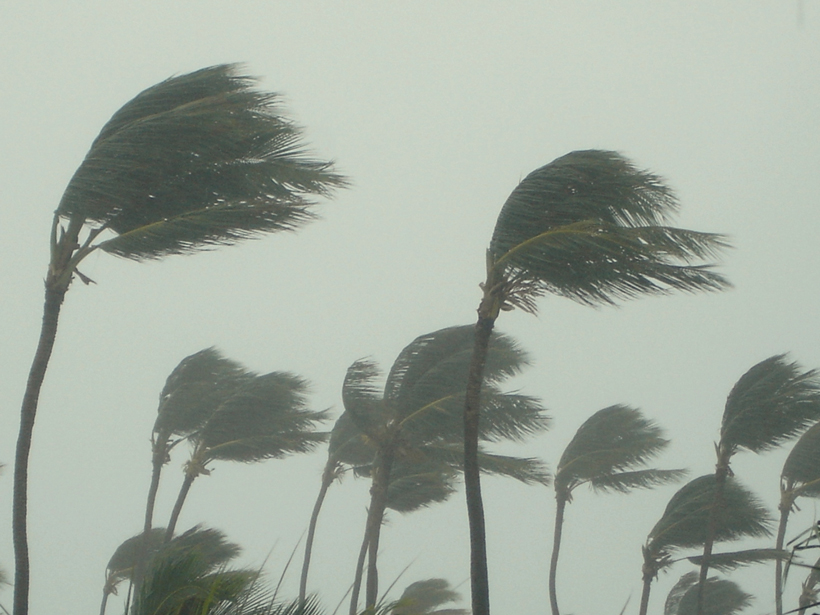
NOAA Officials Stress Hurricane Danger and Storm Safety

Agency scientists on a Hurricane Awareness Tour showcase NOAA research capabilities and warn that although winds can cause severe damage, the biggest killers are storm surges and inland flooding.

Posted inNews
Plague Bug May Have Lurked in Medieval England Between Outbreaks

A new analysis of climate records in England and Europe’s Low Countries suggests that the disease-causing bacterium persisted in rodents between recurrences in people.
Posted inNews
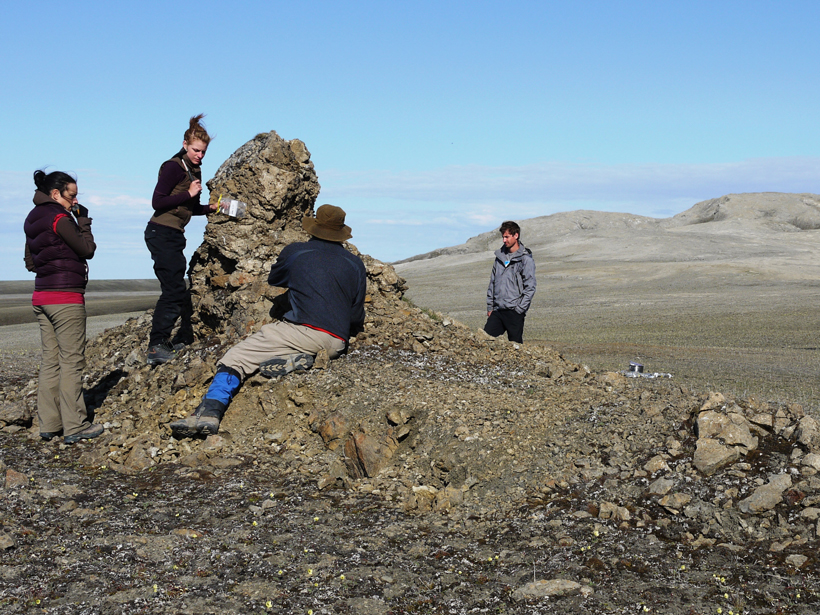
Ancient Methane Seeps Tell Tale of Sudden Warming
Newly discovered rock mounds left by ancient methane seeps give scientists clues that methane on ancient ocean floor was released by ancient global warming.

Posted inResearch Spotlights
Catching Glimpses of Centuries-Old Earthquakes
Researchers in the western United States survey the earthquakes that have torn up California for the past millennium.

Posted inScience Updates
Integrating Research of the Sun-Earth System
International Symposium on Recent Observations and Simulations of the Sun-Earth System III; 11–16 September 2016, Varna, Bulgaria

Posted inScience Updates
Understanding Kamchatka’s Extraordinary Volcano Cluster
An international seismological collaboration in Kamchatka, Russia, investigates the driving forces of one of the world’s largest, most active volcano clusters.
Posted inEditors' Vox
Reducing Uncertainty in Hazard Prediction
The editors of a new book describe how to characterize uncertainty in natural hazards, the incorporation of uncertainty into modeling, its contribution to better decision-making, and research needs.