
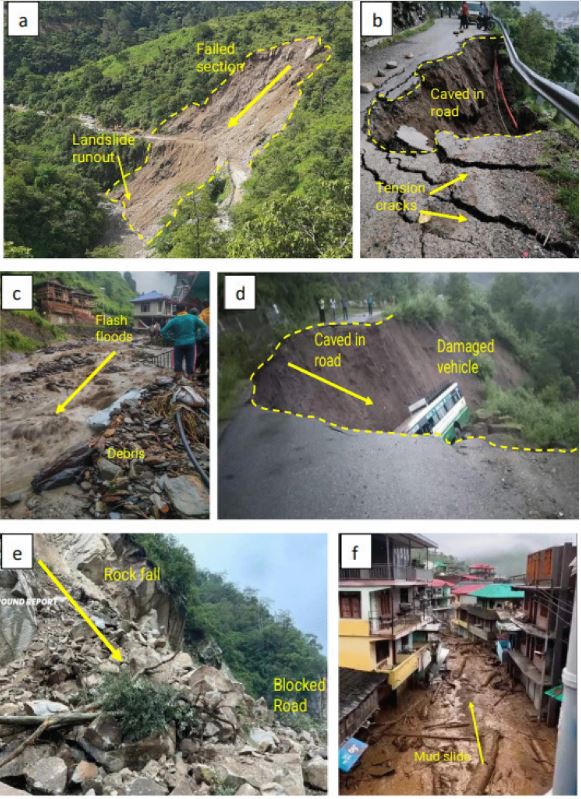
The Landslide Blog is written by Dave Petley, who is widely recognized as a world leader in the study and management of landslides. In July 2023, northern India was affected by intense and prolonged rainfall that triggered multiple landslides. Himachal Pradesh, in the NW Himalayas, was particularly badly impacted. A new paper published in the […]
landslides
Posted inThe Landslide Blog
Professor Denys Brunsden
The Landslide Blog is written by Dave Petley, who is widely recognized as a world leader in the study and management of landslides. Professor Denys Brunsden, one of the most influential and impactful people in geomorphology, sadly died last week, at the age of 87. He will be missed greatly by us all. Denys described […]
Posted inThe Landslide Blog
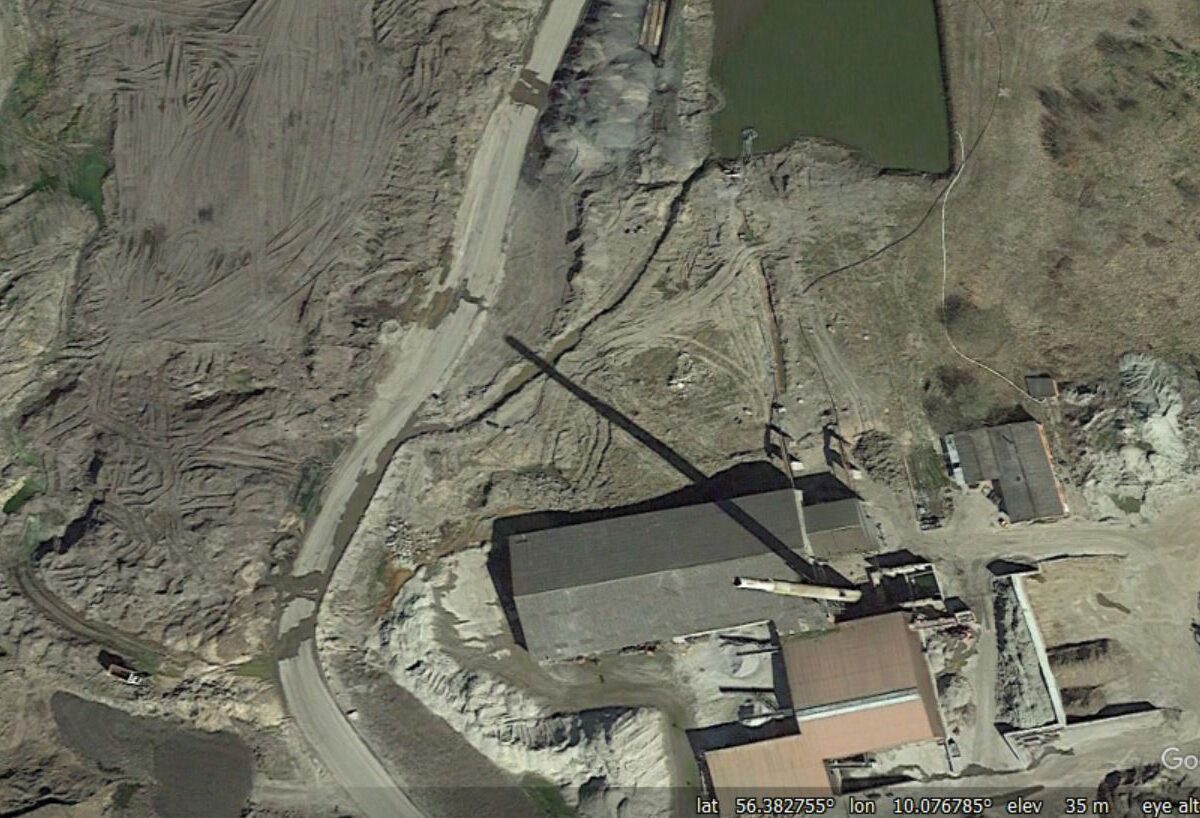
The Nordic Waste landslide scandal in Denmark
The Landslide Blog is written by Dave Petley, who is widely recognized as a world leader in the study and management of landslides. In Denmark , there is a substantial scandal rumbling on around a substantial landslide at a site owned by Nordic Waste, a company specialising in dealing with contaminated soil. The site in […]

Posted inThe Landslide Blog
The 22 January 2023 landslide at Zhenxiong in Yunnan Province, China
The Landslide Blog is written by Dave Petley, who is widely recognized as a world leader in the study and management of landslides. At 5:51 am local time on 22 January 2023, a significant landslide occurred in Liangshui Village in Zhenxiong County, Yunnan Province of China. It is reported that 47 people from 18 households […]

Posted inThe Landslide Blog
Planet Labs imagery of the Mount Hanang debris flows in Tanzania
On 21 December 2023, Planet Labs captured imagery of the Mount Hanang debris flows in Tanzania, highlighting that many failures coalesced into channelised debris flows.

Posted inThe Landslide Blog
Trends in the occurrence of landslides in Nepal from 2011 to 2020
The Landslide Blog is written by Dave Petley, who is widely recognized as a world leader in the study and management of landslides. Nepal is one of the most landslide prone countries on earth, a consequence of its topography, geology, climate and socio-economic setting. I have long had an interest in landslides in Nepal, and […]

Posted inThe Landslide Blog
Landslides from the 1 January 2024 Noto Peninsula Earthquake in Japan
The Landslide Blog is written by Dave Petley, who is widely recognized as a world leader in the study and management of landslides. On 1 January 2024, the Mw=7.5 Noto Peninsula Earthquake struck the Ishikawa Prefecture in Japan. AS of the time of writing, 168 people are known to have lost their lives, whilst up […]
Posted inThe Landslide Blog
Giant landslides in the Vaigat strait in Greenland
The Landslide Blog is written by Dave Petley, who is widely recognized as a world leader in the study and management of landslides. A fascinating and important open access paper has just been published in the journal Geology (Svennevig et al. 2023) that seeks to understand the generation of tsunami waves in high latitude fjord […]
Posted inThe Landslide Blog
An interesting failure of an engineered slope in Puchong, Malaysia
The Landslide Blog is written by Dave Petley, who is widely recognized as a world leader in the study and management of landslides. On 16 December 2023 an interesting failure occurred on an engineered slope at Taman Wawasan in Puchong, Malaysia. The location of the slope is [3.0378, 101.6215]. The failure removed the roadway in […]
Posted inNews
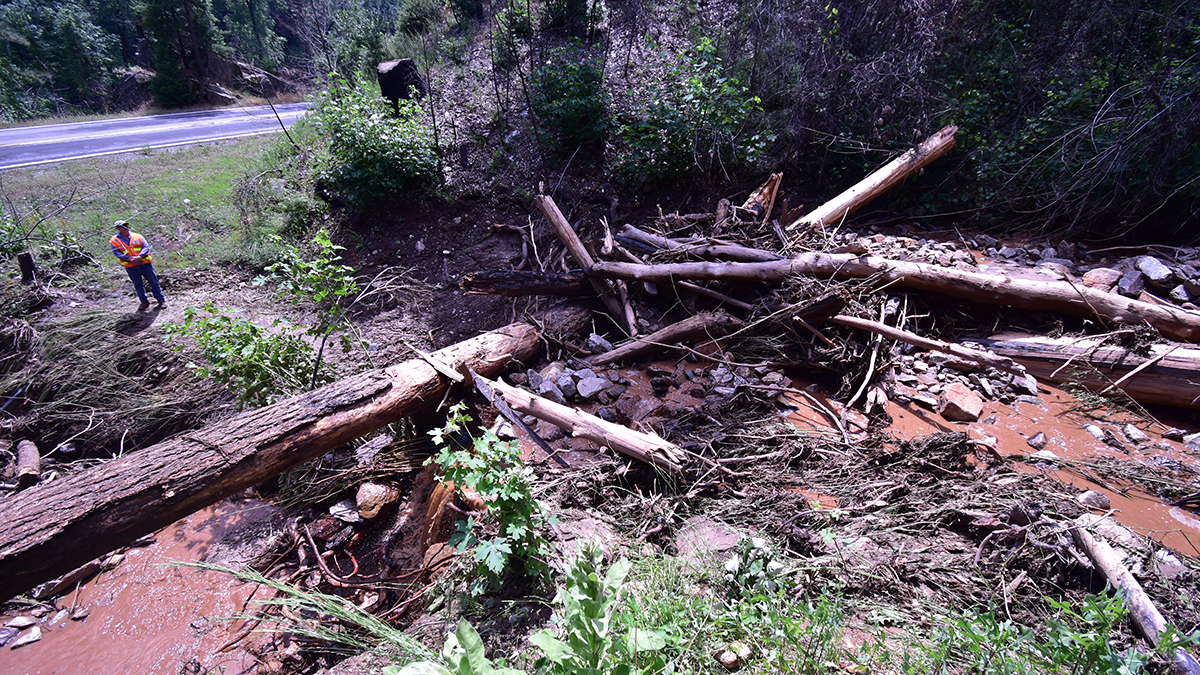
Postfire Debris Flows Strike in a Puzzling Pattern
California geologists are improving their understanding and forecasting of which slopes in wildfire-burned areas might fail during heavy rainstorms.