• About
  • Sections
  • Topics
    • Climate
    • Earth Science
    • Oceans
    • Space & Planets
    • Health & Ecosystems
    • Culture & Policy
    • Education & Careers
    • Opinions
  • Projects
    • Postcards From the Field
    • ENGAGE
    • Editors’ Highlights
    • Editors’ Vox
    • Eos en Español
    • Eos 简体中文版
    • Print Archive: 2015–2025
  • Science Policy Tracker
  • Blogs
    • Research & Developments
    • The Landslide Blog
  • Newsletter
  • Submit to Eos
  • AGU.org
  • Career Center
  • Join AGU
  • Give to AGU
  • About
  • Sections
  • Topics
    • Climate
    • Earth Science
    • Oceans
    • Space & Planets
    • Health & Ecosystems
    • Culture & Policy
    • Education & Careers
    • Opinions
  • Projects
    • Postcards From the Field
    • ENGAGE
    • Editors’ Highlights
    • Editors’ Vox
    • Eos en Español
    • Eos 简体中文版
    • Print Archive: 2015–2025
  • Science Policy Tracker
  • Blogs
    • Research & Developments
    • The Landslide Blog
  • Newsletter
  • Submit to Eos
Skip to content
  • AGU.org
  • Career Center
  • Join AGU
  • Give to AGU
Eos

Eos

Science News by AGU

Support Eos
Sign Up for Newsletter
  • About
  • Sections
  • Topics
    • Climate
    • Earth Science
    • Oceans
    • Space & Planets
    • Health & Ecosystems
    • Culture & Policy
    • Education & Careers
    • Opinions
  • Projects
    • Postcards From the Field
    • ENGAGE
    • Editors’ Highlights
    • Editors’ Vox
    • Eos en Español
    • Eos 简体中文版
    • Print Archive: 2015–2025
  • Science Policy Tracker
  • Blogs
    • Research & Developments
    • The Landslide Blog
  • Newsletter
  • Submit to Eos

magnetic fields & magnetism

Posted inResearch Spotlights

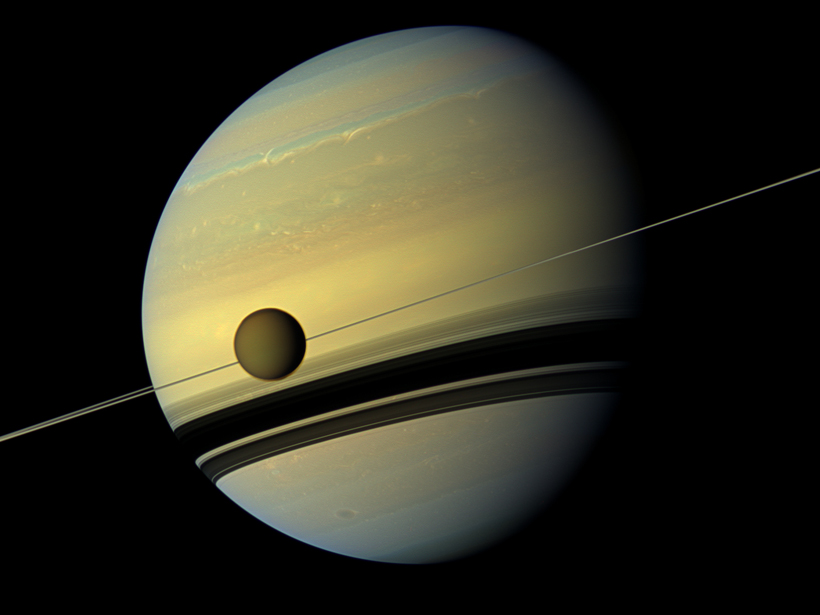
When the Sun Goes Quiet, Titan Gets Gassy

by Mark Zastrow 11 May 20157 July 2025

Observations from NASA's Cassini probe show that the level of methane in Titan's atmosphere depends on the Sun's 11-year cycle of magnetic activity.

Posted inResearch Spotlights

What Causes Sunspot Pairs?

JoAnna Wendel, freelance science writer and illustrator by JoAnna Wendel 5 May 201518 January 2023

Analysis of magnetic fields on the Sun's surface offers a new clue on why sunspots appear.

Posted inResearch Spotlights

Scientists Watch Solar Winds Blast Mercury's Magnetic Field

by E. Betz 25 March 201518 July 2023

A NASA team used the MESSENGER spacecraft to analyze Mercury's magnetosphere during intense solar wind pressure.

Posted inResearch Spotlights

Large-Scale Electric Currents May Flow Through Mercury’s Crust

by J. Orwig 18 March 20157 July 2025

NASA's MESSENGER spacecraft discovered electric currents in Mercury's magnetosphere directed toward and away from the planet. Do the currents reach the planet? If so, where do they go?

Posted inResearch Spotlights

Satellite Data Yield Detailed Picture of the Lunar Wake

by J. Rosen 9 March 20157 July 2025

Researchers use satellite data to characterize the physical properties of the lunar wake and the processes that govern it.

Posted inResearch Spotlights

Can Scientists Boost Solar Modeling Despite a Lack of Data?

by C. Schultz 5 February 201515 March 2022

Researchers show that a data processing technique could salvage useful information from raw solar observations, opening the door to improved understanding of the solar dynamo.

Posted inResearch Spotlights

How the Solar Wind May Affect Weather and Climate

JoAnna Wendel, freelance science writer and illustrator by JoAnna Wendel 15 January 20158 March 2022

The Sun's influence on the Earth's climate is complicated, but researchers are slowly figuring out how the solar wind can indirectly affect clouds over the poles.

Posted inNews

Smartphone App Seeks to Make Navigation Safer

by L. O’Hanlon 6 January 20155 May 2022

The app sends local magnetic field strength along with your phone’s position and orientation to scientists, who use the data to fine-tune magnetic field models.

Posted inNews

Theodore Richard Madden (1925–2013)

by E. Williams, N. Madden, J. Madden and H. Madden 15 December 20145 May 2022

Madden, an AGU Fellow and a lifelong professor of geophysics at the Massachusetts Institute of Technology, was fascinated with all things electromagnetic. He died on 11 November 2013 at age 88.

Posted inResearch Spotlights

Trapping Waves in Earth's Plasmasphere

by E. Betz 9 December 201421 February 2023

Satellite observations explain why magnetosonic waves can be found in regions far from where they originate.

Posts pagination

Newer posts 1 … 30 31 32 33 Older posts
A view of a bridge, with the New Orleans skyline visible in the distance between the bridge and the water. A purple tint, a teal curved line representing a river, and the text “#AGU25 coverage from Eos” overlie the photo.

Features from AGU Publications

Research Spotlights

Our Ocean’s “Natural Antacids” Act Faster Than We Thought

30 January 202630 January 2026
Editors' Highlights

Cows, Coal, and Chemistry: The Role of Photochemistry in Methane Budget

27 January 202623 January 2026
Editors' Vox

Bridging the Gap: Transforming Reliable Climate Data into Climate Policy

16 January 202616 January 2026
Eos logo at left; AGU logo at right

About Eos
ENGAGE
Awards
Contact

Advertise
Submit
Career Center
Sitemap

© 2026 American Geophysical Union. All rights reserved Powered by Newspack