• About
  • Special Reports
  • Topics
    • Climate
    • Earth Science
    • Oceans
    • Space & Planets
    • Health & Ecosystems
    • Culture & Policy
    • Education & Careers
    • Opinions
  • Projects
    • Postcards From the Field
    • ENGAGE
    • Editors’ Highlights
    • Editors’ Vox
    • Eos en Español
    • Eos 简体中文版
    • Print Archive: 2015–2025
  • Policy Tracker
  • Blogs
    • Research & Developments
    • The Landslide Blog
  • Newsletter
  • Submit to Eos
  • AGU.org
  • Career Center
  • Join AGU
  • Give to AGU
  • About
  • Special Reports
  • Topics
    • Climate
    • Earth Science
    • Oceans
    • Space & Planets
    • Health & Ecosystems
    • Culture & Policy
    • Education & Careers
    • Opinions
  • Projects
    • Postcards From the Field
    • ENGAGE
    • Editors’ Highlights
    • Editors’ Vox
    • Eos en Español
    • Eos 简体中文版
    • Print Archive: 2015–2025
  • Policy Tracker
  • Blogs
    • Research & Developments
    • The Landslide Blog
  • Newsletter
  • Submit to Eos
Skip to content
  • AGU.org
  • Career Center
  • Join AGU
  • Give to AGU
Eos

Eos

Science News by AGU

Support Eos
Sign Up for Newsletter
  • About
  • Special Reports
  • Topics
    • Climate
    • Earth Science
    • Oceans
    • Space & Planets
    • Health & Ecosystems
    • Culture & Policy
    • Education & Careers
    • Opinions
  • Projects
    • Postcards From the Field
    • ENGAGE
    • Editors’ Highlights
    • Editors’ Vox
    • Eos en Español
    • Eos 简体中文版
    • Print Archive: 2015–2025
  • Policy Tracker
  • Blogs
    • Research & Developments
    • The Landslide Blog
  • Newsletter
  • Submit to Eos

magnetic fields & magnetism

Posted inResearch Spotlights

"Fingers" of Plasma Invade Saturn's Magnetic Field

by Mark Zastrow 15 October 201511 January 2022

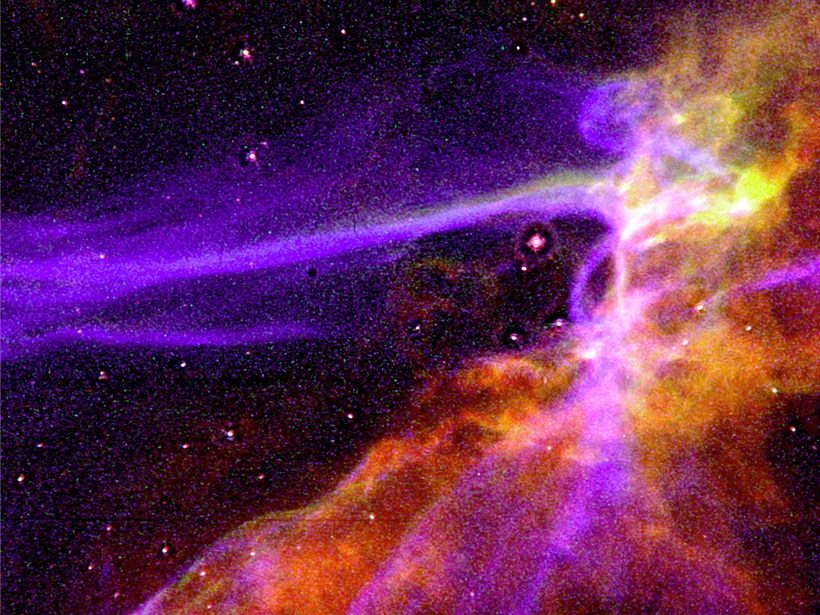
NASA's Cassini probe observed vast amounts of plasma on the fringes of Saturn's magnetic field being mysteriously injected hundreds of thousands of kilometers inward.
Posted inResearch Spotlights

Magnetized Collisionless Shock Waves Measured in the Lab

by C. Minnehan 6 October 201512 October 2022

Scientists create collisionless shock waves to better understand the phenomenon in nature.

Posted inFeatures

Aurora Painting Pays Tribute to Civil War's End

by J. J. Love 24 September 20155 October 2021

Frederic Edwin Church's 1865 arctic landscape, Aurora Borealis, is a beautiful depiction of nature. It might also be a memorial reflection on the end of the war.

Posted inAGU News

Jackson Receives 2015 William Gilbert Award

by AGU 16 September 20153 May 2023

Michael Jackson will receive the 2015 William Gilbert Award at the 2015 American Geophysical Union Fall Meeting, to be held 14–18 December in San Francisco, Calif. The award recognizes outstanding and unselfish work in magnetism of Earth materials and of the Earth and planets.

Posted inResearch Spotlights

Spacecraft Records Rising-Tone Magnetosonic Waves

by C. Minnehan 11 September 20157 July 2025

A rising tone in wave frequencies suggests a complicated, nonlinear series of interactions between electromagnetic sound waves and protons near the magnetic equator.
Posted inScience Updates

Making the Northern Indian Ocean a Hub of Geomagnetic Data

by K. Arora, N. Nagarajan, A. Thomson and A. Ismail-Zadeh 18 August 201516 March 2022

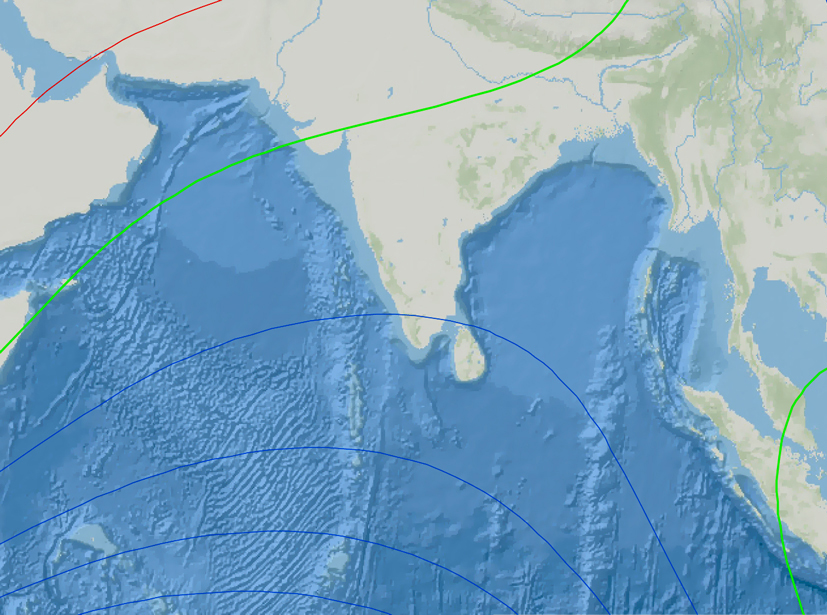
A new initiative seeks to unite and network the magnetic research community in the northern Indian Ocean region.

Posted inResearch Spotlights

X Marks the Spot of Magnetic Islands in Space

by Mark Zastrow 17 June 201518 July 2023

At the edge of Earth's magnetic field, satellites have found X-shaped fields and fast-moving "islands" of magnetism that could shed light on the physics of solar storms.

Posted inResearch Spotlights

New Insights into Currents in Earth's Magnetic Field

Kate Wheeling, freelance science writer by Kate Wheeling 18 May 201516 November 2021

Multisatellite missions give scientists a more complete view of the intense currents that bounce back and forth along our planet's magnetic field lines.

Posted inResearch Spotlights

When the Sun Goes Quiet, Titan Gets Gassy

by Mark Zastrow 11 May 20157 July 2025

Observations from NASA's Cassini probe show that the level of methane in Titan's atmosphere depends on the Sun's 11-year cycle of magnetic activity.

Posted inResearch Spotlights

What Causes Sunspot Pairs?

JoAnna Wendel, freelance science writer and illustrator by JoAnna Wendel 5 May 201518 January 2023

Analysis of magnetic fields on the Sun's surface offers a new clue on why sunspots appear.

Posts pagination

Newer posts 1 … 31 32 33 34 35 Older posts
Over a dark blue-green square appear the words Special Report: The State of the Science 1 Year On.

Features from AGU Publications

Research Spotlights

Tiny Cyanobacteria May Be the Secret Heroes of Ocean Carbon Sequestration

10 September 202610 September 2026
Editors' Highlights

Waves Play a Key Role for Lateral Stirring and Mixing of Ocean Tracers

11 September 202611 September 2026
Editors' Vox

How Can We Make Better Decisions About What Lies Underground?

10 September 202610 September 2026
Eos logo at left; AGU logo at right

About Eos
ENGAGE
Awards
Contact

Advertise
Submit
Career Center
Sitemap

© 2026 American Geophysical Union. All rights reserved Powered by Newspack