• About
  • Special Reports
  • Topics
    • Climate
    • Earth Science
    • Oceans
    • Space & Planets
    • Health & Ecosystems
    • Culture & Policy
    • Education & Careers
    • Opinions
  • Projects
    • Postcards From the Field
    • ENGAGE
    • Editors’ Highlights
    • Editors’ Vox
    • Eos en Español
    • Eos 简体中文版
    • Print Archive: 2015–2025
  • Policy Tracker
  • Blogs
    • Research & Developments
    • The Landslide Blog
  • Newsletter
  • Submit to Eos
  • AGU.org
  • Career Center
  • Join AGU
  • Give to AGU
  • About
  • Special Reports
  • Topics
    • Climate
    • Earth Science
    • Oceans
    • Space & Planets
    • Health & Ecosystems
    • Culture & Policy
    • Education & Careers
    • Opinions
  • Projects
    • Postcards From the Field
    • ENGAGE
    • Editors’ Highlights
    • Editors’ Vox
    • Eos en Español
    • Eos 简体中文版
    • Print Archive: 2015–2025
  • Policy Tracker
  • Blogs
    • Research & Developments
    • The Landslide Blog
  • Newsletter
  • Submit to Eos
Skip to content
  • AGU.org
  • Career Center
  • Join AGU
  • Give to AGU
Eos

Eos

Science News by AGU

Support Eos
Sign Up for Newsletter
  • About
  • Special Reports
  • Topics
    • Climate
    • Earth Science
    • Oceans
    • Space & Planets
    • Health & Ecosystems
    • Culture & Policy
    • Education & Careers
    • Opinions
  • Projects
    • Postcards From the Field
    • ENGAGE
    • Editors’ Highlights
    • Editors’ Vox
    • Eos en Español
    • Eos 简体中文版
    • Print Archive: 2015–2025
  • Policy Tracker
  • Blogs
    • Research & Developments
    • The Landslide Blog
  • Newsletter
  • Submit to Eos

meetings & workshops

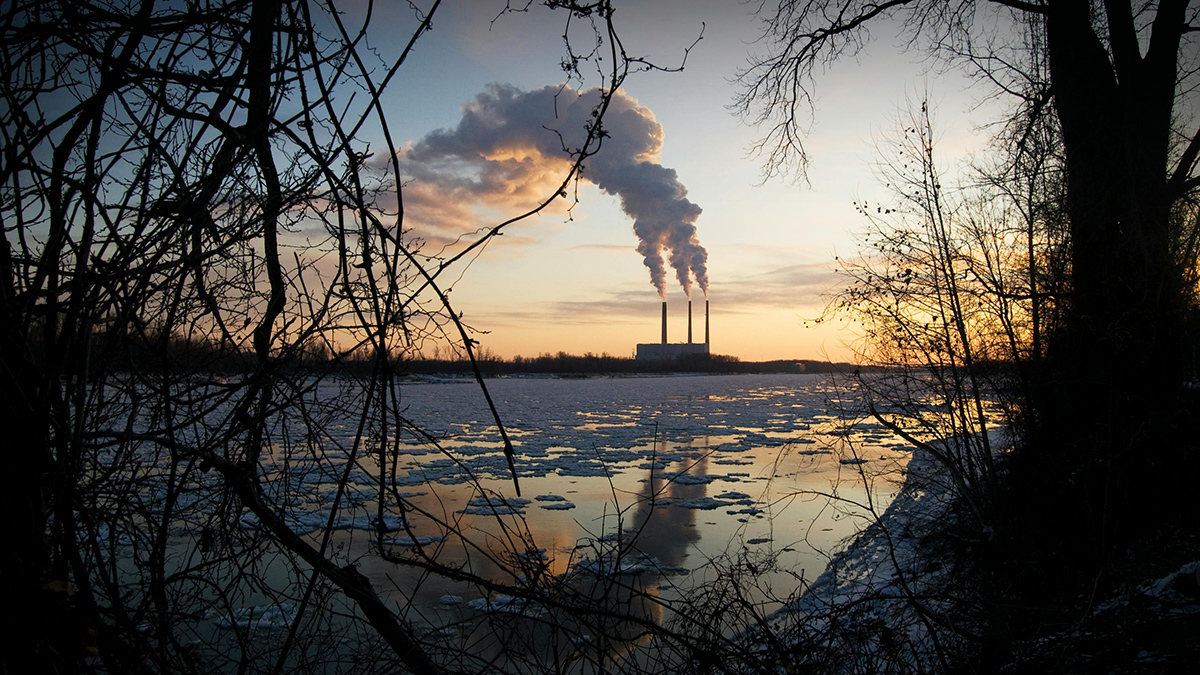
Emissions billow from a power plant’s smokestacks in the distance beyond a partially ice-covered river.
Posted inOpinions

A Better Way to Monitor Greenhouse Gases

by Dustin Carroll, Nick Parazoo, Hannah Nesser, Yinon Bar-On and Zoe Pierrat 24 October 20252 February 2026

A unified, global observing system could more effectively monitor progress in reducing emissions and accelerate climate action through improved data and decision support.
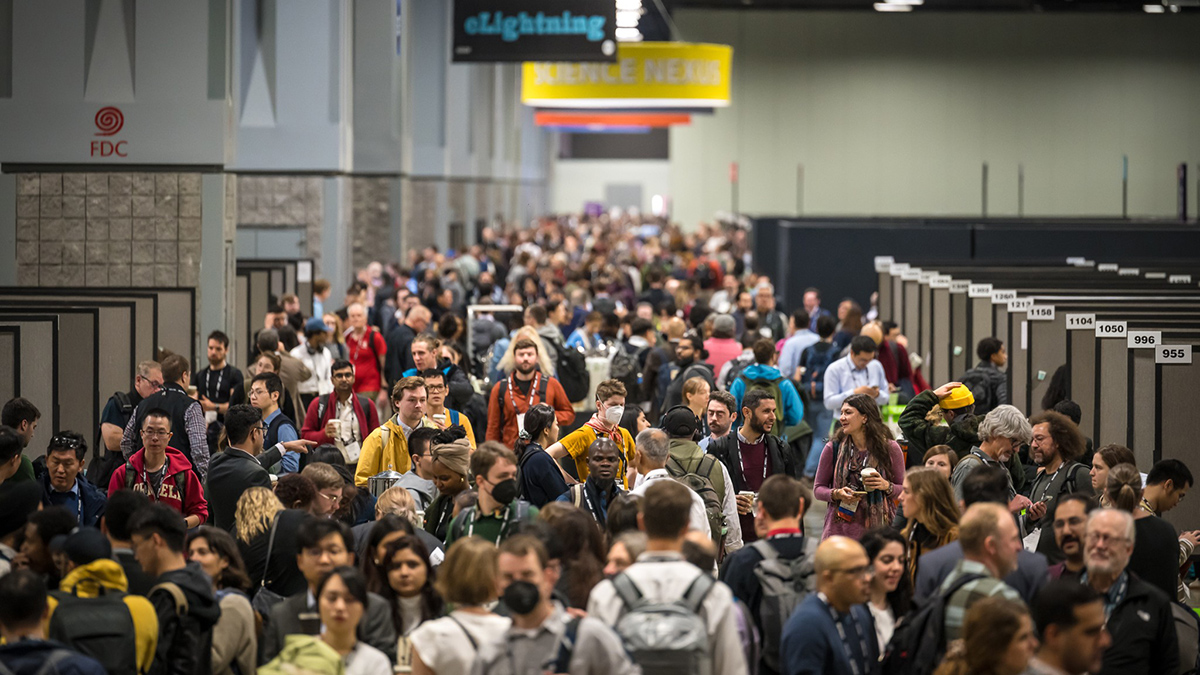
A crowd of people walk in a corridor between rows of posters at a scientific conference.
Posted inOpinions

Eight Ways to Encourage Equality, Diversity, and Inclusion Discussions at Conferences

by Benjamin Fernando and Mariama Dryák-Vallies 5 August 202513 November 2025

Getting scientists to engage in sessions about issues of scientific culture is challenging, but these best practices for meeting organizers can help.
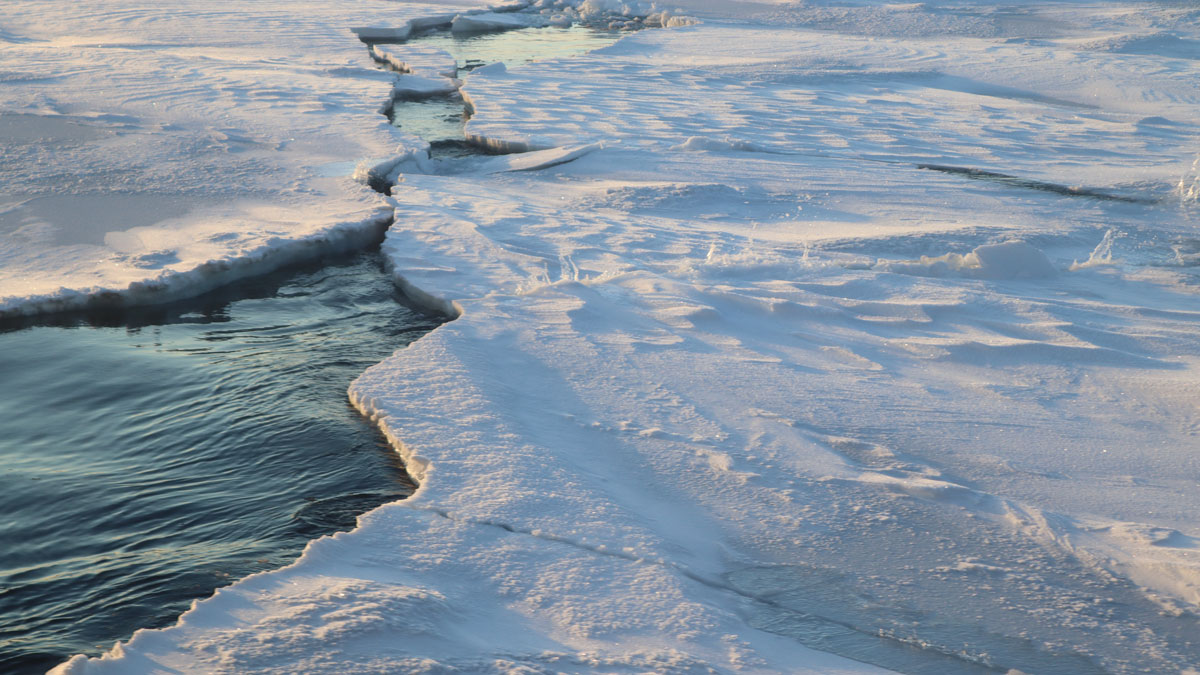
Close-up view of pieces of sea ice separated by a strip of open water.
Posted inScience Updates

Finding Consensus on Arctic Ocean Climate History

by Jochen Knies, Matt O’Regan and Claude Hillaire Marcel 25 June 202525 June 2025

Understanding the effects of a “blue” Arctic Ocean on future climate requires a coordinated effort to study Earth’s past warm periods using a variety of classical and cutting-edge methods.
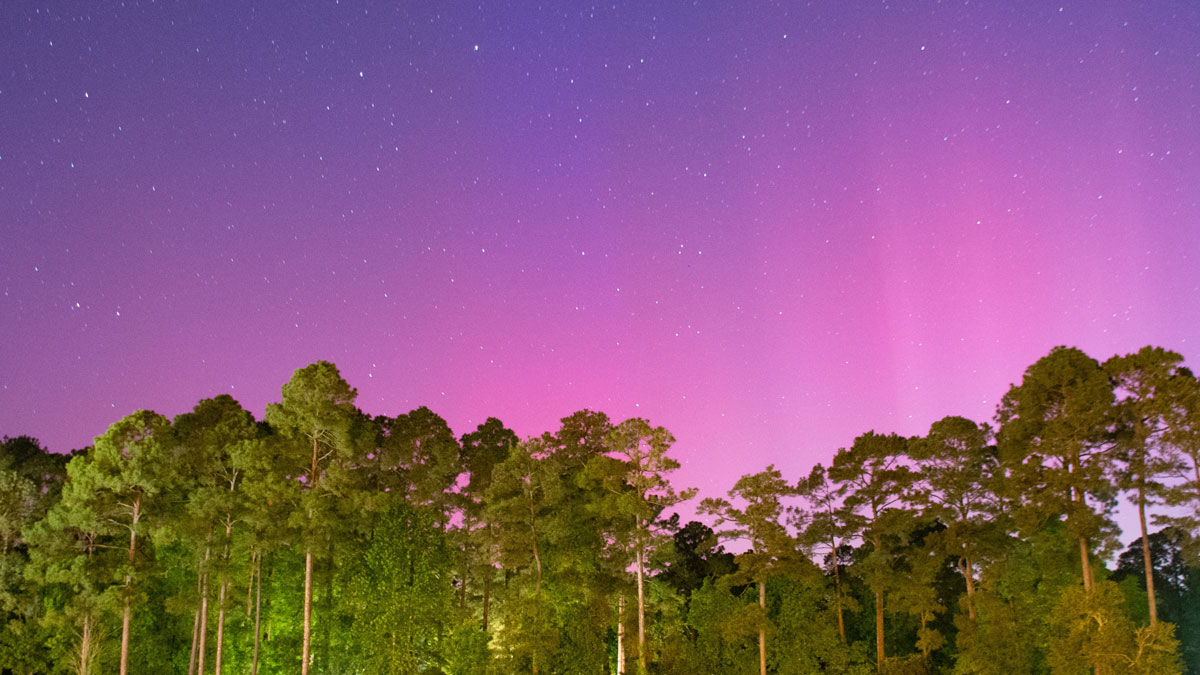
Pink aurorae illuminate the starry night sky above a stand of trees.
Posted inScience Updates

Two Neutron-Monitoring Networks Are Better Than One

by Trenton Franz, Darin Desilets, Martin Schrön, Fraser Baird and David McJannet 6 June 20259 June 2025

Hydrologists, atmospheric scientists, and space scientists are teaming up to keep a closer eye on soil moisture, hazardous space weather, and more.
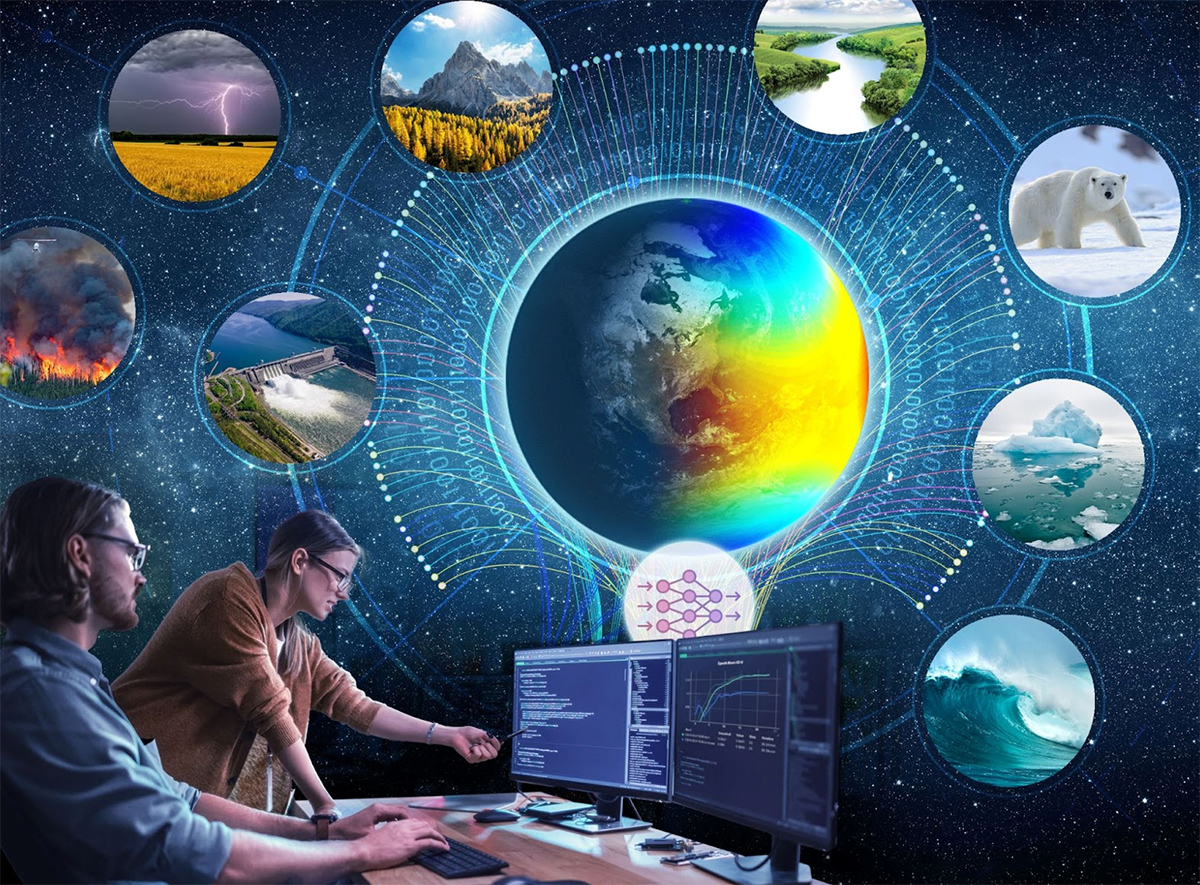
Artificial intelligence–generated depiction of two people looking at computer monitors on a desk, small images of nature scenes in circles representing different Earth science applications, and a depiction of Earth surrounded by zeros and ones representing digital data, all in front of a star-filled night sky background.
Posted inScience Updates

A Two-Step Approach to Training Earth Scientists in AI

by Lexie Goldberger, Peishi Jiang, Tirthankar “TC” Chakraborty, Andrew Geiss and Xingyuan Chen 29 April 202526 February 2026

Researchers learned machine learning methods during a boot camp, then applied their new knowledge to real-world research problems during a hackathon.
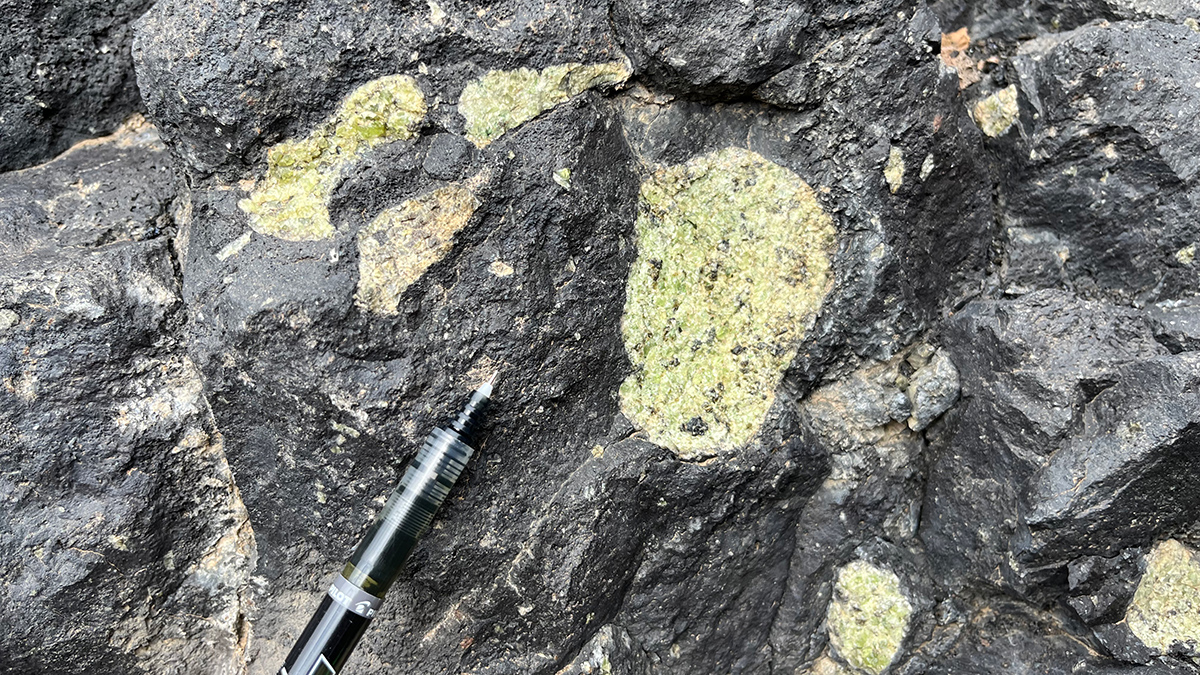
Close up view of the surface of dark-colored rock containing several large pale green crystals. The tip of a pen appears beside the rock for scale.
Posted inScience Updates

The Deep Frontier of Mantle Magma Supply

by Ben Black, Samer Naif, Forrest Horton, Andrea Goltz and Cian Wilson 25 March 202525 March 2025

Compared with crustal magma systems, little is known about the deep sources of volcanic supply chains. Interdisciplinary efforts can help answer key questions about how magma migrates from the mantle.

Illustration depicting glowing blue circuitry lines in the shape of a tree with branches, a trunk, and roots
Posted inScience Updates

Planting Seeds for Thriving Data Management

by Abigail Benson, Stace E. Beaulieu, Bradley Wade Bishop, Stephen C. Diggs and Stephen Formel 24 March 202527 March 2025

Learning how to manage research data is a core part of scientific education. The Earth Science Information Partners community has ideas to help early-career scientists build these important skills.

Aerial view of a debris flow composed of sediment, rocks, and uprooted trees that flowed down a narrow ravine before fanning out over a road and into a river
Posted inScience Updates

Confronting Debris Flow Hazards After Wildfire

by Ann M. Youberg, Luke A. McGuire, Nina Oakley, Francis K. Rengers and Autym Shafer 19 February 202519 February 2025

Scientists and practitioners have identified research priorities to improve scientific understanding of postfire debris flows and meet decisionmaking challenges posed by this growing hazard.

An image of a tree in a field taken by a thermal imaging camera, with cooler to warmer temperatures denoted by a spectrum of colors from blue to red
Posted inScience Updates

Sensing Potential, Scientists Refine Thermal Imaging of Ecosystems

by Jen L. Diehl, Benjamin C. Wiebe, Mostafa Javadian, Stephanie Pau and Andrew D. Richardson 7 February 20257 February 2025

At a recent “bake-off,” researchers judged thermal infrared cameras and developed guidelines for their consistent use in studying vegetation temperatures, which illuminate vital ecosystem processes.

Small houses painted in bright colors dot a hillside in the foreground in front of a fjord with icebergs and, in the background, tall mountains partially covered in snow.
Posted inScience Updates

Beneath Greenland, Insights for Energy Transitions and Climate Models

by Juan C. Afonso, Agnes Wansing, Parviz Ajourlou, John Hopper and Jörg Ebbing 15 January 202530 September 2025

Emerging consensus on the structure and dynamics of Greenland’s lithosphere may help improve forecasts of climate and sea level change and develop solutions for sustainable resource use.

Posts pagination

Newer posts 1 2 3 4 … 51 Older posts
Over a dark blue-green square appear the words Special Report: The State of the Science 1 Year On.

Features from AGU Publications

Research Spotlights

In Alaska, Wildfires Help Prevent Future Burns. Will That Feedback Loop Hold?

24 September 202625 September 2026
Editors' Highlights

“Young Get Older, but Old Get Younger”: Counterintuitive Ocean Waters

25 September 202625 September 2026
Editors' Vox

In Appreciation of AGU’s Outstanding Reviewers of 2025

14 September 202610 September 2026
Eos logo at left; AGU logo at right

About Eos
ENGAGE
Awards
Contact

Advertise
Submit
Career Center
Sitemap

© 2026 American Geophysical Union. All rights reserved Powered by Newspack