• About
  • Special Reports
  • Topics
    • Climate
    • Earth Science
    • Oceans
    • Space & Planets
    • Health & Ecosystems
    • Culture & Policy
    • Education & Careers
    • Opinions
  • Projects
    • Postcards From the Field
    • ENGAGE
    • Editors’ Highlights
    • Editors’ Vox
    • Eos en Español
    • Eos 简体中文版
    • Print Archive: 2015–2025
  • Policy Tracker
  • Blogs
    • Research & Developments
    • The Landslide Blog
  • Newsletter
  • Submit to Eos
  • AGU.org
  • Career Center
  • Join AGU
  • Give to AGU
  • About
  • Special Reports
  • Topics
    • Climate
    • Earth Science
    • Oceans
    • Space & Planets
    • Health & Ecosystems
    • Culture & Policy
    • Education & Careers
    • Opinions
  • Projects
    • Postcards From the Field
    • ENGAGE
    • Editors’ Highlights
    • Editors’ Vox
    • Eos en Español
    • Eos 简体中文版
    • Print Archive: 2015–2025
  • Policy Tracker
  • Blogs
    • Research & Developments
    • The Landslide Blog
  • Newsletter
  • Submit to Eos
Skip to content
  • AGU.org
  • Career Center
  • Join AGU
  • Give to AGU
Eos

Eos

Science News by AGU

Support Eos
Sign Up for Newsletter
  • About
  • Special Reports
  • Topics
    • Climate
    • Earth Science
    • Oceans
    • Space & Planets
    • Health & Ecosystems
    • Culture & Policy
    • Education & Careers
    • Opinions
  • Projects
    • Postcards From the Field
    • ENGAGE
    • Editors’ Highlights
    • Editors’ Vox
    • Eos en Español
    • Eos 简体中文版
    • Print Archive: 2015–2025
  • Policy Tracker
  • Blogs
    • Research & Developments
    • The Landslide Blog
  • Newsletter
  • Submit to Eos

solar activity

Posted inEditors' Highlights

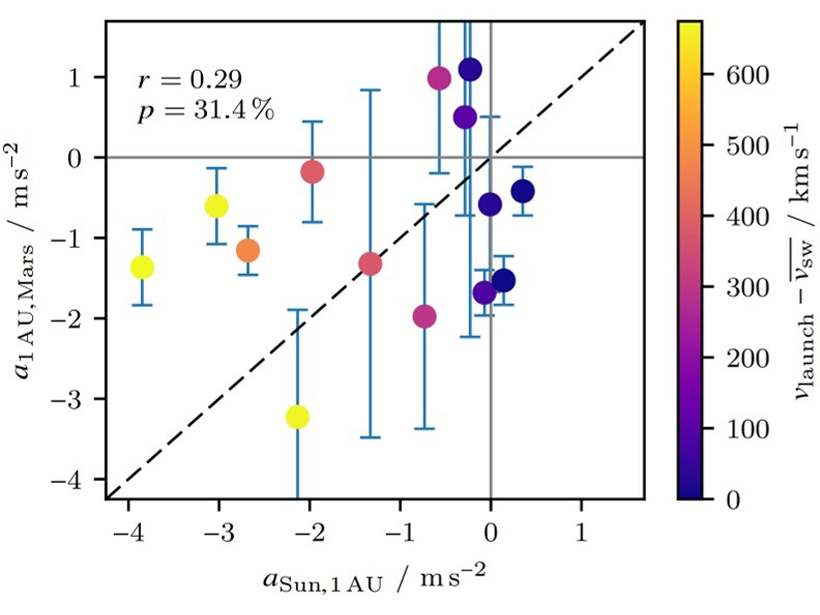
Fast CMEs Continue to Decelerate in the Outer Heliosphere

by Y. Wang 12 February 201831 May 2022

Most fast coronal mass ejections will be decelerated into ambient solar wind quickly in the inner heliosphere, but some of them continue the deceleration with an even larger amplitude beyond 1 AU.
Posted inEditors' Highlights

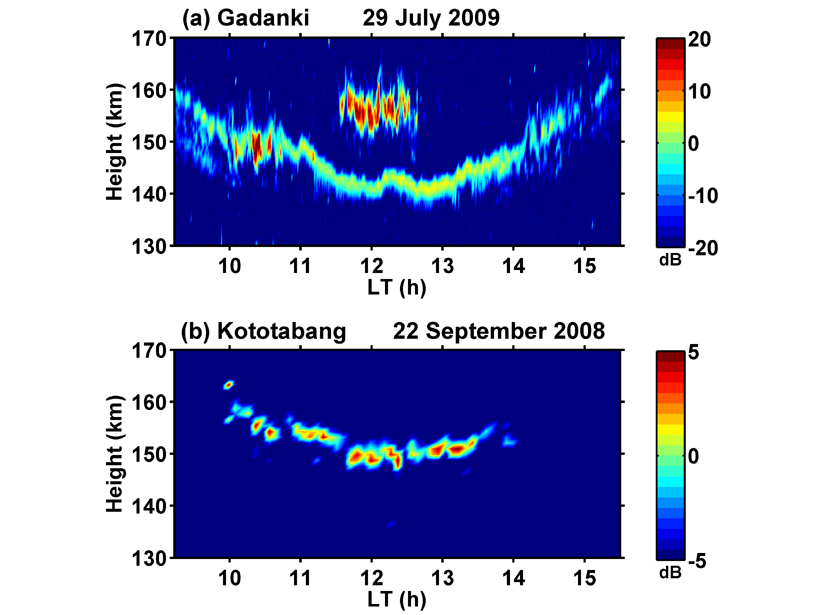
New Observations of Mysterious Radar Echoes

by Gang Lu 19 January 201812 October 2022

Exploring the relationship between solar extreme ultraviolet radiation flux and 150-km radar echoes.
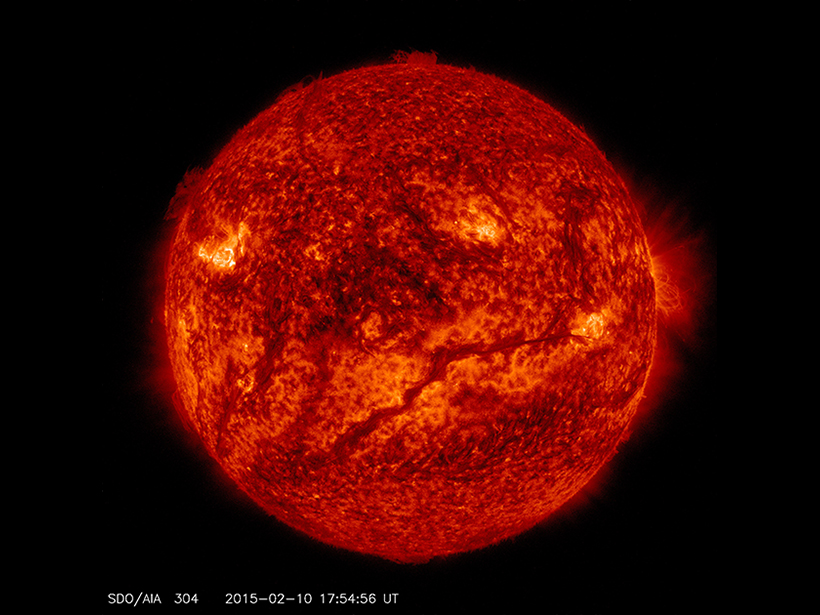
Researchers compile a 45-year map record of sunspots
Posted inResearch Spotlights

Preserving a 45-Year Record of Sunspots

by E. Underwood 17 January 201813 October 2022

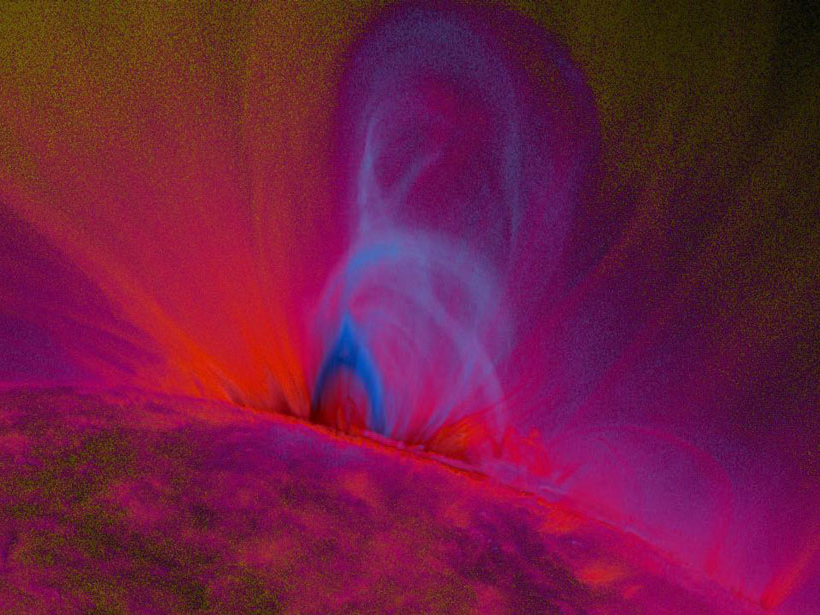
Maps reveal how the Sun’s magnetic field evolves through solar cycles.
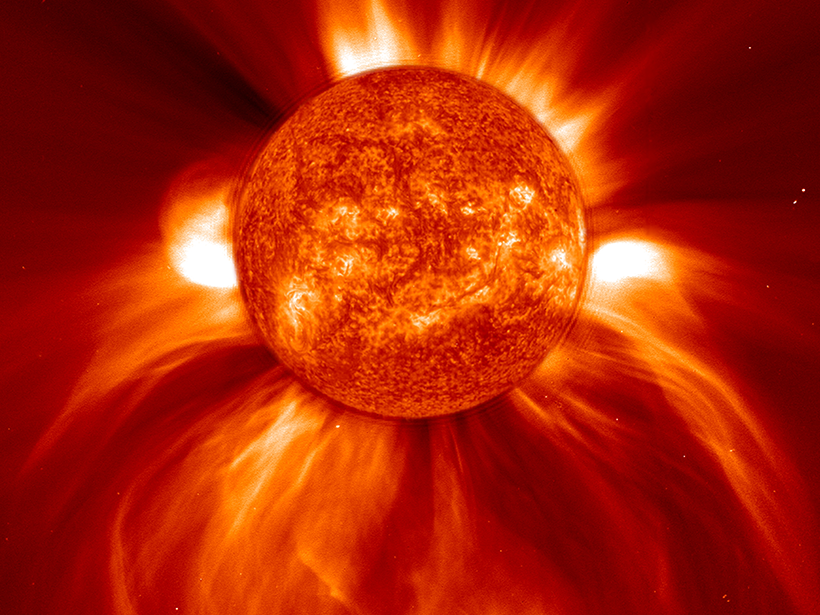
A new model of solar winds could improve predictions of space storms
Posted inResearch Spotlights

A Better Way to Predict Space Storms

by E. Underwood 13 December 201713 April 2022

A new model of solar winds could reduce false alarms.
Posted inEditors' Highlights

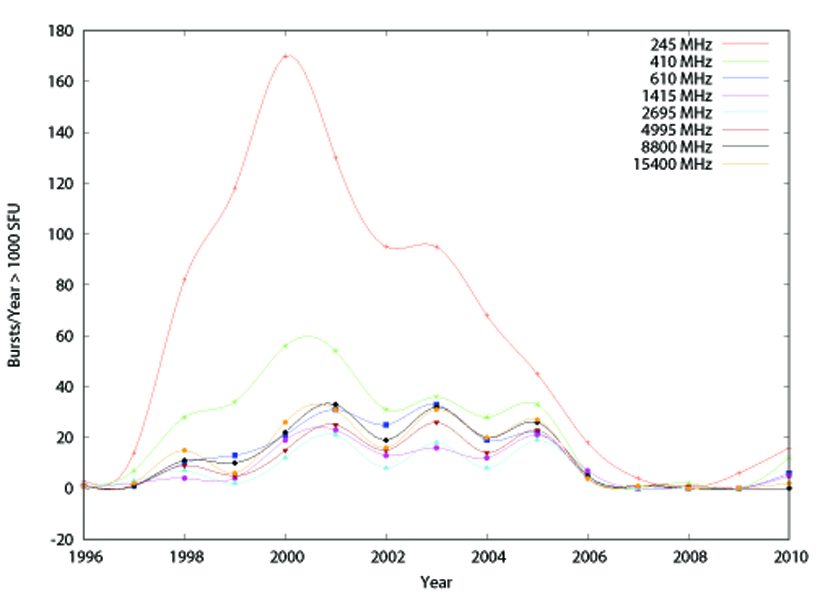
A Survey of Solar Radio Burst Statistics

by D. J. Knipp 7 December 201727 January 2022

National solar radio archive records have substantial missing data potentially affecting the ability to benchmark extreme solar events.

Posted inEditors' Highlights

Where Did the Water Go on Mars?

by Andrew Yau 28 November 20174 May 2022

Primordial solar storm conditions are believed to have significantly enhanced the loss of water and other atmospheric volatiles in Mars’ history.

Posted inEditors' Highlights

Imaging the Sun’s Atmosphere

by D. J. Knipp 2 November 201731 May 2022

The technique of heliospheric imaging could be valuable for future space weather operations.
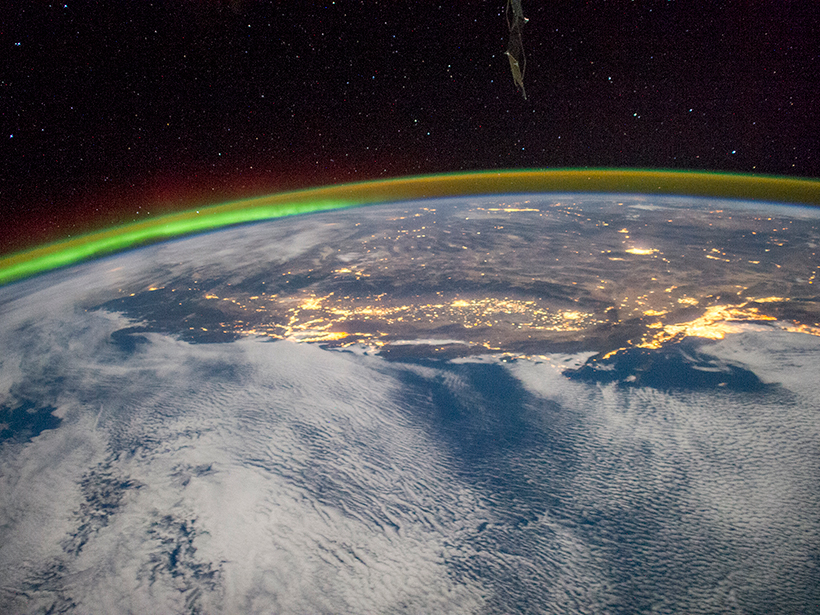
Researchers trace long-term changes in the ionosphere back to Sun cycles, not greenhouse gas emissions.
Posted inResearch Spotlights

Is There a Greenhouse Effect in the Ionosphere, Too? Likely Not

by Mark Zastrow 13 October 201723 January 2023

Controversial observations of long-term changes in the ionosphere appear to be explained by the Sun’s 11-year cycle of activity, not human greenhouse gas emissions.

Posted inOpinions

To Understand Future Solar Activity, One Has to Know the Past

by A. A. Pevtsov and F. Clette 29 September 201718 January 2023

Short-term funding strategies present serious problems for programs like solar activity studies, where observations and analysis span decades or longer.

Researchers use 8 years of satellite data to test modeling of coronal mass injections
Posted inResearch Spotlights

NASA Fleet Helps Predict Space Weather

by S. Witman 21 September 201720 December 2021

Using 8 years of data collected via spacecraft, scientists produce hindcasts of plasma eruptions from the Sun. These will help improve forecasts.

Posts pagination

Newer posts 1 … 6 7 8 9 10 11 Older posts
Over a dark blue-green square appear the words Special Report: The State of the Science 1 Year On.

Features from AGU Publications

Research Spotlights

What Australian Lakes Showed Us About Martian Hydrology

27 July 202627 July 2026
Editors' Highlights

The Role of Tidal Wetlands in the Global Nitrogen Cycle Under Global Change

27 July 202627 July 2026
Editors' Vox

The Hidden Costs of Mining River Sand

27 July 202627 July 2026
Eos logo at left; AGU logo at right

About Eos
ENGAGE
Awards
Contact

Advertise
Submit
Career Center
Sitemap

© 2026 American Geophysical Union. All rights reserved Powered by Newspack