• About
  • Special Reports
  • Topics
    • Climate
    • Earth Science
    • Oceans
    • Space & Planets
    • Health & Ecosystems
    • Culture & Policy
    • Education & Careers
    • Opinions
  • Projects
    • Postcards From the Field
    • ENGAGE
    • Editors’ Highlights
    • Editors’ Vox
    • Eos en Español
    • Eos 简体中文版
    • Print Archive: 2015–2025
  • Policy Tracker
  • Blogs
    • Research & Developments
    • The Landslide Blog
  • Newsletter
  • Submit to Eos
  • AGU.org
  • Career Center
  • Join AGU
  • Give to AGU
  • About
  • Special Reports
  • Topics
    • Climate
    • Earth Science
    • Oceans
    • Space & Planets
    • Health & Ecosystems
    • Culture & Policy
    • Education & Careers
    • Opinions
  • Projects
    • Postcards From the Field
    • ENGAGE
    • Editors’ Highlights
    • Editors’ Vox
    • Eos en Español
    • Eos 简体中文版
    • Print Archive: 2015–2025
  • Policy Tracker
  • Blogs
    • Research & Developments
    • The Landslide Blog
  • Newsletter
  • Submit to Eos
Skip to content
  • AGU.org
  • Career Center
  • Join AGU
  • Give to AGU
Eos

Eos

Science News by AGU

Support Eos
Sign Up for Newsletter
  • About
  • Special Reports
  • Topics
    • Climate
    • Earth Science
    • Oceans
    • Space & Planets
    • Health & Ecosystems
    • Culture & Policy
    • Education & Careers
    • Opinions
  • Projects
    • Postcards From the Field
    • ENGAGE
    • Editors’ Highlights
    • Editors’ Vox
    • Eos en Español
    • Eos 简体中文版
    • Print Archive: 2015–2025
  • Policy Tracker
  • Blogs
    • Research & Developments
    • The Landslide Blog
  • Newsletter
  • Submit to Eos

tomography

Seismic tomography imaging shows a portion of a “blob” that sits at the base of the mantle below Africa.
Posted inFeatures

The Unsolved Mystery of the Earth Blobs

Jenessa Duncombe, Staff Writer by Jenessa Duncombe 27 February 201927 January 2023

Researchers peering into Earth’s interior found two continent-sized structures that upend our picture of the mantle. What could their existence mean for us back on Earth’s surface?

Posted inAGU News

Donald W. Forsyth Receives 2017 Maurice Ewing Medal

by AGU 19 December 201711 April 2023

Donald W. Forsyth was awarded the 2017 Maurice Ewing Medal at the American Geophysical Union Fall Meeting Honors Ceremony, held on 13 December 2017 in New Orleans, La. The medal is for “significant original contributions to the ocean sciences.”
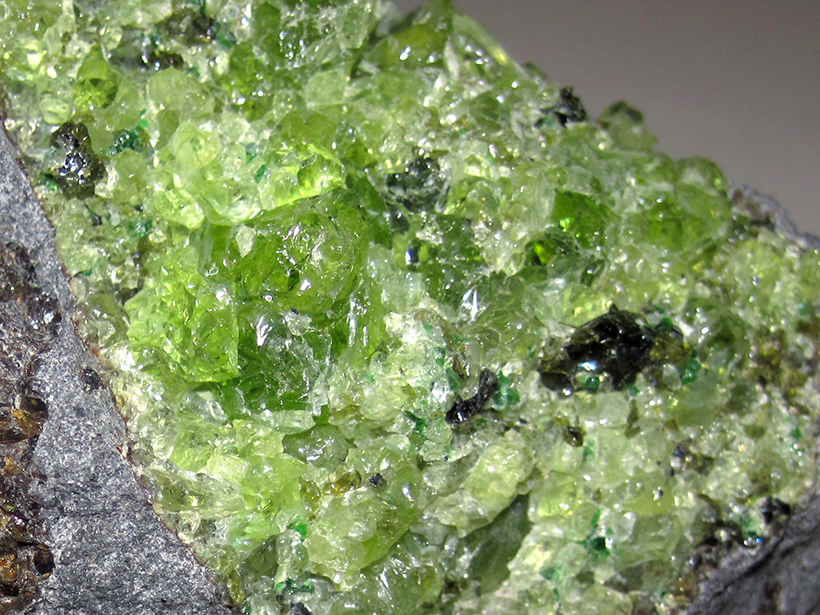
seismology-model-study-subduction-zone-characteristics
Posted inResearch Spotlights

Seismological Models Are Biased, but Scientists Have a Solution

Shannon Hall by S. Hall 26 September 201629 September 2016

Many seismic wave models are based on an erroneous assumption about the Earth's interior. A new technique corrects this by eliminating false signals produced by models.

US crustal thickness map.
Posted inResearch Spotlights

Novel Technique Finds New Features Under United States

by Terri Cook 29 June 201627 January 2023

A new high-fidelity tomography harnesses USArray data to expose a wealth of noteworthy crustal and upper mantle structures, including previously unknown anomalies beneath the Appalachians.
Posted inScience Updates

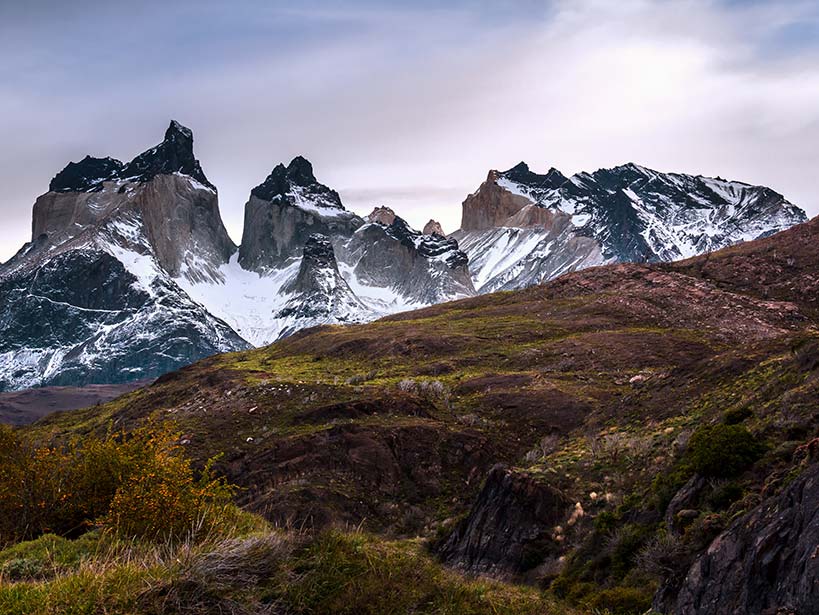
Extending Recent Seismic Imaging Successes to South America

by K. M. Ward, J. R. Delph and S. L. Beck 28 April 201627 January 2023

Ambient Noise Tomography Workshop (MIMOSA); Tucson, Arizona, 17–23 January 2016
Posted inFeatures

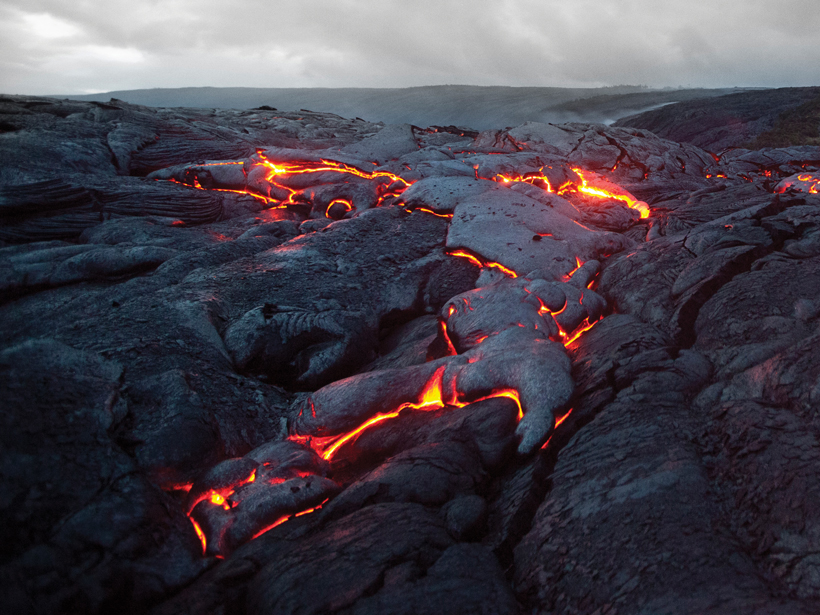
What Lies Deep in the Mantle Below?

by G. R. Foulger, G. F. Panza, I. M. Artemieva, I. D. Bastow, F. Cammarano, C. Doglioni, J. R. Evans, W. B. Hamilton, B. R. Julian, M. Lustrino, H. Thybo and T. B. Yanovskaya 25 August 20154 August 2023

For decades, scientists have probed Earth's remote mantle by analyzing how seismic waves of distant earthquakes pass through it. But we are still challenged by the technique's limitations.

Posts pagination

Newer posts 1 2 3
Over a dark blue-green square appear the words Special Report: The State of the Science 1 Year On.

Features from AGU Publications

Research Spotlights

Extreme Heat May Drive Asthma Risk in Baltimore, Especially at Night

12 August 202612 August 2026
Editors' Highlights

How Fluid Mixing due to Kelvin-Helmholtz Instabilities Really Works

13 August 202613 August 2026
Editors' Vox

Introducing Research Letters in Paleoceanography and Paleoclimatology

12 August 202610 August 2026
Eos logo at left; AGU logo at right

About Eos
ENGAGE
Awards
Contact

Advertise
Submit
Career Center
Sitemap

© 2026 American Geophysical Union. All rights reserved Powered by Newspack