• About
  • Topics
    • Climate
    • Earth Science
    • Oceans
    • Space & Planets
    • Health & Ecosystems
    • Culture & Policy
    • Education & Careers
    • Opinions
  • Projects
    • Special Projects
    • Postcards From the Field
    • ENGAGE
    • Editors’ Highlights
    • Editors’ Vox
    • Eos en Español
    • Eos 简体中文版
    • Print Archive: 2015–2025
  • Science Policy Tracker
  • Blogs
    • Research & Developments
    • The Landslide Blog
  • Newsletter
  • Submit to Eos
  • AGU.org
  • Career Center
  • Join AGU
  • Give to AGU
  • About
  • Topics
    • Climate
    • Earth Science
    • Oceans
    • Space & Planets
    • Health & Ecosystems
    • Culture & Policy
    • Education & Careers
    • Opinions
  • Projects
    • Special Projects
    • Postcards From the Field
    • ENGAGE
    • Editors’ Highlights
    • Editors’ Vox
    • Eos en Español
    • Eos 简体中文版
    • Print Archive: 2015–2025
  • Science Policy Tracker
  • Blogs
    • Research & Developments
    • The Landslide Blog
  • Newsletter
  • Submit to Eos
Skip to content
  • AGU.org
  • Career Center
  • Join AGU
  • Give to AGU
Eos

Eos

Science News by AGU

Support Eos
Sign Up for Newsletter
  • About
  • Topics
    • Climate
    • Earth Science
    • Oceans
    • Space & Planets
    • Health & Ecosystems
    • Culture & Policy
    • Education & Careers
    • Opinions
  • Projects
    • Special Projects
    • Postcards From the Field
    • ENGAGE
    • Editors’ Highlights
    • Editors’ Vox
    • Eos en Español
    • Eos 简体中文版
    • Print Archive: 2015–2025
  • Science Policy Tracker
  • Blogs
    • Research & Developments
    • The Landslide Blog
  • Newsletter
  • Submit to Eos

Science Updates

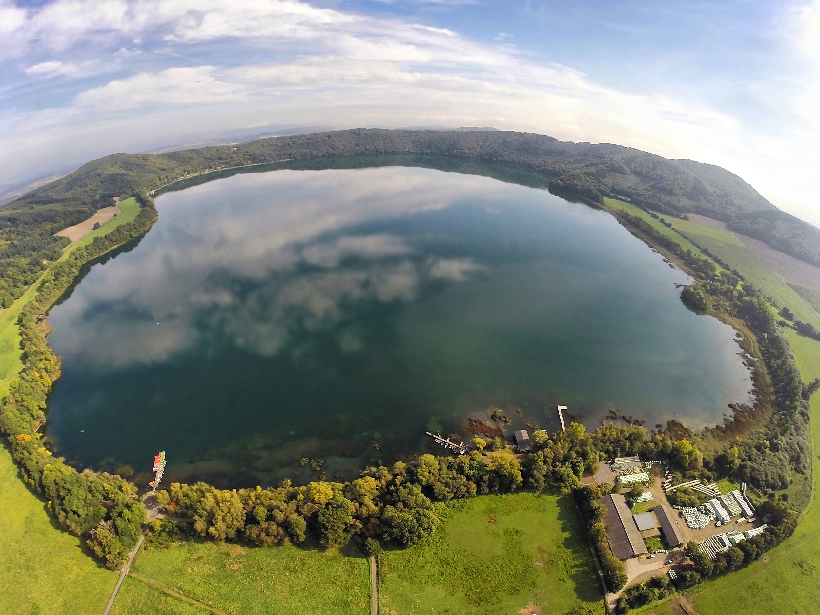
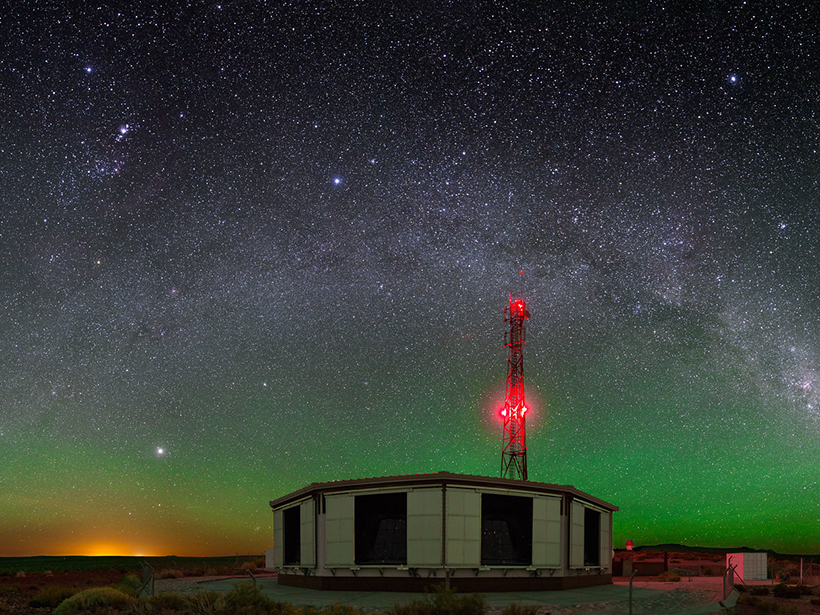
Armenia’s Lake Kari sits near the top of Mount Aragats.
Posted inScience Updates

Understanding High-Energy Physics in Earth’s Atmosphere

by A. A. Chilingarian 8 January 202010 March 2023

Thunderstorms present a variety of hazards, including emissions of ionizing radiation. An international group of scientists met at an Armenian observatory to share their findings.

Hackathon participants at several locations collaborated on climate model analyses summer 2019.
Posted inScience Updates

Hackathon Speeds Progress Toward Climate Model Collaboration

by W. Weijer, F. M. Hoffman, P. A. Ullrich, M. Wehner and Ji. Liu 23 December 201924 March 2023

Climate scientists collaborated in a nationwide event to analyze and compare archived Earth system model simulations and to generate input for the IPCC’s upcoming climate change report.

Controlled burn in a sagebrush ecosystem in Hart Mountain National Antelope Refuge in southeastern Oregon
Posted inScience Updates

Rating Fire Danger from the Ground Up

by M. R. Levi, E. S. Krueger, G. J. Snitker, T. Ochsner, M. L. Villarreal, E. H. Elias and D. E. Peck 17 December 201929 September 2021

Soil moisture information could improve assessments of wildfire probabilities and fuel conditions, resulting in better fire danger ratings.

Stalled barges at the confluence of the Mississippi and Ohio Rivers near Cairo, Ill.
Posted inScience Updates

Working Together to Close Climate Change Information Gaps

by R. Graham, C. Negri, T. Wall and V. R. Kotamarthi 16 December 201929 September 2021

Scientists and managers on the ground gathered to identify information gaps that pose barriers to evaluating climate change risks and responses.

A true-color satellite image of the Gulf of Mexico on 17 July 2019
Posted inScience Updates

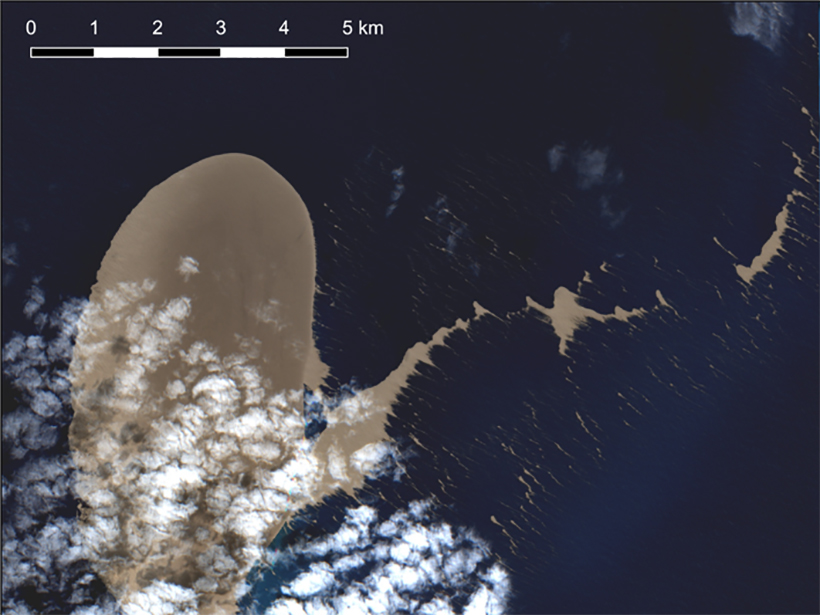
Filling the Gaps in Ocean Maps

by X. Liu and M. Wang 21 November 20199 February 2022

A new software application merges ocean color data from instruments aboard two satellites to provide gap-free, near-real-time monitoring of the global ocean environment.

Seagrass and mangrove habitats at Bocas del Toro in Panama typify these vital, but endangered, coastal ecosystems.
Posted inScience Updates

Integrating Global Seagrass and Mangrove Ecosystem Observations

by J. E. Duffy, L. M. Rebelo and P. Miloslavich 20 November 20199 March 2023

Coordinating the Implementation of Mangrove and Seagrass Essential Observations: A joint GOOS/MBON community outreach workshop to implement EOV/EBVs (Sea Plants Workshop), Consortium for Ocean Leadership; Washington, D.C., 10–11 June 2019

Practitioners participate in a group exercise around a table during a training session on using climate projections.
Posted inScience Updates

Making Sense of Local Climate Projections

by D. H. Rosendahl, R. A. McPherson, A. Wootten, E. Mullens, J. Blackband and A. Bryan 14 November 20193 June 2022

Hands-on training, collaboration with scientists, and practice using real-world challenges give planners and decision-makers confidence to work with climate model information.

Marine biogeochemists at a workshop last summer huddle over a biogeochemical instrument they are learning to use.
Posted inScience Updates

Training the Next Generation of Marine Biogeochemists

by A. P. Palacz, M. Telszewski, G. Rehder and H. C. Bittig 6 November 20197 March 2023

Early-career scientists came together recently to learn to use a suite of ocean biogeochemical sensors, with the goal of closing the knowledge gap between ocean technology and potential end users.

False-color composite image of the landscape near Noatak, Alaska, showing 3 of 425 spectral bands of NASA’s AVRIS-NG
Posted inScience Updates

Watching Earth’s Interconnected Systems at Work

by F. D. Schneider, A. Ferraz and D. Schimel 31 October 201931 March 2023

Surface Biology and Geology, a new NASA Earth observation effort, is developing a path forward for monitoring the Earth system from space.

The landscape in James Bay, Quebec, Canada, consists of hydrologically interconnected forests, wetlands, rivers, and lakes.
Posted inScience Updates

Integrating Landscape Terrestrial and Aquatic Carbon Fluxes

by P. Bodmer, J. P. Casas-Ruiz and P. A. del Giorgio 11 October 201929 September 2021

Workshop on the Integration of Aquatic and Terrestrial Carbon Fluxes across landscapes; Montreal, Quebec, Canada, 9–10 May 2019

Posts pagination

Newer posts 1 … 15 16 17 18 19 … 69 Older posts
Over a dark blue-green square appear the words Special Report: The State of the Science 1 Year On.

Features from AGU Publications

Research Spotlights

Our Ocean’s “Natural Antacids” Act Faster Than We Thought

30 January 202630 January 2026
Editors' Highlights

Cows, Coal, and Chemistry: The Role of Photochemistry in Methane Budget

27 January 202623 January 2026
Editors' Vox

Bridging the Gap: Transforming Reliable Climate Data into Climate Policy

16 January 202616 January 2026
Eos logo at left; AGU logo at right

About Eos
ENGAGE
Awards
Contact

Advertise
Submit
Career Center
Sitemap

© 2026 American Geophysical Union. All rights reserved Powered by Newspack