
Americans set few everyday expectations for science, but they are fundamental: We expect the weather forecast to be right, we expect science and technology that allow weather hazards to be anticipated within reason, and we expect public services to protect our lives and livelihoods from such hazards—floods, fires, tornadoes, and hurricanes.
NCAR is not just another research center. It is purpose-built critical infrastructure designed to integrate observations, modeling, supercomputing, and applied research in ways that no single university, agency, or contractor can replicate on its own.
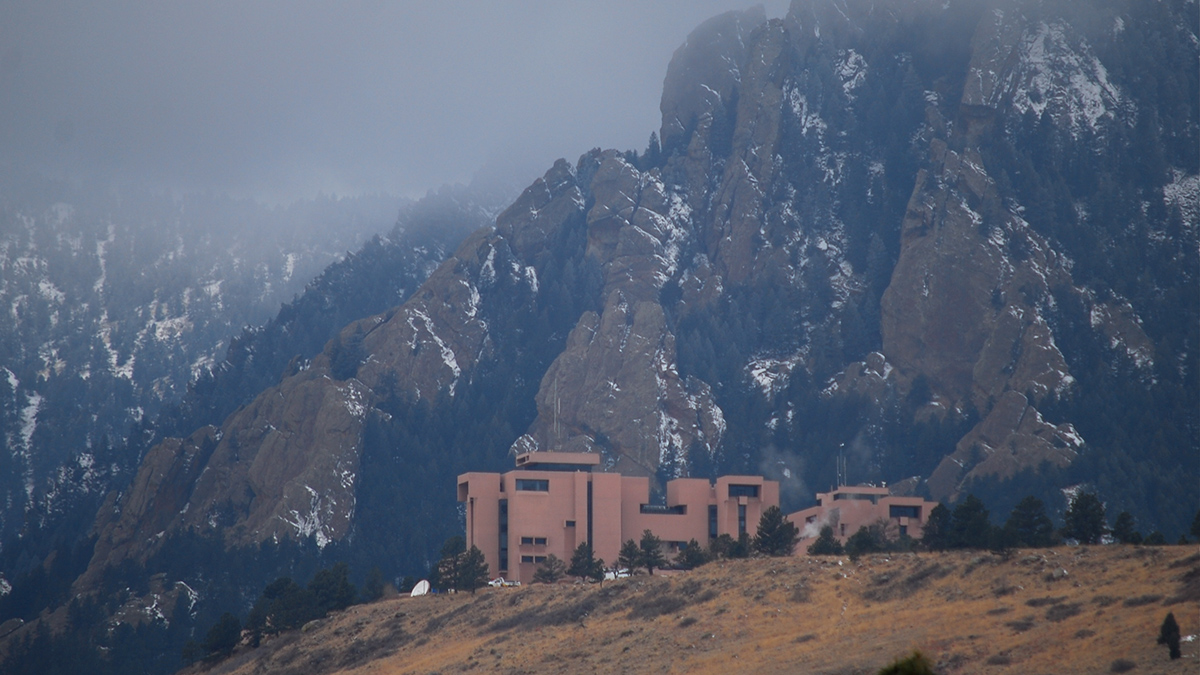
Well, the fulfillment of those expectations is in real doubt now that the Trump administration plans to dismantle the National Science Foundation’s (NSF) National Center for Atmospheric Research (NCAR), a federally funded institution that underpins critical science that Americans rely on. Administration officials have argued that NCAR’s work can simply be redistributed to other institutions without loss. But NCAR is not just another research center. It is purpose-built critical infrastructure designed to integrate observations, modeling, supercomputing, and applied research in ways that no single university, agency, or contractor can replicate on its own.
Although Congress rejected the administration’s proposed funding cuts to NSF, the most recent spending bill did not include explicit language protecting NCAR as a unified entity.
As a result, the center remains vulnerable—not through outright defunding, but through fragmentation. The administration could try to cut interagency contracts that NCAR relies on to fund its staff, lay off staff, and relocate critical capabilities. NSF has already outlined plans to restructure NCAR, including moving its supercomputer to another site and transferring or divesting research aircraft it operates. These risks would hollow out the institution itself, breaking apart integrated teams, disrupting continuity in projects, and weakening the unique collaborative model at NCAR that accelerates scientific progress in weather, water, climate, and space weather.
This distinction matters. NCAR’s value does not lie solely in the science it produces, but in how that science is organized, sustained, and shared across the nation.
The following are five of the many ways Americans will lose the benefits of scientific research if plans to dismantle NCAR unfold, and two ways we can work to prevent it.
1. Air Travelers Will Lose Protection
Every day, millions of Americans board airplanes expecting to arrive safely at their destinations. What most passengers never see is the science working behind the scenes to keep flights safe through better understanding of atmospheric conditions such as turbulence and microburst winds.
Turbulence alone is the leading cause of injuries on U.S. commercial flights and cargo operations, and NCAR research has played a central role in reducing that risk by improving how turbulence is detected, predicted, and avoided. NCAR scientists helped develop advanced forecasting techniques that allow pilots and dispatchers to reroute aircraft away from dangerous air currents before passengers are ever put at risk.
In addition to safety, NCAR research has reduced the $100 million financial strain severe turbulence costs the U.S. aviation system every year through aircraft damage, inspections, medical costs, and delays.
NCAR’s contributions to aviation safety extend well beyond turbulence. In the 1970s and 1980s, NCAR scientists led research that identified and explained microbursts, a poorly understood weather phenomenon consisting of powerful downdraft winds produced by thunderstorms. Microbursts had caused multiple fatal airline crashes during takeoff and landing, and NCAR findings convinced the Federal Aviation Administration (FAA) and international aviation authorities to develop radar warning systems to detect these threats. Since these tools have been deployed, fatal U.S. airline crashes caused by microbursts have effectively been eliminated.
Dismantling NCAR and moving this work elsewhere would break the integrated system that makes aviation safety research effective in the first place. NCAR uniquely brings together long-term observational data, advanced modeling, specialized instrumentation, and direct operational partnerships with agencies like the FAA under one roof. Fragmenting that capacity across multiple institutions would disrupt decades of trusted, public service relationships with the aviation community, making it harder and slower to translate research into real-world protections for pilots and passengers. With millions of people in the sky every day, this is not a risk we should take.
2. Food Security and the U.S. Agricultural Economy Will Be Put at Risk
Agriculture contributes hundreds of billions of dollars annually to the U.S. economy, and food security remains a national priority, making NCAR’s research crucial to this weather-sensitive sector. Drought, heat waves, and floods are recurring stresses that affect what crops farmers can grow, as well as food prices for consumers.
NCAR’s long-standing collaborations, integrated modeling and computing capacity, and role as a trusted public service institution are what allow farmers to rely on consistent, decision-ready information year after year.
NCAR research is directly relevant to food security. For example, NCAR scientists are working in conjunction with universities in Kansas and Nebraska and the U.S. Department of Agriculture to develop CropSmart, a next-generation system that aggregates weather forecasts, crop data, soil conditions, and other inputs into actionable, decision-ready information for farmers, agribusinesses, and agricultural officials. Early projections from CropSmart suggest that if advanced decision support systems like this were adopted on even half of irrigated farms in a state like Nebraska, farmers could save up to 1 billion cubic meters of water and $100 million in irrigation energy costs annually while also cutting about a million tons of greenhouse gas emissions per year.
If NCAR is broken up, we lose this economic opportunity and the myriad ways it supports U.S. agriculture. NCAR’s long-standing collaborations, integrated modeling and computing capacity, and role as a trusted public service institution are what allow farmers to rely on consistent, decision-ready information year after year.
All the agricultural tools housed, supported, or innovated by NCAR would be put at risk, leaving farmers with fewer early warnings, less reliable guidance, and greater exposure to weather extremes. These losses would translate to the food on our tables having a higher price tag, which inevitably increases food insecurity, already a significant problem in the United States.
3. U.S. National Security and Military Readiness Will Be Weakened
The U.S. military depends on weather and climate intelligence to operate safely, effectively, and strategically. From flight operations and naval deployments to training exercises and base infrastructure, weather conditions shape nearly every aspect of defense readiness. When forecasts are wrong or incomplete, missions can be delayed, equipment can be damaged, and personnel and our national defense are put at risk.
Accurate environmental intelligence reduces risk, lowers costs, and strengthens national security.
NCAR’s research and operational tools provide the environmental intelligence that defense planners, operators, and test authorities rely on to keep us safe. Accurate, NCAR-enhanced forecasts have saved the U.S. Army millions of dollars by reducing weather-related test cancellations and avoiding needless mobilization costs. NCAR weather forecasting tools have been used for defense-related purposes, including anti-terrorism support at the Olympic games, protection of the Pentagon, support for firefighters, and analysis of exposure of our military personnel to toxins.
The strategic value of this work is reflected in the breadth of defense agencies that rely on NCAR today. NCAR maintains active partnerships and contracts with the Air Force, the Army Corps of Engineers, the National Ground Intelligence Center, the Defense Threat Reduction Agency, and the Army Test and Evaluation Command. These relationships exist for a simple reason: Accurate environmental intelligence reduces risk, lowers costs, and strengthens national security.
Dismantling NCAR is a national security threat. Defense agencies rely on specialized, mission-critical environmental products and expertise that are developed, maintained, and refined through streamlined, long-standing relationships with NCAR scientists. These capabilities cannot be replaced quickly without disruption, and even short gaps in trusted weather and environmental intelligence would increase operational risk for current and future missions. Protecting NCAR is an investment in military readiness, operational efficiency, and the safety of those who serve.
4. Americans in Disaster-Prone Areas Will Have Less Time to Prepare for, and Evacuate from, Extreme Weather
Since 1980, weather hazards have cost the United States thousands of lives and more than $3.1 trillion. In 2025 alone, disasters cost nearly 300 lives and $115 billion in damages to homes and businesses. And these weather hazards are expected to worsen because of our changing climate.
A 2010 study from the National Academies of Sciences, Engineering, and Medicine found that public weather forecasts and warnings deliver roughly $31.5 billion in annual economic benefits in the United States. These gains in preparedness and economic benefit would not have been possible without sustained scientific research from NCAR.
Hurricane forecasting provides a clear example of how NCAR research has secured the safety and mitigated the economic losses of residents and businesses. Since 1980, hurricanes have caused nearly $3 trillion in damages in the United States.
For decades, NCAR scientists have worked to develop and refine instruments and methods to collect real-time hurricane observations and improve our understanding of storm behavior. By the 1980s, data and modeling advances emerging from NCAR research were being used operationally by NOAA, contributing to a roughly 20%–30% improvement in the accuracy of hurricane track forecasts compared to earlier decades.
NCAR continues to enhance forecasting capabilities for hurricanes, as well as their associated flood risks, through the center’s sophisticated flood risk model. Today, the model is used operationally by the National Weather Service in more than 3,800 locations serving 3 million people.
If NCAR’s role in advancing forecast science is weakened by dismantling it, these gains in disaster preparedness will be put in jeopardy. Forecast improvements do not happen automatically; they require sustained research, coordination, and testing. If NCAR’s research capabilities to develop and improve weather forecasting disappear, the United States will face a major public safety risk.
5. Americans Lose a Unique Source of National Pride
NCAR was never designed to serve a select few. It was built with public investment to serve the nation as a whole.
NCAR was never designed to serve a select few. It was built with public investment to serve the nation as a whole. From its founding, NCAR embraced the idea that understanding the Earth system—its atmosphere, oceans, land, and ice—requires collaboration across institutions, disciplines, and generations, not isolated efforts working in parallel.
That collaborative model is embedded in how NCAR operates. It is stewarded by a consortium of more than 120 colleges and universities across the United States, representing a wide range of regions, institutional types, and scientific strengths. This structure allows knowledge, tools, and expertise to flow across the country, connecting large research universities with smaller institutions, federal agencies with academic scientists, and fundamental research with real-world applications for the public and private sectors. The result is a shared national capability that no single institution could sustain on its own.
There is something deeply American in that collaborative vision, a belief that publicly funded science should be openly shared, collectively advanced, and used to strengthen the common good. NCAR represents what is possible when a nation chooses to invest in science as a public good.
For more than 6 decades, NCAR has shown that open, collaborative science can save lives, support economic resilience and national defense, and expand opportunity across generations. Preserving and celebrating NCAR are choosing a future where shared knowledge, innovation, and public-serving science continue to thrive.
What We Must Do Now
This moment demands more than concern—it requires action.
First, NSF is requesting feedback regarding its intent to restructure NCAR. Feedback “will be used to inform NSF’s future actions with respect to the components of NCAR and to ensure the products, services, and tools provided in the future align with the needs and expectations of stakeholders to the extent practicable.”
Respond, and inform NSF about the value and benefits of all of NCAR, not only its constituent parts. Readers can submit comments through 13 March.
Second, Congress ultimately holds the authority to fund and protect NCAR, and lawmakers need to hear clearly that dismantling it would put the health, safety, and financial stability of Americans at risk. By October 2026, Congress will address the funding of NSF for next year; we must actively and consistently reach out to our congressional representatives now and throughout the year.
Readers can contact their members of Congress through easy-to-use resources provided by AGU and the Union of Concerned Scientists.
Author Information
Carlos Martinez ([email protected]) is a senior climate scientist with the Climate & Energy Program at the Union of Concerned Scientists.