
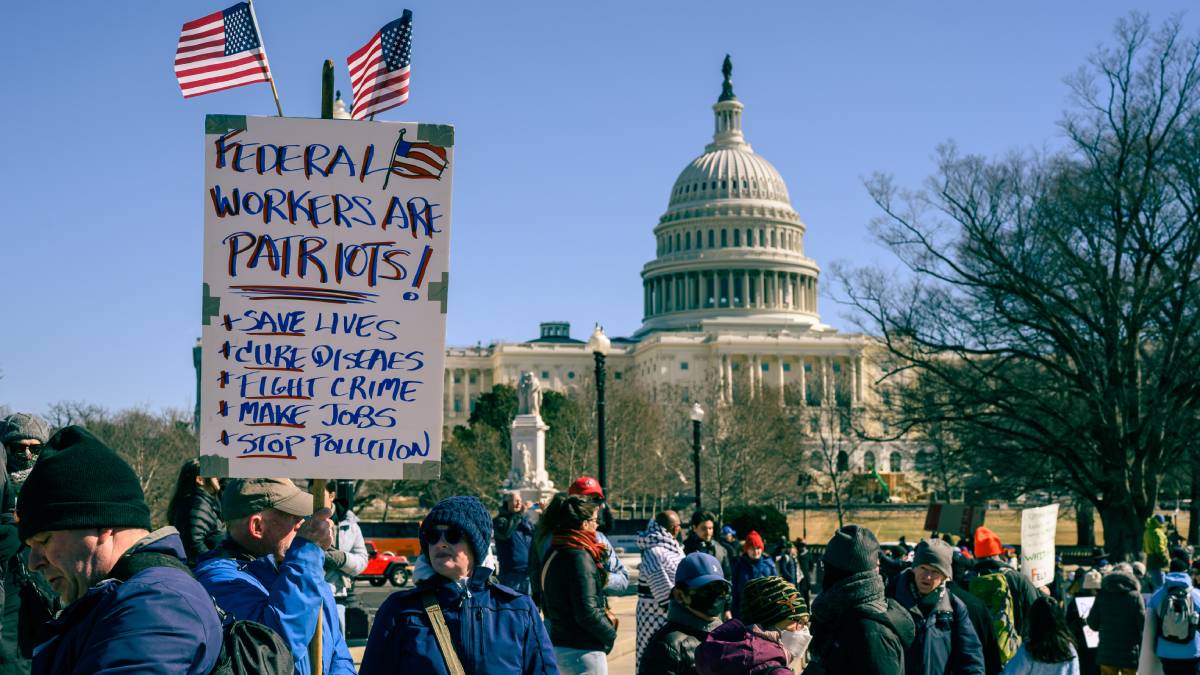

Today, a federal judge in San Francisco ordered the Trump administration to offer reinstatement to all probationary employees previously fired from the departments of Agriculture, Defense, Energy, Interior, Treasury and Veterans Affairs.
culture & policy

Posted inResearch & Developments
United States and Ukraine Weigh Mineral Deal

When U.S. President Donald Trump and Ukrainian President Volodymyr Zelenskyy met to sign a minerals agreement on 28 February, their discussion devolved into a heated, and widely covered, exchange. The minerals agreement, if signed, would result in half of Ukraine’ future revenue from minerals and natural resources going to the United States, in exchange for U.S. military support.

Posted inResearch & Developments
EPA Plans to Close Environmental Justice Offices, Leaving Communities to Face Pollution Alone

Yesterday, news broke that a memo from Lee Zeldin, the new administrator of the EPA, directed the agency to eliminate all offices that focus on environmental justice.

Posted inNews
Will Its $154 Billion Price Tag Keep Dust from Being Swept Under the Rug?
Data from 2017 show that costs associated with dust were second only to hurricanes when comparing billion-dollar disasters.

Posted inResearch & Developments
Funding Uncertainties Hit Undergrad REUs, Grad Admissions
A freeze, then a defrost, of National Science Foundation funding has caused turmoil among undergraduate scientists applying to graduate programs or REUs.

Posted inResearch Spotlights
Food Insecurity Is Linked to Heart Disease and Diabetes in the United States
A new study examines the geographic and demographic connections between health and a lack of consistent access to food, finding that this link is particularly strong in the South.
Posted inResearch & Developments
NASA Shutters Offices of Strategy, Chief Scientist, and Diversity
On Monday morning, NASA conducted a reduction in force (RIF) for its Office of Technology, Policy, and Strategy (OTPS), Office of the Chief Scientist, and the Diversity, Equity, Inclusion, and Accessibility branch of the Office of Diversity and Equal Opportunity. Scientists at these offices provided strategic insights and analysis on NASA’s partnerships and missions, ensured its science goals align with the administration’s science objectives, and ensured that everyone has the opportunity to contribute to space exploration.

Posted inNews
Crowds Stand Up for Science Across the United States
Funding freezes, firings, and censorship have sent shockwaves through the science community since January. Scientists and supporters are standing up in defense.

Posted inResearch & Developments
NOAA Layoffs Include Two Hurricane Hunter Flight Directors
On 27 February, the Trump administration fired hundreds of employees of the National Oceanic and Atmospheric Administration (NOAA). Among those fired were two flight directors for NOAA’s Hurricane Hunters, a loss that threatens to worsen the quality of hurricane forecasts ahead of Atlantic hurricane season.

Posted inNews
Trump Boasts About Dismantling Environmental and Science Policy
President Trump’s address to Congress touted takedowns of Biden’s initiatives and encouraged fossil fuel expansion but did not acknowledge recent cuts to the federal workforce.