

An analysis suggests that craters degrade faster on Mercury than the Moon, raising questions about landscape evolution on different planetary bodies.
erosion & weathering
Posted inEditors' Vox
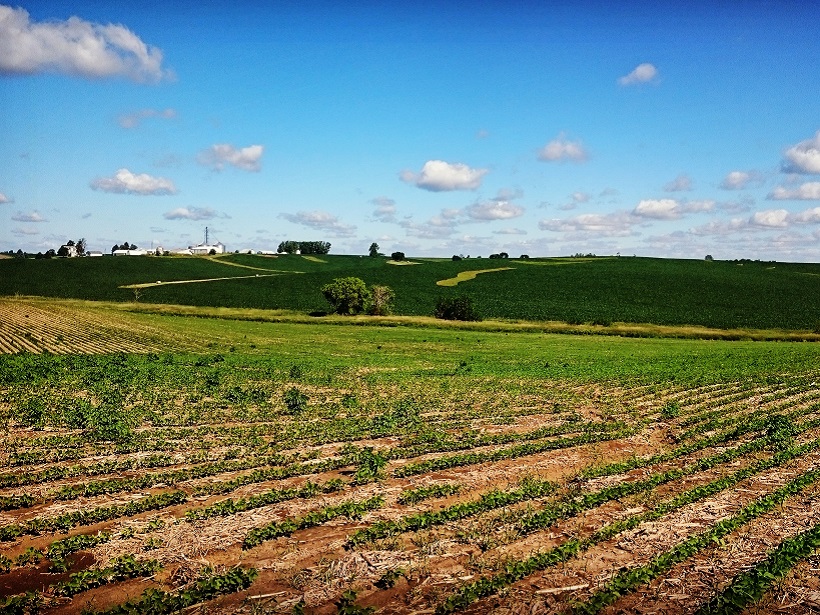
Stories in the Soil
A series of field experiments in the U.S. Midwest is investigating how past, present, and future human activities and climate affect the health of soil.
Posted inNews
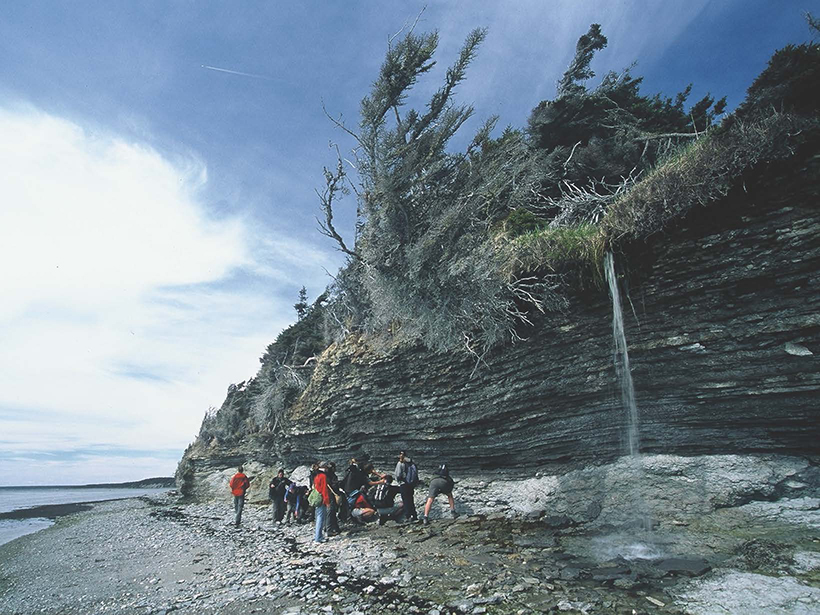
Clues Found That Earth May Have a Thermostat Set to “Habitable”

Weathering of rocks can control Earth’s temperature over geologic timescales, new geochemical data suggest.

Posted inEditors' Vox
Peering into the Cracks
A recent article in Reviews of Geophysics combined mathematical modeling, fracture mechanics theory and engineering research data to provide new insights into a critical geological process.

Posted inResearch Spotlights
Modeling Ocean Waves over Rocky Reefs
A field survey in Australia links rugged seafloor terrain to erosion-causing waves.
Posted inResearch Spotlights
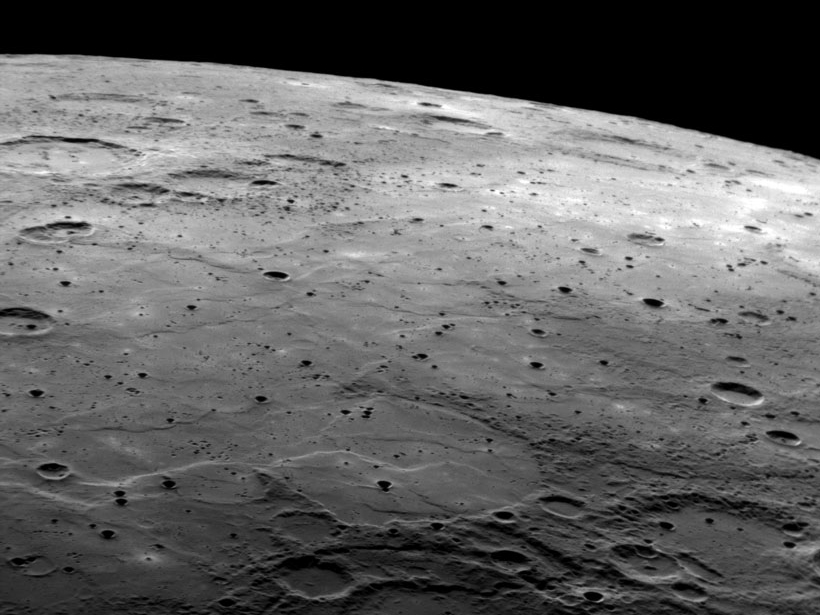
How Quickly Is Mercury’s Surface Evolving?

New measurements of impact craters on Mercury’s smooth plains suggest that the topography of the solar system’s innermost planet is changing at twice the rate of landforms on the Moon.
Posted inResearch Spotlights
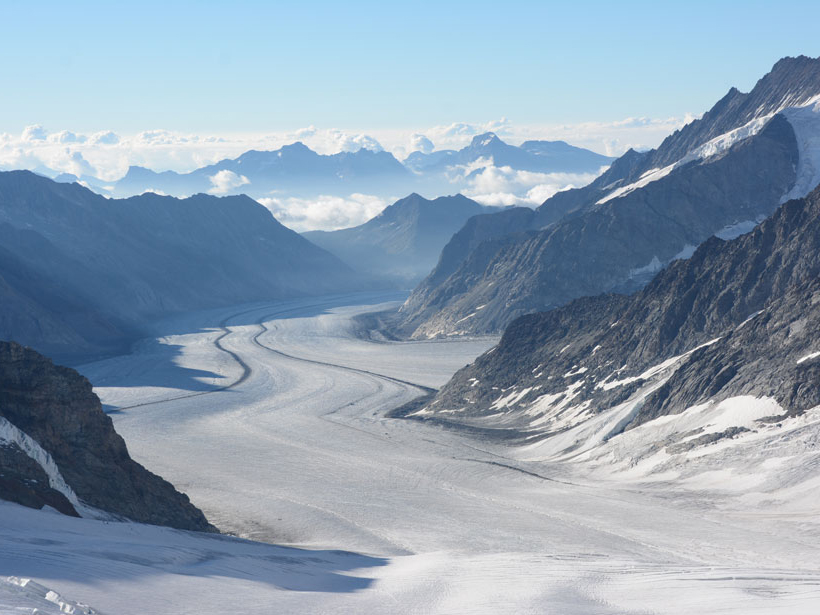
Cosmic Muons Reveal the Land Hidden Under Ice
Scientists accurately map the shape of the bedrock beneath a glacier using a new technique.
Posted inResearch Spotlights
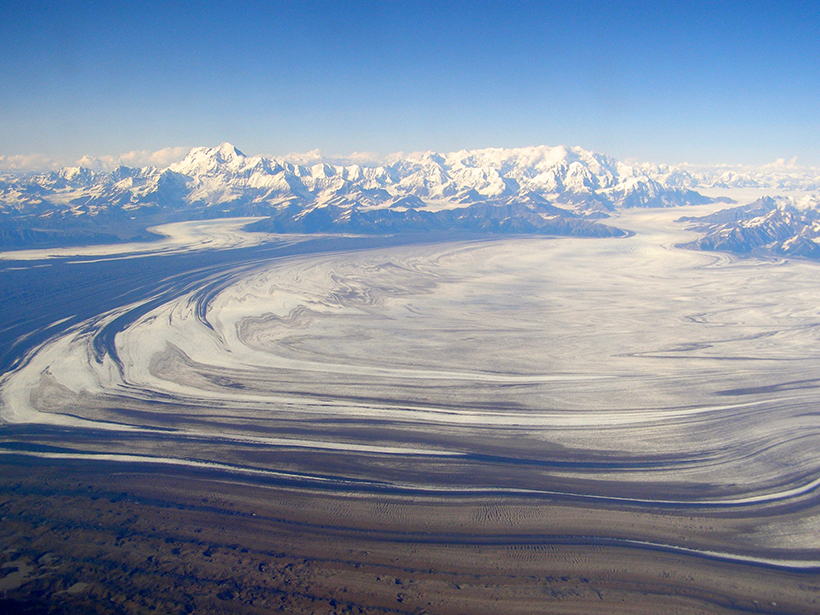
A Mountain Range's History Preserved in Ocean Sediments
Fission track dating core samples from the Gulf of Alaska demonstrates that offshore sediments can be used to reconstruct a mountain range's changing exhumation patterns.
Posted inResearch Spotlights
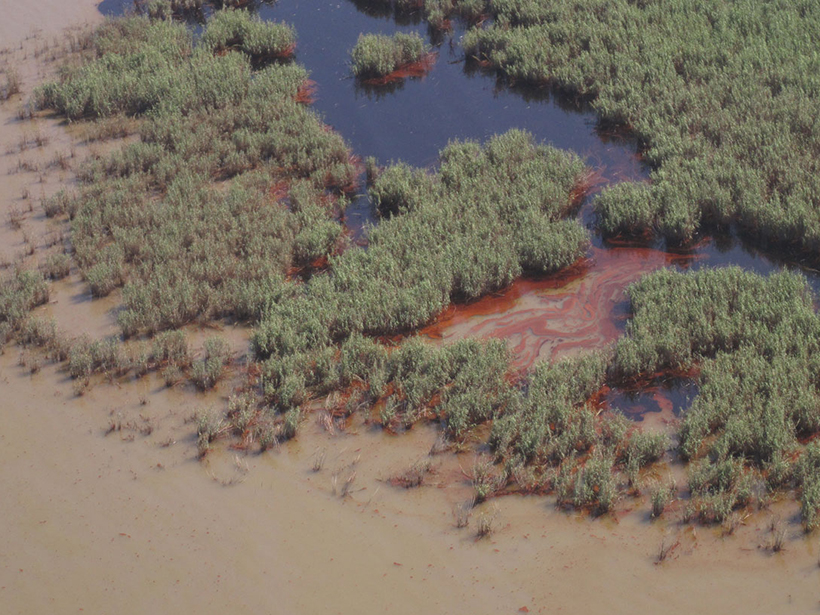
Oil Residues Accelerate Coastal Wetland Losses

Coastal wetland loss after an oil spill can be more extensive than after a hurricane.
Posted inResearch Spotlights
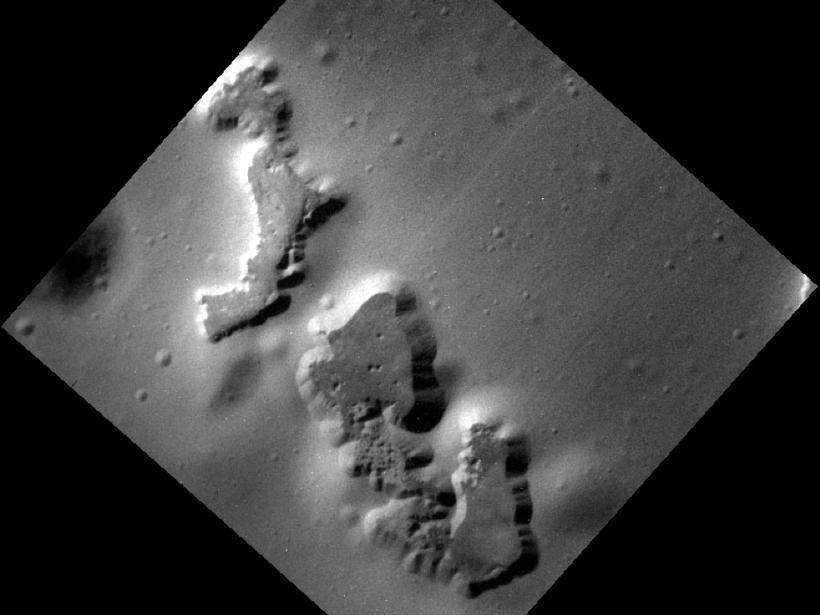
Unprecedented Views of Mercury Constrain Hollow Formation
The consistently shallow depths of the depressions scattered across Mercury's surface suggest their morphology is not determined by the thickness of a volatile-rich outer layer.