

An improved representation for black carbon microphysical and optical properties alleviates overestimations of aerosol absorption efficiency in global climate models.
everything atmospheric

Posted inNews
Meteor Impact Site Holds 200-Million-Year-Old Atmospheric Snapshot
Minerals formed in short-lived hydrothermal systems set off by a meteor impact in France preserved information about noble gases in the ancient atmosphere.

Posted inNews
Natural Nitrogen Emissions Are Rising in California
Wildfires and soil microbes are releasing more nitrogen oxides in California as the climate gets warmer and drier.

Posted inEditors' Highlights
Melting Glaciers as a Source of Lead in Coastal Waters
New experiments show how lead circulates through glaciers, meltwater, and sediments in polar environments.
Posted inResearch Spotlights
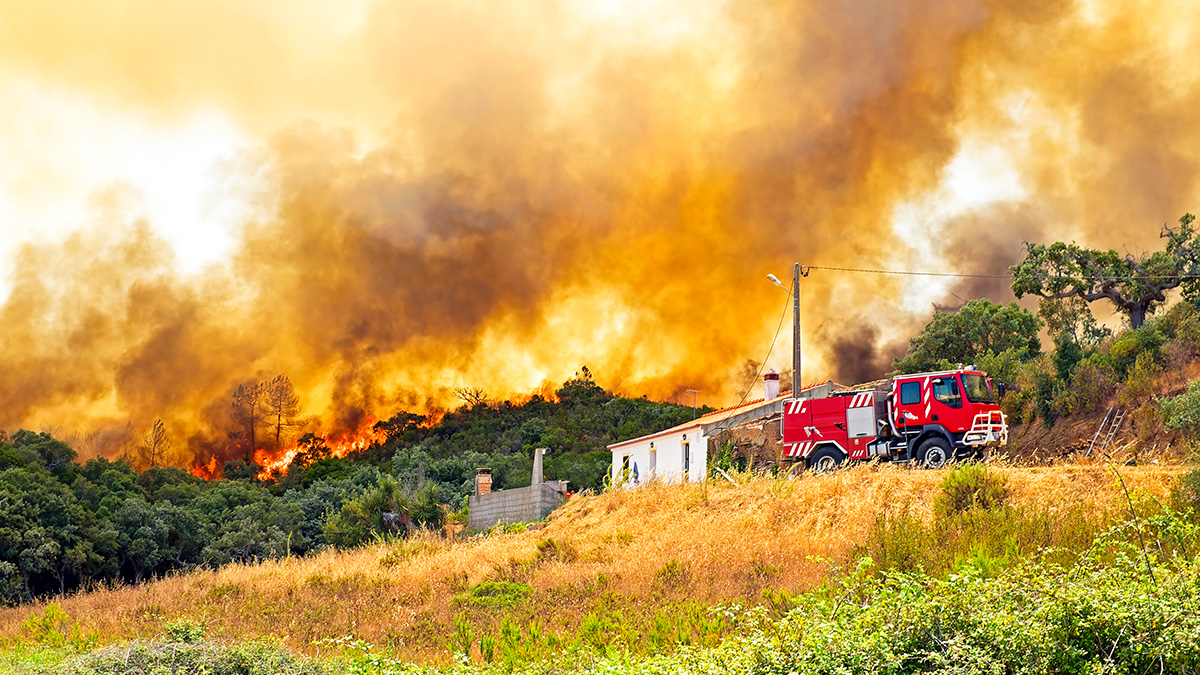
How Wildfires and Weather Affect Portugal’s Public Health

Researchers dug into data to examine the effects of wildfires, pollutants, and meteorological factors on mortality and cardiovascular health in the Iberian country.

Posted inEditors' Highlights
Warming Reduces Relative Humidity Through Soil Moisture
Relative humidity over land decreases in a warmer climate as a result of interactive soil moisture response.

Posted inResearch Spotlights
Aurora Records Reveal Shortened Solar Cycle During Maunder Minimum
Fastidious night sky observations from Korean historical texts provide a novel source of evidence for an altered solar cycle during periods of low magnetic activity.

Posted inEditors' Highlights
Meteorological Uncertainty Shapes Global Hydrological Modeling
A new study examines the effects of spatiotemporal precipitation uncertainty on key hydrologic processes, including runoff and soil moisture, in a comprehensive sample of 289 cryosphere regions.

Posted inNews
Plants Worldwide Reach a Stomata Stalemate
Research unveiled a surprising plateau in plants’ ability to absorb carbon through stomata, which could mean more carbon left in the atmosphere.
Posted inEditors' Highlights
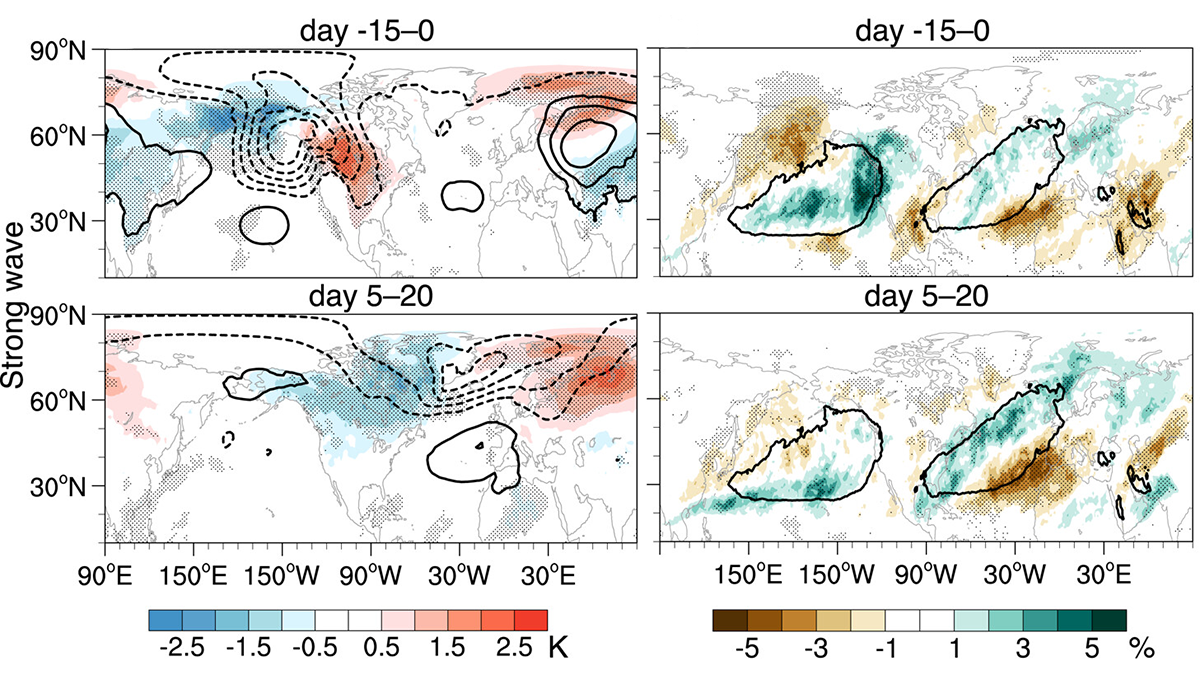
Modeling Stratospheric Impacts on North American Extreme Events
A new study quantifies the tropospheric and surface impacts of extreme stratospheric wave events and evaluates their representation in state-of-the-art climate models.