• About
  • Special Reports
  • Topics
    • Climate
    • Earth Science
    • Oceans
    • Space & Planets
    • Health & Ecosystems
    • Culture & Policy
    • Education & Careers
    • Opinions
  • Projects
    • Postcards From the Field
    • ENGAGE
    • Editors’ Highlights
    • Editors’ Vox
    • Eos en Español
    • Eos 简体中文版
    • Print Archive: 2015–2025
  • Policy Tracker
  • Blogs
    • Research & Developments
    • The Landslide Blog
  • Newsletter
  • Submit to Eos
  • AGU.org
  • Career Center
  • Join AGU
  • Give to AGU
  • About
  • Special Reports
  • Topics
    • Climate
    • Earth Science
    • Oceans
    • Space & Planets
    • Health & Ecosystems
    • Culture & Policy
    • Education & Careers
    • Opinions
  • Projects
    • Postcards From the Field
    • ENGAGE
    • Editors’ Highlights
    • Editors’ Vox
    • Eos en Español
    • Eos 简体中文版
    • Print Archive: 2015–2025
  • Policy Tracker
  • Blogs
    • Research & Developments
    • The Landslide Blog
  • Newsletter
  • Submit to Eos
Skip to content
  • AGU.org
  • Career Center
  • Join AGU
  • Give to AGU
Eos

Eos

Science News by AGU

Support Eos
Sign Up for Newsletter
  • About
  • Special Reports
  • Topics
    • Climate
    • Earth Science
    • Oceans
    • Space & Planets
    • Health & Ecosystems
    • Culture & Policy
    • Education & Careers
    • Opinions
  • Projects
    • Postcards From the Field
    • ENGAGE
    • Editors’ Highlights
    • Editors’ Vox
    • Eos en Español
    • Eos 简体中文版
    • Print Archive: 2015–2025
  • Policy Tracker
  • Blogs
    • Research & Developments
    • The Landslide Blog
  • Newsletter
  • Submit to Eos

Hazards & Disasters

The sun rises in a pink sky beyond the skyline of lower Manhattan.
Posted inResearch Spotlights

The Far-Reaching Consequences of Wildfire Smoke Plumes

Kate Wheeling, freelance science writer by Kate Wheeling 1 December 20211 March 2023

Smoke from wildfires burning in the western United States carries harmful pollutants across the country.

Nevado del Ruiz volcano seen on a cloudless morning from the western hills of Bogotá
Posted inENGAGE, News

How the Armero Tragedy Changed Volcanology in Colombia

by Santiago Flórez and Camilo Garzón 30 November 202128 March 2023

The deadly eruption of Nevado del Ruiz in 1985 made Colombian volcanologists realize that studying natural phenomena was irrelevant if they could not share their knowledge to avoid predictable tragedies.

Posted inResearch Spotlights

Tubos de lava terrestres podrían ofrecer información sobre la vida extraterrestre

Aaron Sidder, freelance science writer by Aaron Sidder 29 November 202129 November 2021

Una nueva investigación encuentra que Actinobacteria en cuevas de lava fijan carbón y sobreviven independientemente de aportes superficiales, ofreciendo una nueva perspectiva en la investigación de la vida fuera de la Tierra.

An uprooted tree after an extreme weather event
Posted inResearch Spotlights

New Theory Connects Tree Uprooting and Sediment Movement

Aaron Sidder, freelance science writer by Aaron Sidder 19 November 202125 March 2022

Tree throw from extreme wind events plays an important role in the movement of sediment and erosion on forested hillslopes. A new theory offers a novel way to measure its impact.

Aerial view of flooding in around Houston, Texas.
Posted inScience Updates

Forecasting Compound Floods in Complex Coastal Regions

by Saeed Moghimi, Edward Myers, Shachak Pe’eri, Y. Joseph Zhang and Fei Ye 16 November 202127 October 2022

Coastal communities face more frequent floods in which rain, rivers, and ocean storm surge combine forces. A reliable system that accurately predicts inundation from these events is urgently needed.
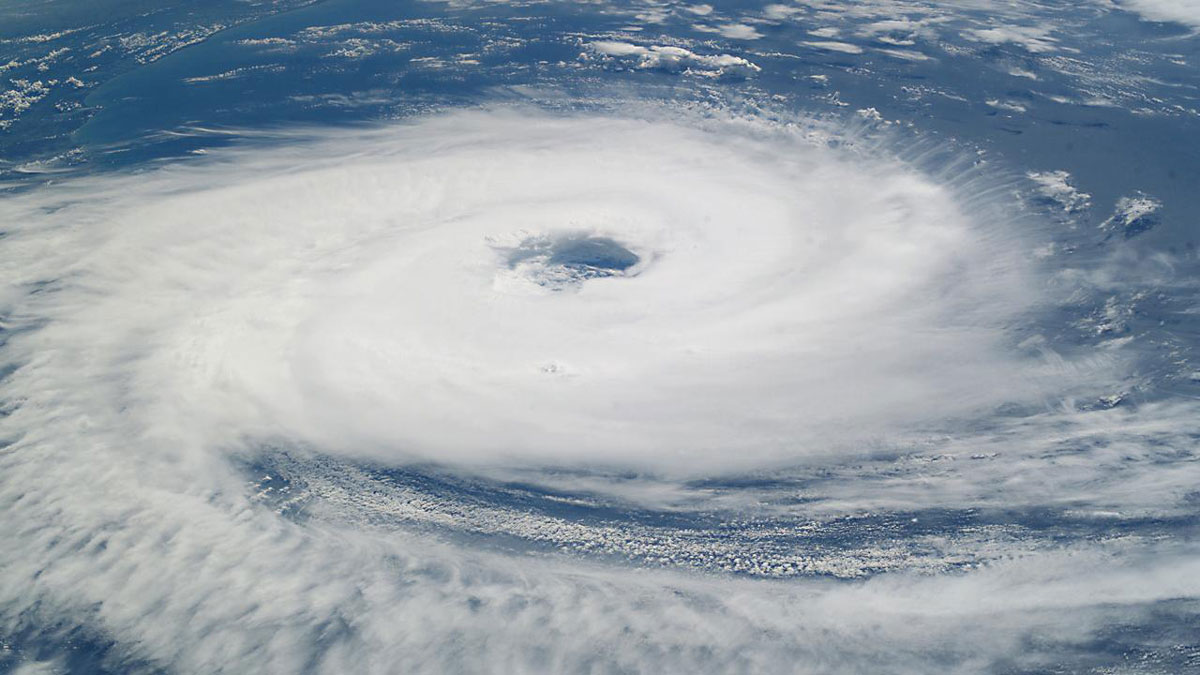
An image of a hurricane making landfall in southern Brazil
Posted inResearch Spotlights

Cyclone “Seed” Survival Affects Hurricane Season Intensity

Joshua Learn, Science Writer by Joshua Rapp Learn 15 November 202111 January 2022

Understanding how seed storms grow into full-blown hurricanes and typhoons could help predict hurricane season intensity in a changing climate.

A van drives through a flooded street in downtown Miami on a sunny day.
Posted inFeatures

The Benefits of Better Ocean Weather Forecasting

by Charlotte DeMott, Ángel G. Muñoz, Christopher D. Roberts, Claire M. Spillman and F. Vitart 12 November 202118 October 2022

Improvements in our ability to forecast oceanic conditions weeks to months in advance will help communities, industries, and other groups prepare amid a changing climate.

Image of gas hydrate cubes burning
Posted inNews

Forecasting Geohazards in the Age of Gas Hydrate Exploitation

by Fanni Daniella Szakal 3 November 202131 July 2023

A curious breath-like pattern exhibited by gas hydrates may help forecast hazards associated with extracting them from the seafloor.
Posted inENGAGE, News

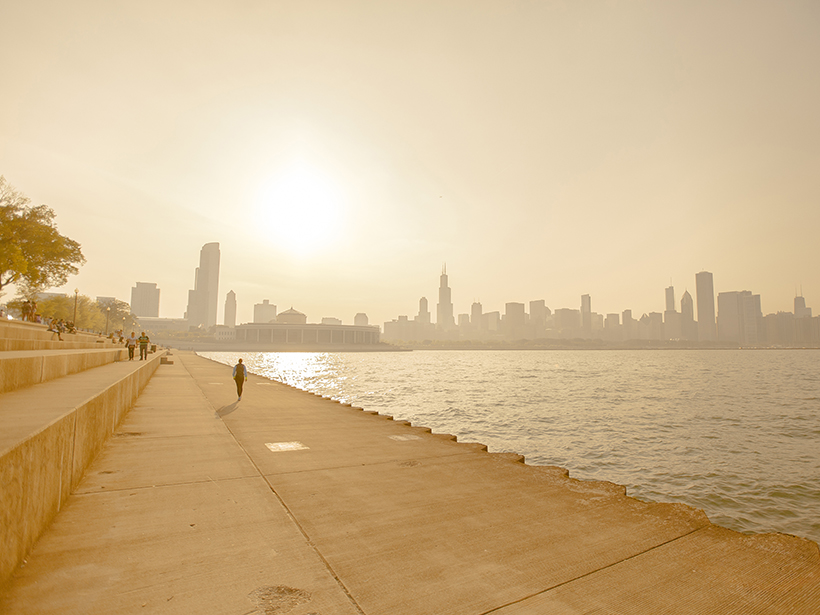
¿Cómo saber si has experimentado el calentamiento global?

Kimberly M. S. Cartier, News Writing and Production Intern for Eos.org by Kimberly M. S. Cartier 3 November 202128 March 2023

Contestar esta pregunta puede ayudar a tomadores de decisiones, científicos y comunicadores climáticos a desarrollar estrategias más efectivas para llegar a escépticos y negacionistas.

Overhead shot of a flooded river in the center of Hue, Vietnam
Posted inNews

New Tool Crafts Fast, Free Flood Maps for the Global South

by J. Besl 2 November 202130 September 2022

A new online program can quickly map the outlines of past floods, allowing data-scarce countries to prepare for future disasters.

Posts pagination

Newer posts 1 … 75 76 77 78 79 … 186 Older posts
Over a dark blue-green square appear the words Special Report: The State of the Science 1 Year On.

Features from AGU Publications

Research Spotlights

Harnessing Glacial Lakes for Hydropower

23 November 202623 November 2026
Editors' Highlights

How Streams Breathe: The Science of Expanding and Contracting

24 November 202624 November 2026
Editors' Vox

2100 is Not the Far Future Anymore

24 November 202624 November 2026
Eos logo at left; AGU logo at right

About Eos
ENGAGE
Awards
Contact

Advertise
Submit
Career Center
Sitemap

© 2026 American Geophysical Union. All rights reserved Powered by Newspack