• About
  • Special Reports
  • Topics
    • Climate
    • Earth Science
    • Oceans
    • Space & Planets
    • Health & Ecosystems
    • Culture & Policy
    • Education & Careers
    • Opinions
  • Projects
    • Postcards From the Field
    • ENGAGE
    • Editors’ Highlights
    • Editors’ Vox
    • Eos en Español
    • Eos 简体中文版
    • Print Archive: 2015–2025
  • Policy Tracker
  • Blogs
    • Research & Developments
    • The Landslide Blog
  • Newsletter
  • Submit to Eos
  • AGU.org
  • Career Center
  • Join AGU
  • Give to AGU
  • About
  • Special Reports
  • Topics
    • Climate
    • Earth Science
    • Oceans
    • Space & Planets
    • Health & Ecosystems
    • Culture & Policy
    • Education & Careers
    • Opinions
  • Projects
    • Postcards From the Field
    • ENGAGE
    • Editors’ Highlights
    • Editors’ Vox
    • Eos en Español
    • Eos 简体中文版
    • Print Archive: 2015–2025
  • Policy Tracker
  • Blogs
    • Research & Developments
    • The Landslide Blog
  • Newsletter
  • Submit to Eos
Skip to content
  • AGU.org
  • Career Center
  • Join AGU
  • Give to AGU
Eos

Eos

Science News by AGU

Support Eos
Sign Up for Newsletter
  • About
  • Special Reports
  • Topics
    • Climate
    • Earth Science
    • Oceans
    • Space & Planets
    • Health & Ecosystems
    • Culture & Policy
    • Education & Careers
    • Opinions
  • Projects
    • Postcards From the Field
    • ENGAGE
    • Editors’ Highlights
    • Editors’ Vox
    • Eos en Español
    • Eos 简体中文版
    • Print Archive: 2015–2025
  • Policy Tracker
  • Blogs
    • Research & Developments
    • The Landslide Blog
  • Newsletter
  • Submit to Eos

plate tectonics

The active crater of Vulcano viewed from Lipari, in Italy’s Aeolian islands
Posted inScience Updates

Understanding Volcanic Eruptions Where Plates Meet

by R. Azzaro and R. De Rosa 16 May 201627 October 2021

A new project elucidates the relationships between tectonics and volcanic systems and how they influence hazards on Italy's Mount Etna and Vulcano and Lipari islands.
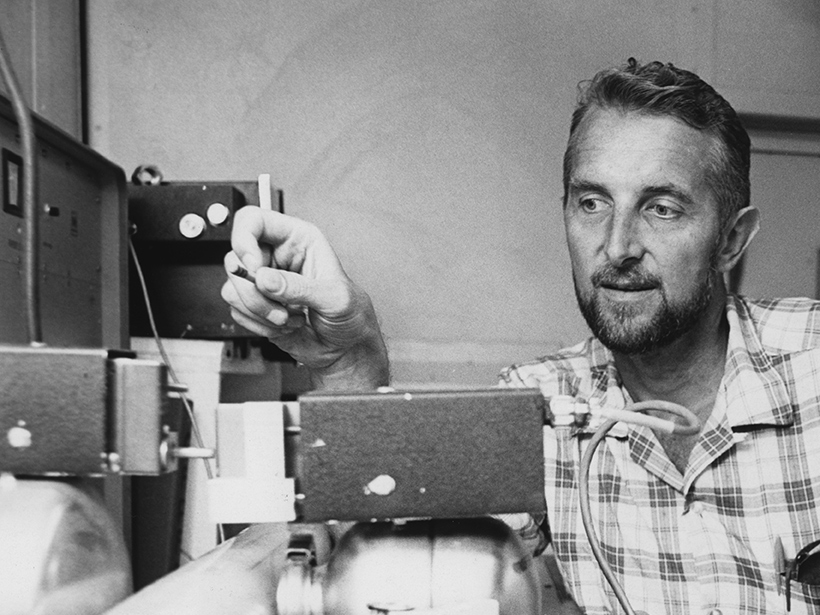
Richard P. Von Herzen examining a gamma ray attenuation porosity evaluation machine aboard the drilling ship Glomar Challenger during Leg 3 of the Deep Sea Drilling Project in 1968.
Posted inNews

Richard P. Von Herzen (1930–2016)

by K. Becker and J. G. Sclater 27 April 20161 October 2021

Richard P. Von Herzen, a pioneer of marine heat flow studies who helped validate plate tectonics and discover oceanic hydrothermal vents, passed away on 28 January 2016. He was 85.
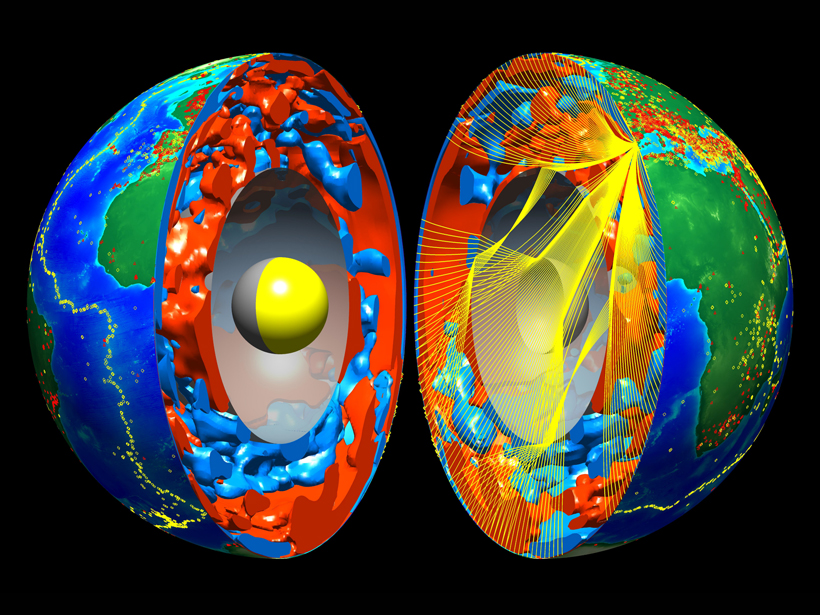
Seismic wave velocity structure in deep Earth revealed through seismic tomography.
Posted inResearch Spotlights

Massive Ancient Tectonic Slab Found Below the Indian Ocean

Cody Sullivan by C. Sullivan 1 April 201611 January 2022

Scientists discover a surprisingly positioned tectonic plate, buried below the southern Indian Ocean, that spans the entire mantle.

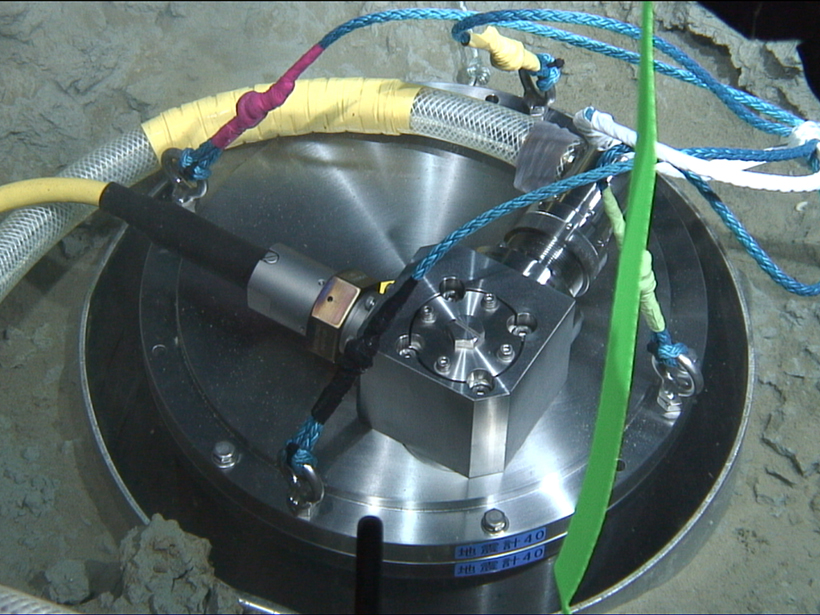
Recovery of one of the Lamont Doherty Earth Observatory instruments aboard R/V Roger Revelle.
Posted inScience Updates

Investigations of Shallow Slow Slip Offshore of New Zealand

by R. Harris, L. Wallace, S. Webb, Y. Ito, K. Mochizuki, H. Ichihara, S. Henrys, A. Tréhu, S. Schwartz, A. Sheehan, D. Saffer and R. Lauer 28 March 201618 January 2022

Recent and upcoming studies of the Hikurangi margin east of New Zealand shed light on previously undetectable tectonic movements.

Posted inResearch Spotlights

Alaska's Semidi Segment Could Unleash a Devastating Tsunami

by Terri Cook 19 February 201616 August 2022

Study reveals structures along the Alaskan convergent margin capable of generating a powerful tsunami directed toward the United States's West Coast.

Posted inResearch Spotlights

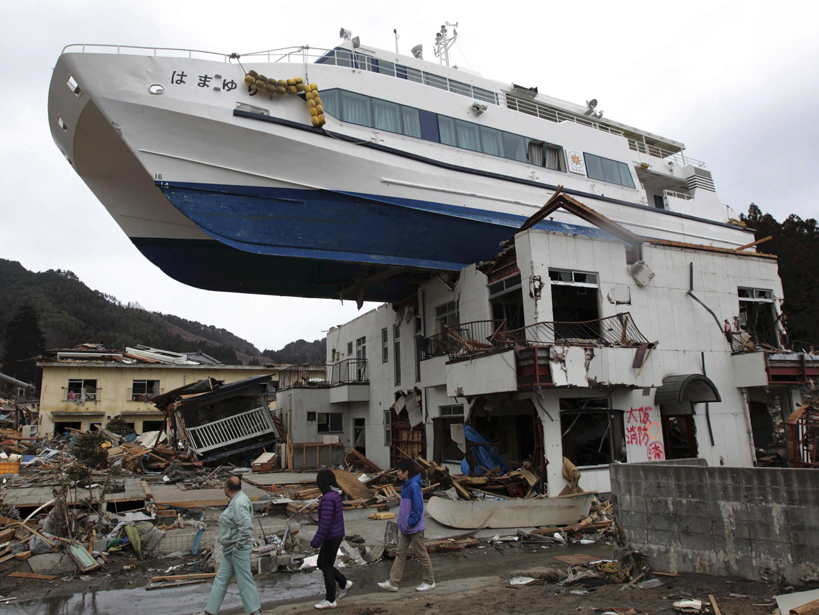
Plate Displacement Rate Offers Insight into 2011 Tohoku Quake

by L. Strelich 4 February 201624 January 2023

For the first time, scientists use GPS to measure the displacement rate of the subducting Pacific Plate near the source of disastrous shaking in 2011.
Posted inNews

Subtle Seismic Movements May Help Forecast Large Earthquakes

JoAnna Wendel, freelance science writer and illustrator by JoAnna Wendel 1 February 20166 October 2021

Where a plate of Earth's crust slides under another and when frequent episodes of plate slippage occur without noticeable earthquakes, large temblors will more likely strike, a new study finds.

Posted inScience Updates

UAE-Oman Mountains Give Clues to Oceanic Crust and Mantle Rocks

by S. Pilia, M. Y. Ali, A. B. Watts and M. P. Searle 9 December 20154 August 2023

When oceanic plates meet continental plates, the continental plates usually come out on top. Cases where this is reversed provide valuable access to oceanic crust and mantle materials.

Posted inResearch Spotlights

Wharton Basin Earthquakes: Evidence for a New Plate Boundary?

by Terri Cook 11 November 20154 February 2022

The largest ever strike-slip earthquake may have occurred on a newly developing boundary between the Indian and Australian plates.

Posted inResearch Spotlights

Bending Plate Provides Unexpected Heat Source

by C. Minnehan 1 October 201510 March 2022

Scientists discover the causes for heat flow anomalies near the Japan Trench.

Posts pagination

Newer posts 1 … 24 25 26 27 28 Older posts
Over a dark blue-green square appear the words Special Report: The State of the Science 1 Year On.

Features from AGU Publications

Research Spotlights

How Does Social Vulnerability Evolve After a Tropical Cyclone?

4 August 20264 August 2026
Editors' Highlights

Late Campanian Arabia-Eastern Anatolia Collision

4 August 20264 August 2026
Editors' Vox

How Bubbles Reshape Air-Sea Gas Exchange

5 August 20265 August 2026
Eos logo at left; AGU logo at right

About Eos
ENGAGE
Awards
Contact

Advertise
Submit
Career Center
Sitemap

© 2026 American Geophysical Union. All rights reserved Powered by Newspack