• About
  • Special Reports
  • Topics
    • Climate
    • Earth Science
    • Oceans
    • Space & Planets
    • Health & Ecosystems
    • Culture & Policy
    • Education & Careers
    • Opinions
  • Projects
    • Postcards From the Field
    • ENGAGE
    • Editors’ Highlights
    • Editors’ Vox
    • Eos en Español
    • Eos 简体中文版
    • Print Archive: 2015–2025
  • Policy Tracker
  • Blogs
    • Research & Developments
    • The Landslide Blog
  • Newsletter
  • Submit to Eos
  • AGU.org
  • Career Center
  • Join AGU
  • Give to AGU
  • About
  • Special Reports
  • Topics
    • Climate
    • Earth Science
    • Oceans
    • Space & Planets
    • Health & Ecosystems
    • Culture & Policy
    • Education & Careers
    • Opinions
  • Projects
    • Postcards From the Field
    • ENGAGE
    • Editors’ Highlights
    • Editors’ Vox
    • Eos en Español
    • Eos 简体中文版
    • Print Archive: 2015–2025
  • Policy Tracker
  • Blogs
    • Research & Developments
    • The Landslide Blog
  • Newsletter
  • Submit to Eos
Skip to content
  • AGU.org
  • Career Center
  • Join AGU
  • Give to AGU
Eos

Eos

Science News by AGU

Support Eos
Sign Up for Newsletter
  • About
  • Special Reports
  • Topics
    • Climate
    • Earth Science
    • Oceans
    • Space & Planets
    • Health & Ecosystems
    • Culture & Policy
    • Education & Careers
    • Opinions
  • Projects
    • Postcards From the Field
    • ENGAGE
    • Editors’ Highlights
    • Editors’ Vox
    • Eos en Español
    • Eos 简体中文版
    • Print Archive: 2015–2025
  • Policy Tracker
  • Blogs
    • Research & Developments
    • The Landslide Blog
  • Newsletter
  • Submit to Eos

satellites

Posted inResearch Spotlights

Scientists Map Temperature and Density in Earth’s Exosphere

by W. Yan 23 August 201626 October 2021

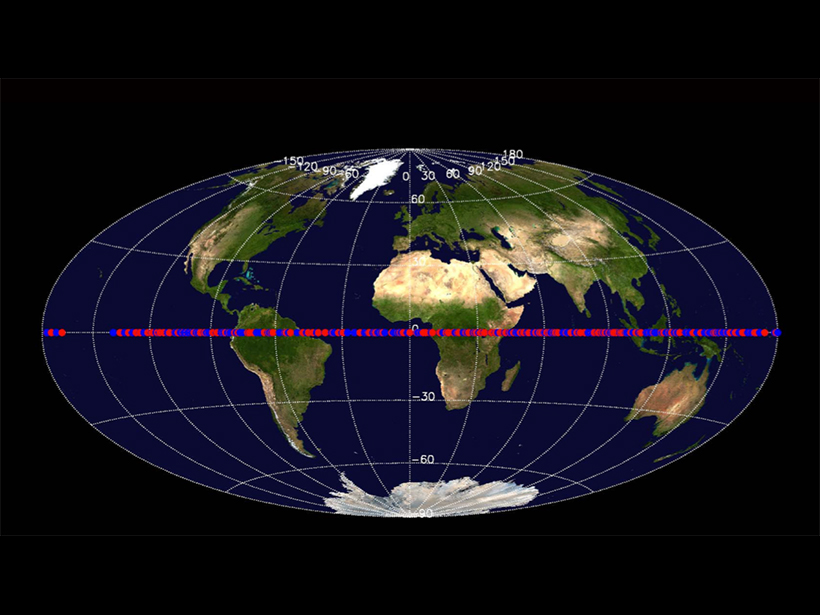
Data from multiple orbiters give a clearer picture of how density and temperature interact and what that could mean for future satellite missions.

space-weather-magnetosphere-model-protect-satellites
Posted inResearch Spotlights

Predicting Space Weather, Protecting Satellites

Leah Crane by L. Crane 4 August 201613 October 2021

A new model predicts electron and ion fluxes at geosynchronous orbit an hour ahead of time, allowing satellite operators to protect their instruments.
CASSIOPE-satellite-measure-Earth-atmosphere-ionosphere
Posted inResearch Spotlights

Tracking Ions at the Edge of the Atmosphere

Leah Crane by L. Crane 2 August 20165 July 2022

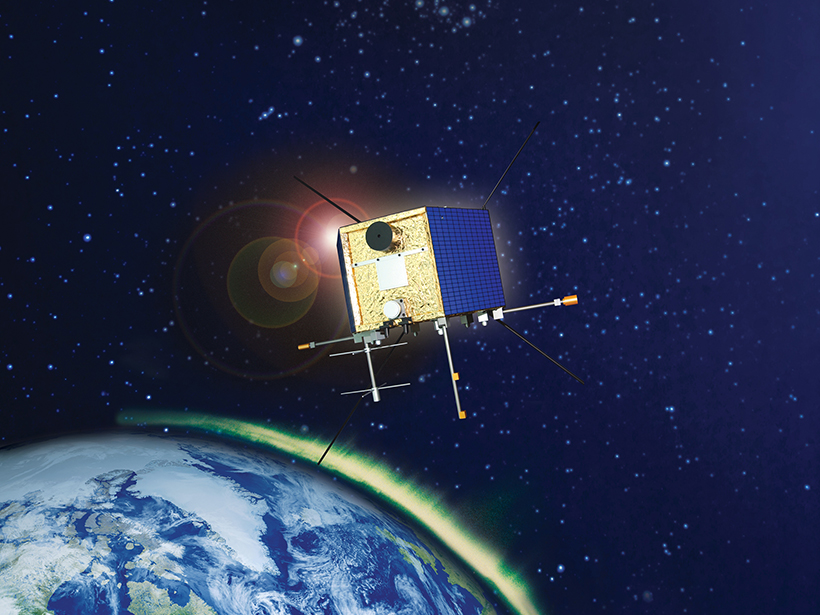
The first results from a recently launched satellite hold promise for studying solar storms, the very top of Earth's ionosphere, and how the atmosphere is evolving.

Portion of the first image taken by the Sentinel-1B Earth-observing satellite.
Posted inNews

Rapidly Activated Satellite Completes A European Constellation

by P. L. Weiss 29 April 20166 March 2023

Sentinel-1B will move to a new orbit on the other side of our planet from its sister spacecraft Sentinel-1A.
van-allen-probes-artists-rendering
Posted inScience Updates

Radiation Belt Processes in a Declining Solar Cycle

by A. Y. Ukhorskiy, B. H. Mauk, D. G. Sibeck and R. L. Kessel 23 March 201627 March 2023

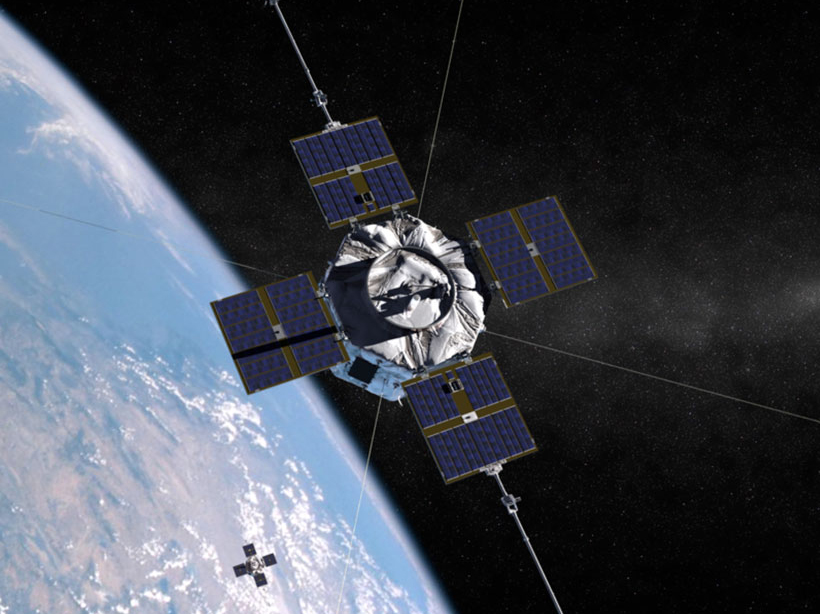
The Van Allen Probes began an extended mission in November to advance understanding of Earth's radiation belts.

Posted inResearch Spotlights

Satellite Shows Earth's Magnetic Field Bent During a Solar Storm

by Mark Zastrow 18 March 201613 April 2022

When solar storms strike, they weaken Earth's defenses against harmful radiation. New satellite measurements reveal just how much.

Posted inResearch Spotlights

New GPS Satellite Technique to Monitor Ionospheric Disturbances

by S. Kelleher 7 March 201624 January 2023

Researchers are developing better ways to use satellites to understand space weather events that can interfere with technology.

Posted inScience Updates

Students, Meet Data

by N. E. Bader, D. Soule, D. Castendyk, T. Meixner, C. O’Reilly and R. D. Gougis 2 March 201612 January 2023

Lessons that incorporate publicly available data from Earth observing sensors can expose students to the thrill of scientific discovery.

Posted inResearch Spotlights

New Weather Satellite Captures Sea Surface Temperatures

Sarah Stanley, Science Writer by Sarah Stanley 19 February 20169 February 2022

A new algorithm improves the accuracy of Pacific and Indian Ocean surface temperature measurements by the Japanese geostationary satellite Himawari-8.
Posted inResearch Spotlights

Satellites Reveal Dynamics of Suspended Mineral Particles

by Terri Cook 18 February 20165 September 2023

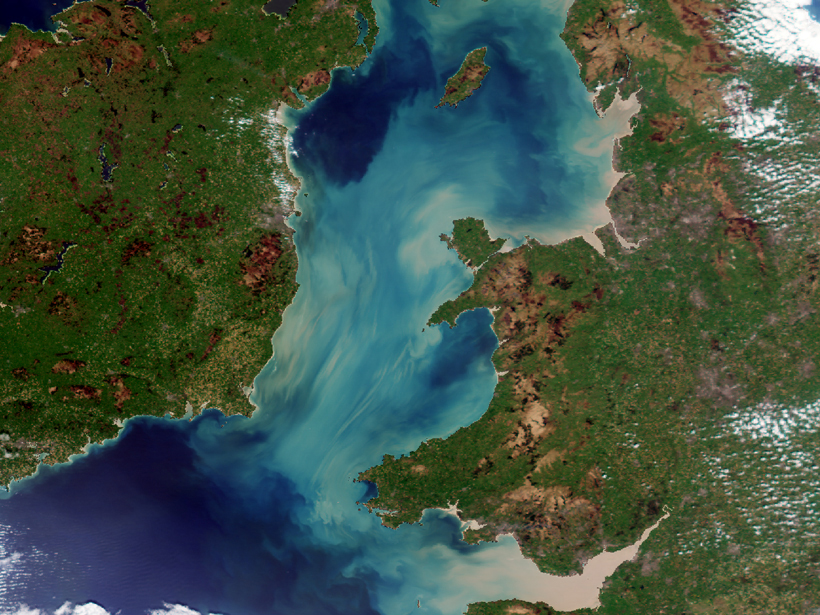
A case study of the Irish Sea evaluates the use of ocean color data to measure the optical properties of sedimentary particles in offshore waters.

Posts pagination

Newer posts 1 … 25 26 27 28 29 Older posts
Over a dark blue-green square appear the words Special Report: The State of the Science 1 Year On.

Features from AGU Publications

Research Spotlights

A Decade of Carbon Dioxide Data from Space Gets an Upgrade

30 October 202630 October 2026
Editors' Highlights

Connecting Radio Wave Disruption to “Hot” Charged Particles from Afar

30 October 202630 October 2026
Editors' Vox

Opening Access to Earth Observation Data for Disaster Mitigation

21 October 202620 October 2026
Eos logo at left; AGU logo at right

About Eos
ENGAGE
Awards
Contact

Advertise
Submit
Career Center
Sitemap

© 2026 American Geophysical Union. All rights reserved Powered by Newspack