• About
  • Special Reports
  • Topics
    • Climate
    • Earth Science
    • Oceans
    • Space & Planets
    • Health & Ecosystems
    • Culture & Policy
    • Education & Careers
    • Opinions
  • Projects
    • Postcards From the Field
    • ENGAGE
    • Editors’ Highlights
    • Editors’ Vox
    • Eos en Español
    • Eos 简体中文版
    • Print Archive: 2015–2025
  • Policy Tracker
  • Blogs
    • Research & Developments
    • The Landslide Blog
  • Newsletter
  • Submit to Eos
  • AGU.org
  • Career Center
  • Join AGU
  • Give to AGU
  • About
  • Special Reports
  • Topics
    • Climate
    • Earth Science
    • Oceans
    • Space & Planets
    • Health & Ecosystems
    • Culture & Policy
    • Education & Careers
    • Opinions
  • Projects
    • Postcards From the Field
    • ENGAGE
    • Editors’ Highlights
    • Editors’ Vox
    • Eos en Español
    • Eos 简体中文版
    • Print Archive: 2015–2025
  • Policy Tracker
  • Blogs
    • Research & Developments
    • The Landslide Blog
  • Newsletter
  • Submit to Eos
Skip to content
  • AGU.org
  • Career Center
  • Join AGU
  • Give to AGU
Eos

Eos

Science News by AGU

Support Eos
Sign Up for Newsletter
  • About
  • Special Reports
  • Topics
    • Climate
    • Earth Science
    • Oceans
    • Space & Planets
    • Health & Ecosystems
    • Culture & Policy
    • Education & Careers
    • Opinions
  • Projects
    • Postcards From the Field
    • ENGAGE
    • Editors’ Highlights
    • Editors’ Vox
    • Eos en Español
    • Eos 简体中文版
    • Print Archive: 2015–2025
  • Policy Tracker
  • Blogs
    • Research & Developments
    • The Landslide Blog
  • Newsletter
  • Submit to Eos

seismology

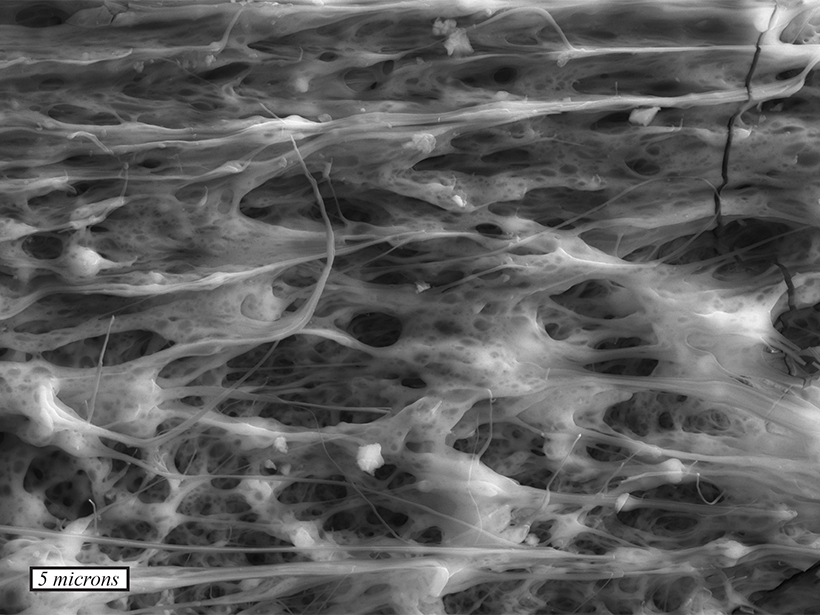
Micrographs of melted asperities due to flash heating during laboratory earthquakes.
Posted inResearch Spotlights

Flash Heating May Lubricate Rubbing Rock Faces in Earthquakes

by David Shultz 24 May 20166 October 2021

A new laboratory study examines the small-scale physics at play as two pieces of granite are smashed together in a scaled-down version of a real earthquake.
Posted inScience Updates

Extending Recent Seismic Imaging Successes to South America

by K. M. Ward, J. R. Delph and S. L. Beck 28 April 201627 January 2023

Ambient Noise Tomography Workshop (MIMOSA); Tucson, Arizona, 17–23 January 2016
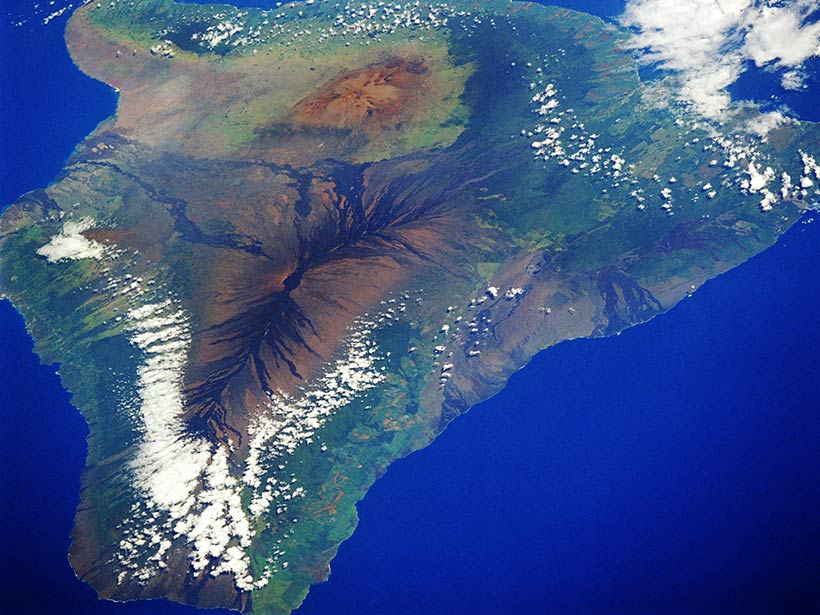
Satellite image of the island of Hawaii.
Posted inResearch Spotlights

A Hole in Earth’s Surface

by W. Yan 26 April 20169 November 2022

Research shows that a broken lithosphere underneath the island of Hawai'i could explain the island's patterns of seismic activity.
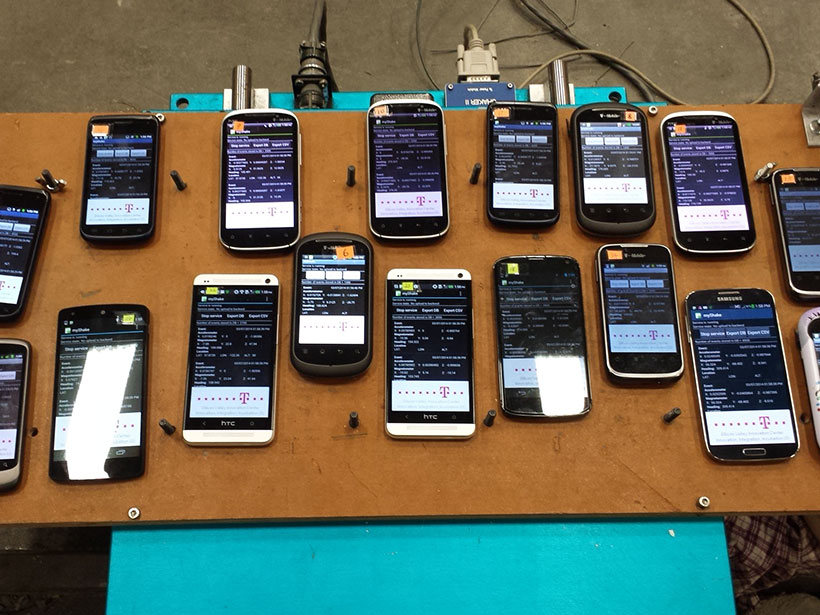
In tests of the MyShake app, researchers subjected cell phones to simulated earthquakes using a shake table at the University of California, Berkeley.
Posted inNews

Crowdsourced Seismology

by E. Deatrick 26 April 20168 December 2022

The seismologists of the world want to turn you into an earthquake detector.
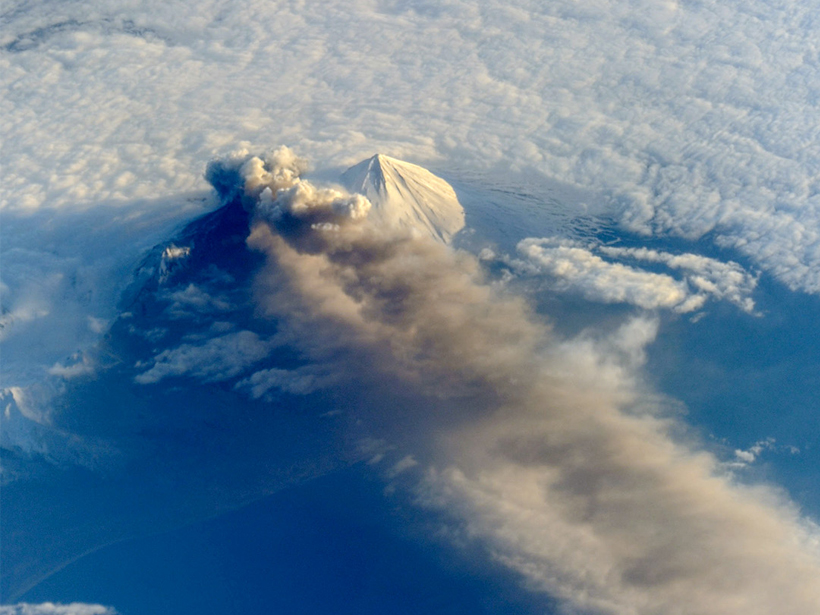
pavlof-volcano-eruption
Posted inNews

Sound Waves Help Scientists Track Volcanic Eruptions

JoAnna Wendel, freelance science writer and illustrator by JoAnna Wendel 5 April 20162 May 2022

When sound waves hit the ground, they shake seismometers like earthquake waves. Scientists can now use these sound-induced seismic waves to investigate volcanic activity.

Posted inResearch Spotlights

Variable Mantle Lies Below Ancient Pieces of Earth's Crust

Cody Sullivan by C. Sullivan 16 March 20164 August 2023

Underneath old and stable pieces of Earth's crust in North America, the mantle's uppermost portion contains multiple layers that change the velocities of seismic waves.

Posted inResearch Spotlights

Characterizing the Fault Beneath the Marmara Sea

Kate Wheeling, freelance science writer by Kate Wheeling 29 February 201624 March 2023

Researchers mine seismic wave data to elucidate the stress relief system of the Main Marmara Fault beneath Turkey's inland sea.

Posted inNews

Seeing the Gravitational Waves, Despite the Seismic Waves

by L. O’Hanlon 17 February 20168 February 2023

For detectors to sense the minute jolt of a gravitational wave announced last week, savvy geophysicists and engineers had to keep Earth's tiniest jiggles from reaching ultrasensitive instruments.

Posted inResearch Spotlights

Seismic Clues Reveal the Mechanisms Behind Iceberg Calving

by L. Strelich 16 February 20168 December 2022

Scientists combine models and video footage of iceberg calving to analyze the potential of seismology to unravel physical processes behind the breakup of ice sheets.

Posted inNews

What Makes the Ground Suddenly Pop?

JoAnna Wendel, freelance science writer and illustrator by JoAnna Wendel 9 February 201630 September 2022

A geological feature in Michigan’s wooded Upper Peninsula has scientists scratching their heads.

Posts pagination

Newer posts 1 … 27 28 29 30 31 Older posts
Over a dark blue-green square appear the words Special Report: The State of the Science 1 Year On.

Features from AGU Publications

Research Spotlights

How the 2024 Solar Superstorm Drained Earth’s Radiation Belt

14 September 202614 September 2026
Editors' Highlights

Remote Sensing Mitigated the Impact of the 2025 Los Angeles Wildfires

14 September 202614 September 2026
Editors' Vox

In Appreciation of AGU’s Outstanding Reviewers of 2025

14 September 202610 September 2026
Eos logo at left; AGU logo at right

About Eos
ENGAGE
Awards
Contact

Advertise
Submit
Career Center
Sitemap

© 2026 American Geophysical Union. All rights reserved Powered by Newspack