Source: AGU Advances
Earth system models offer insight into how climate change will affect communities. But residents of those communities are rarely consulted on the design and deployment of these models, which can lead to the models being misused in local decisionmaking. To bridge this divide, Cheng et al. collaborated with Indigenous communities in two regions to model the effects climate change will have on their land.
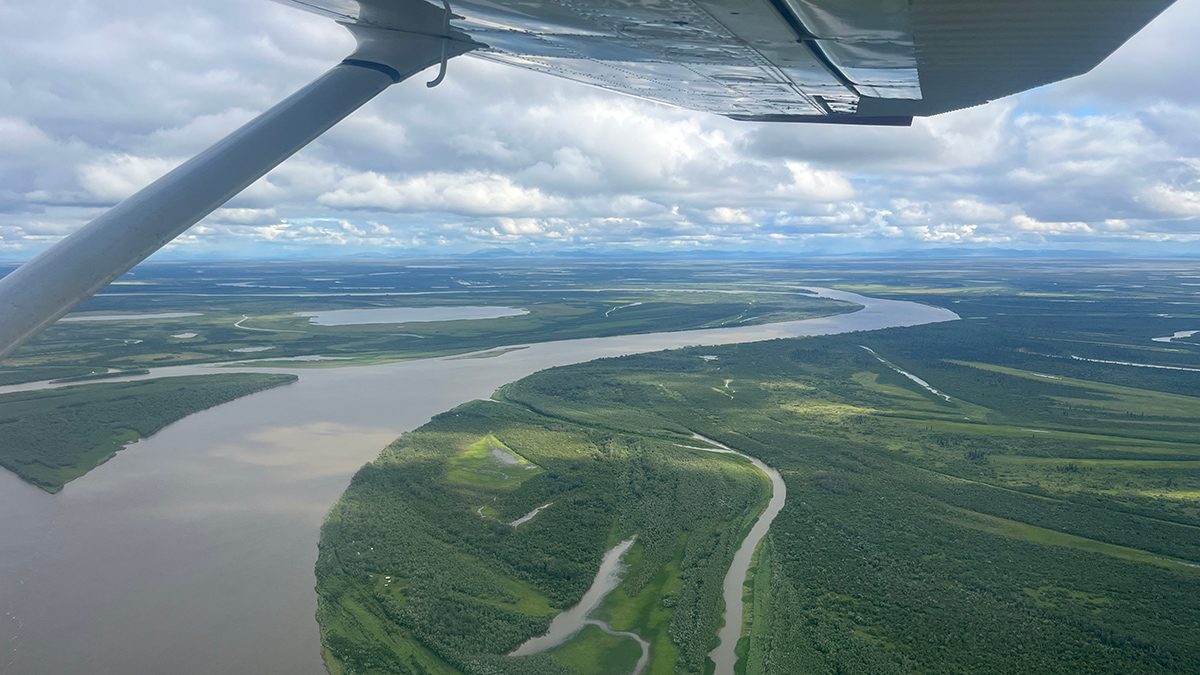
In the Arctic Rivers project, the researchers worked with Indigenous communities across Alaska to model how climate change will alter rivers and streams. In the Mid-Klamath project, the researchers worked with the Karuk Tribe in Northern California to study how different wildfire management strategies would affect local hydrology.
In both cases, mismatches existed between the methodology available to the researchers and the needs of the end users, and the collaborators mitigated these mismatches to varying extents. In the Arctic Rivers project, for example, constraints on computational resources limited the number of future scenarios the researchers could model. Thanks to involvement from the project’s own Indigenous Advisory Council and the Yukon River Inter-Tribal Watershed Council, the researchers were able to prioritize the scenarios most relevant to the communities.
In the Mid-Klamath project, on the other hand, misunderstandings at the start of the project led the researchers to choose a modeling tool that didn’t fully meet the expectations of the tribe. More extensive discussions during early stages of the project could have avoided this issue, the researchers noted, and the National Science Foundation has recently begun to change its granting system to allow for these early discussions.
Accurately communicating the limits of the available technology is crucial, the researchers wrote. For example, one member of an Alaskan community stated that conditions in the region were changing so quickly that they needed subseasonal projections in addition to decade-scale projections. Unfortunately, the former were beyond the technical expertise of the scientists involved in the project. But scientists were careful not to mislead the community into thinking such a thing was possible in that project.
Cultural humility and spending ample time with Indigenous communities are both cornerstones of successful collaborations, the researchers wrote. At the same time, it’s important to acknowledge the capacity constraints that many scientists face. In addition, it is valuable to offer roles involving reasonable time commitments to scientists with fewer resources, so as not to exclude them from the codesign process. (AGU Advances, https://doi.org/10.1029/2025AV001921, 2025)
—Saima May Sidik (@saimamay.bsky.social), Science Writer