• About
  • Special Reports
  • Topics
    • Climate
    • Earth Science
    • Oceans
    • Space & Planets
    • Health & Ecosystems
    • Culture & Policy
    • Education & Careers
    • Opinions
  • Projects
    • Postcards From the Field
    • ENGAGE
    • Editors’ Highlights
    • Editors’ Vox
    • Eos en Español
    • Eos 简体中文版
    • Print Archive: 2015–2025
  • Policy Tracker
  • Blogs
    • Research & Developments
    • The Landslide Blog
  • Newsletter
  • Submit to Eos
  • AGU.org
  • Career Center
  • Join AGU
  • Give to AGU
  • About
  • Special Reports
  • Topics
    • Climate
    • Earth Science
    • Oceans
    • Space & Planets
    • Health & Ecosystems
    • Culture & Policy
    • Education & Careers
    • Opinions
  • Projects
    • Postcards From the Field
    • ENGAGE
    • Editors’ Highlights
    • Editors’ Vox
    • Eos en Español
    • Eos 简体中文版
    • Print Archive: 2015–2025
  • Policy Tracker
  • Blogs
    • Research & Developments
    • The Landslide Blog
  • Newsletter
  • Submit to Eos
Skip to content
  • AGU.org
  • Career Center
  • Join AGU
  • Give to AGU
Eos

Eos

Science News by AGU

Support Eos
Sign Up for Newsletter
  • About
  • Special Reports
  • Topics
    • Climate
    • Earth Science
    • Oceans
    • Space & Planets
    • Health & Ecosystems
    • Culture & Policy
    • Education & Careers
    • Opinions
  • Projects
    • Postcards From the Field
    • ENGAGE
    • Editors’ Highlights
    • Editors’ Vox
    • Eos en Español
    • Eos 简体中文版
    • Print Archive: 2015–2025
  • Policy Tracker
  • Blogs
    • Research & Developments
    • The Landslide Blog
  • Newsletter
  • Submit to Eos

cities

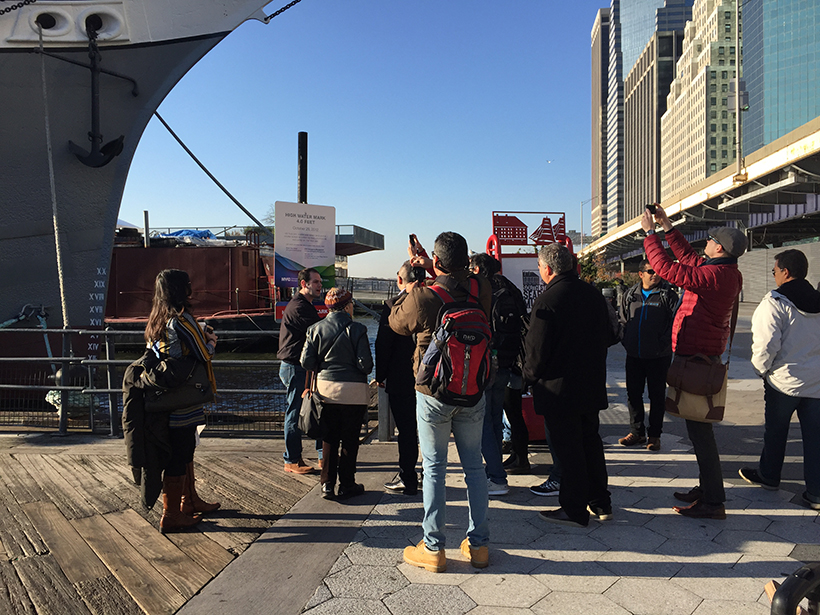
Representatives from NYC and Rio look at the 2012 high-water mark from Hurricane Sandy at New York’s Battery Park.
Posted inScience Updates

Cities Partner to Prepare for Natural Hazards and Climate Change

by M. M. Hurwitz, F. Mandarino and D. B. Kirschbaum 18 July 201720 March 2023

NASA-Rio-UCCRN Workshop on Sea Level Rise, Urban Heat Islands, and Water Quality; New York, 14–16 November 2016
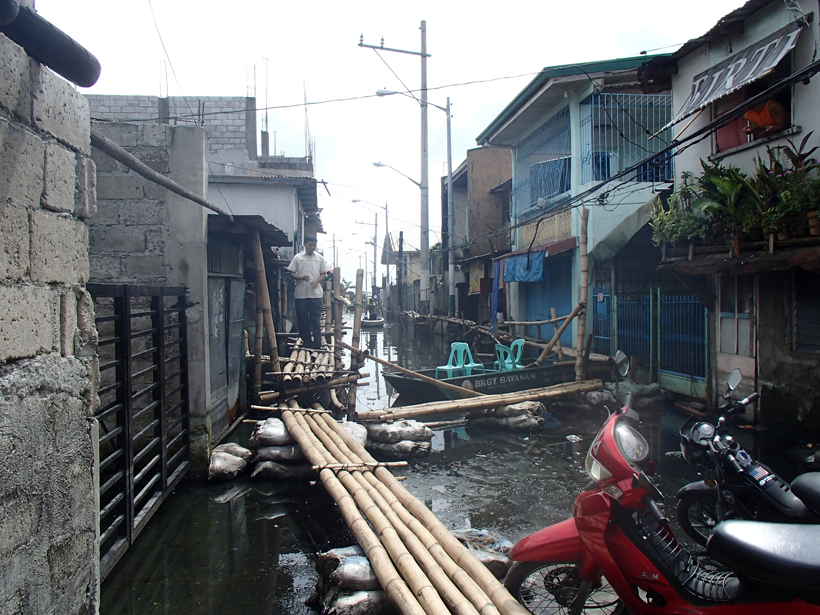
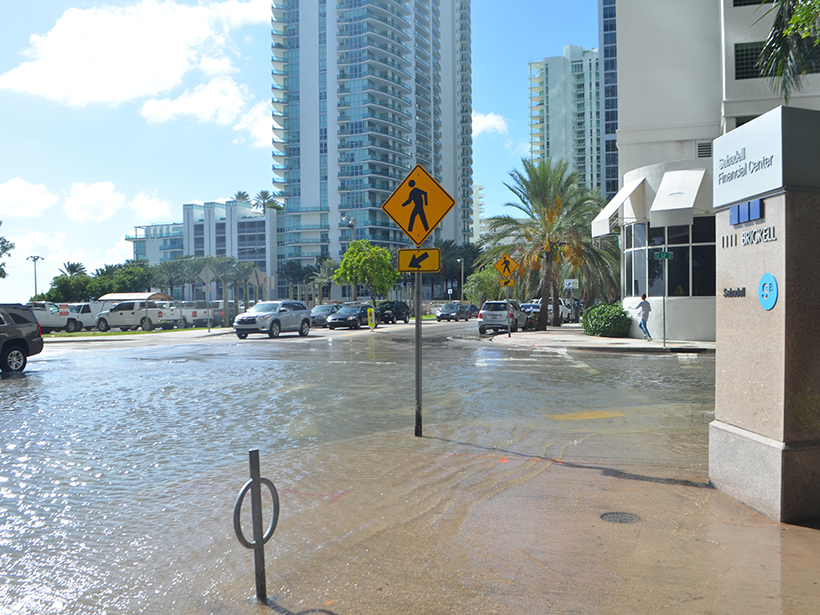
In September 2009, Typhoon Ketsana dropped 455 millimeters of rain on Manila in 24 hours, flooding the city.
Posted inNews

Mapping Dengue Fever Hazard with Machine Learning

Tim Hornyak, Science Writer by Tim Hornyak 14 June 201715 March 2023

Researchers develop a predictive software system to identify city-specific, dengue fever risk areas amid a global increase in cases.

Handlebar view of a courier bicycling in New York City.
Posted inNews

Novel Air Pollution Study Gauges Individual Cyclists’ Risks

by R. Kaufman 13 June 20176 October 2025

By attaching an array of instruments to bike commuters in New York City, researchers aim to evaluate ambient pollution amounts and doses at the level of an individual cyclist.
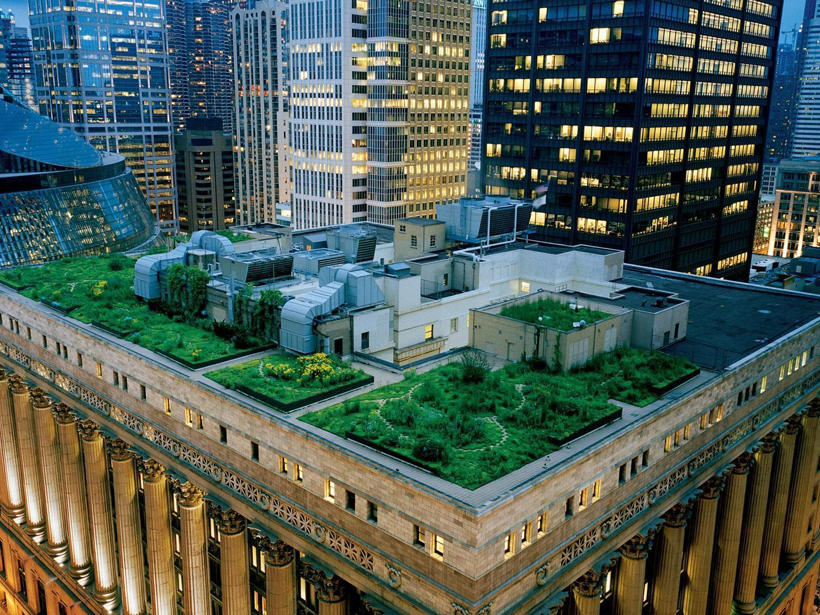
The green roof on Chicago’s City Hall
Posted inScience Updates

Cities Smarten Up and Go Green

by I. Seifert-Dähnn, M. Millstein and P. G. Røe 2 March 201711 August 2022

CIENS Urban Conference 2016: Smart and Green Cities – For Whom?; Oslo, Norway, 13 October 2016

Posted inEditors' Vox

Water Challenges of Megacities

by J. M. Bahr 26 October 20166 February 2023

After attending a groundwater conference this summer in Shenzhen, China, Water Resources Research editor Jean Bahr reports back and summarizes the water management challenges posed by large cities.

lawn-replacement-native-plants-drought-tolerant-change-urban-temperatures
Posted inResearch Spotlights

Switching to Drought-Tolerant Plants Could Alter Urban Climates

Sarah Stanley, Science Writer by Sarah Stanley 30 September 201628 October 2022

In Los Angeles, replacing lawns with native plants that need less water could lead to hotter days and cooler nights.

Two shiny, metallic micrometeorites.
Posted inNews

Urban Micrometeorites No Longer a Myth

JoAnna Wendel, freelance science writer and illustrator by JoAnna Wendel 24 August 20164 October 2021

After sifting through urban debris for 6 years, one scientist unearthed cosmic dust—confirming a long-held myth about urban micrometeorites.

Ruins of Fort Beauregard are partially submerged in lake Borgne.
Posted inFeatures

Global Risks and Research Priorities for Coastal Subsidence

by M. Allison, B. Yuill, T. Törnqvist, F. Amelung, T. H. Dixon, G. Erkens, R. Stuurman, Cathleen Jones, G. Milne, M. Steckler, J. Syvitski and P. Teatini 13 July 201627 October 2022

Some of the world's largest cities are sinking faster than the oceans are rising. Humans are part of the problem, but we can also be part of the solution through monitoring and modeling.

Smog and Hong Kong’s skyline, seen from Victoria Peak.
Posted inResearch Spotlights

Chemical Boosts Ozone Production over Southern China

by Terri Cook 27 May 201613 February 2023

The presence of nitryl chloride in polluted urban air can enhance the production of ozone by up to 41%, according to a new modeling study constrained by ground-based measurements.

piazza-duomo-cathedral-acireale-basilica-saints
Posted inScience Updates

Tiny Accelerometers Create Europe's First Urban Seismic Network

by A. D’Alessandro 17 March 20166 June 2022

The system, under development in Acireale, Italy, could be used to monitor earthquakes in real time and help rescue workers focus efforts where they’re needed most.

Posts pagination

Newer posts 1 … 14 15 16 17 Older posts
Over a dark blue-green square appear the words Special Report: The State of the Science 1 Year On.

Features from AGU Publications

Research Spotlights

Typhoons Mix Up Bacteria and Biochemistry

10 July 20269 July 2026
Editors' Highlights

A Satellite-Based Global Carbon Flux Product is Sensitive to Droughts 

8 July 20266 July 2026
Editors' Vox

Small-Scale Indian Ocean Dynamics Underpin Marine Ecology and Climate

4 June 20263 June 2026
Eos logo at left; AGU logo at right

About Eos
ENGAGE
Awards
Contact

Advertise
Submit
Career Center
Sitemap

© 2026 American Geophysical Union. All rights reserved Powered by Newspack