• About
  • Special Reports
  • Topics
    • Climate
    • Earth Science
    • Oceans
    • Space & Planets
    • Health & Ecosystems
    • Culture & Policy
    • Education & Careers
    • Opinions
  • Projects
    • Postcards From the Field
    • ENGAGE
    • Editors’ Highlights
    • Editors’ Vox
    • Eos en Español
    • Eos 简体中文版
    • Print Archive: 2015–2025
  • Policy Tracker
  • Blogs
    • Research & Developments
    • The Landslide Blog
  • Newsletter
  • Submit to Eos
  • AGU.org
  • Career Center
  • Join AGU
  • Give to AGU
  • About
  • Special Reports
  • Topics
    • Climate
    • Earth Science
    • Oceans
    • Space & Planets
    • Health & Ecosystems
    • Culture & Policy
    • Education & Careers
    • Opinions
  • Projects
    • Postcards From the Field
    • ENGAGE
    • Editors’ Highlights
    • Editors’ Vox
    • Eos en Español
    • Eos 简体中文版
    • Print Archive: 2015–2025
  • Policy Tracker
  • Blogs
    • Research & Developments
    • The Landslide Blog
  • Newsletter
  • Submit to Eos
Skip to content
  • AGU.org
  • Career Center
  • Join AGU
  • Give to AGU
Eos

Eos

Science News by AGU

Support Eos
Sign Up for Newsletter
  • About
  • Special Reports
  • Topics
    • Climate
    • Earth Science
    • Oceans
    • Space & Planets
    • Health & Ecosystems
    • Culture & Policy
    • Education & Careers
    • Opinions
  • Projects
    • Postcards From the Field
    • ENGAGE
    • Editors’ Highlights
    • Editors’ Vox
    • Eos en Español
    • Eos 简体中文版
    • Print Archive: 2015–2025
  • Policy Tracker
  • Blogs
    • Research & Developments
    • The Landslide Blog
  • Newsletter
  • Submit to Eos

mapping

Titan and Dione with Saturn.
Posted inNews

What to Expect from Cassini's Final Views of Titan

JoAnna Wendel, freelance science writer and illustrator by JoAnna Wendel 20 April 201717 January 2023

Cassini will fly close to Saturn's largest moon one last time. Here's a look back at what the spacecraft has revealed and ahead to scientists' final close glimpses of the moon.

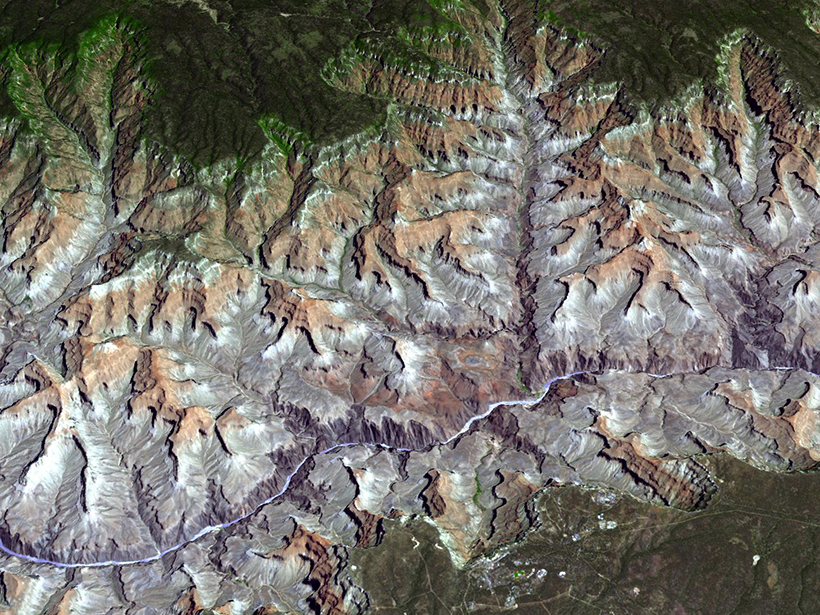
Grand canyon aerial view showing dendritic drainage.
Posted inResearch Spotlights

Stream Network Geometry Correlates with Climate

by Terri Cook 6 April 20176 June 2022

A "big data" analysis of nearly 1 million river junctions in the contiguous United States shows that branching angles in dendritic drainages vary systematically between humid and arid regions.

sunlight on water
Posted inResearch Spotlights

Sun Glitter Provides a Detailed Map of Ocean Waves

by S. Witman 20 March 20176 February 2023

European scientists use satellite sensors to detect light reflected off waves at the ocean's surface, which could help improve wave forecasts.

3-D view of Bingham Canyon Mine, Utah, an example of a human-made topographic fingerprint on the landscape.
Posted inOpinions

Mapping the Topographic Fingerprints of Humanity Across Earth

by P. Tarolli, G. Sofia and E. Ellis 16 March 20176 March 2023

If increasingly globalized societies are to make better land management decisions, the geosciences must globally evaluate how humans are reshaping Earth's surface
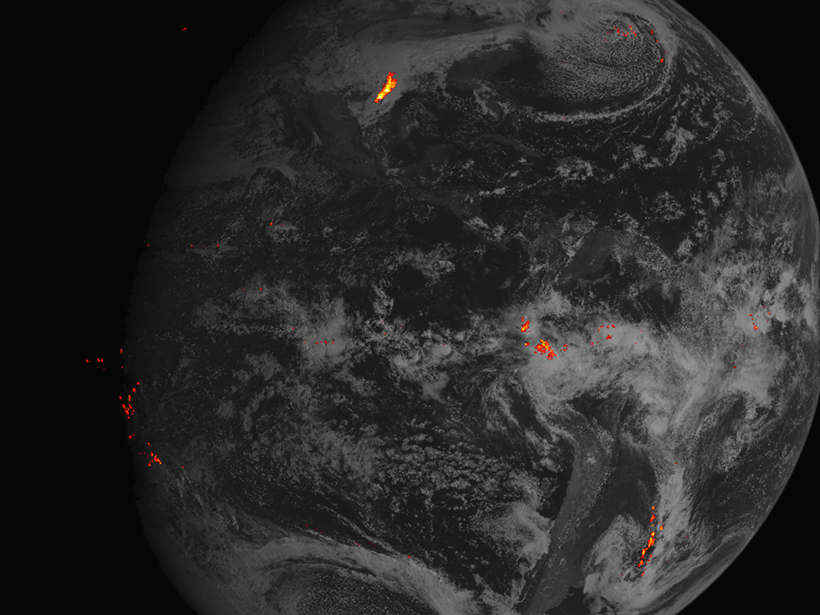
Global lightning detection
Posted inNews

GOES-16 Satellite Lights Up Lightning Flashes in New Video

JoAnna Wendel, freelance science writer and illustrator by JoAnna Wendel 9 March 201713 March 2023

The satellite's lightning mapper instrument will help scientists forecast extreme weather.

The search for Malaysian Airlines flight MH370 produced this detailed view of the landscape deep in the Indian Ocean.
Posted inScience Updates

Geological Insights from Malaysia Airlines Flight MH370 Search

by K. Picard, B. Brooke and M. F. Coffin 6 March 201726 September 2023

A rich trove of marine geophysical data acquired in the search for missing flight MH370 is yielding knowledge of ocean floor processes at a level of detail rare in the deep ocean.

Mt. Kilimanjaro.
Posted inNews

Kilimanjaro's Iconic Snows Mapped in Three Dimensions

Katherine Kornei, Science Writer by Katherine Kornei 3 March 20177 February 2023

New ground-penetrating radar measurements reveal the thickness and total ice volume of the mountain's Northern Ice Field.
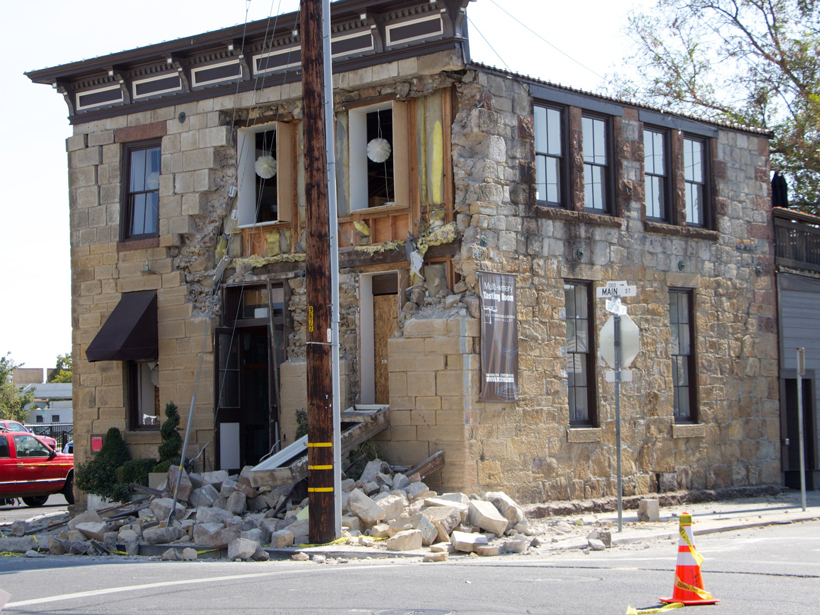
Stone crumbled off the surface of a building in Napa after the 2014 magnitude 6.0 earthquake.
Posted inNews

Overlooked Data Source Improves Quake Intensity Maps

Sarah Derouin, Science Writer by Sarah Derouin 20 February 20178 December 2022

A new approach may fine-tune estimates of the range of shaking from earthquakes and help define areas of potential damage.
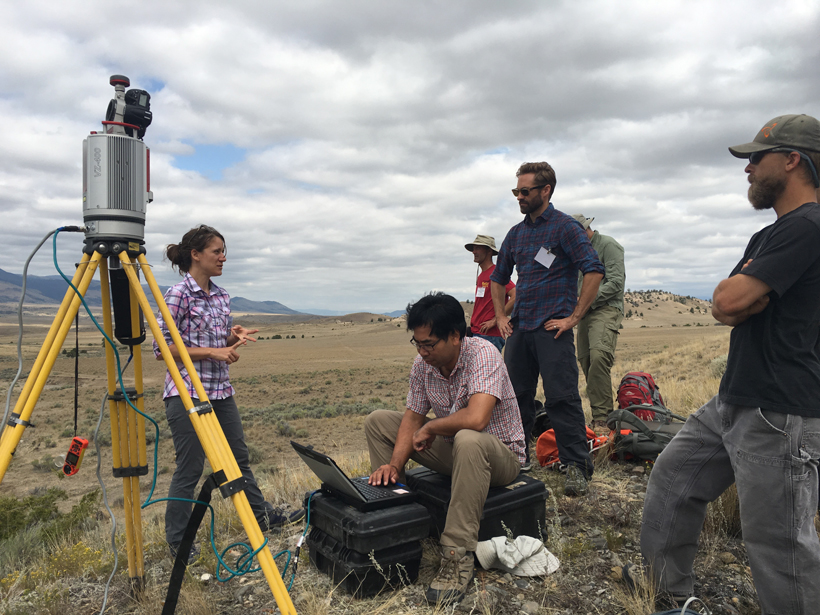
Geoscience instructors participating in a 2016 workshop.
Posted inScience Updates

Integrating Topographic Imaging into Geoscience Field Courses

by B. Pratt-Sitaula, B. Crosby and C. Crosby 7 February 20171 November 2022

Using TLS and Structure from Motion (SfM) Photogrammetry in Undergraduate Field Education; Cardwell, Montana, 16–19 August 2016
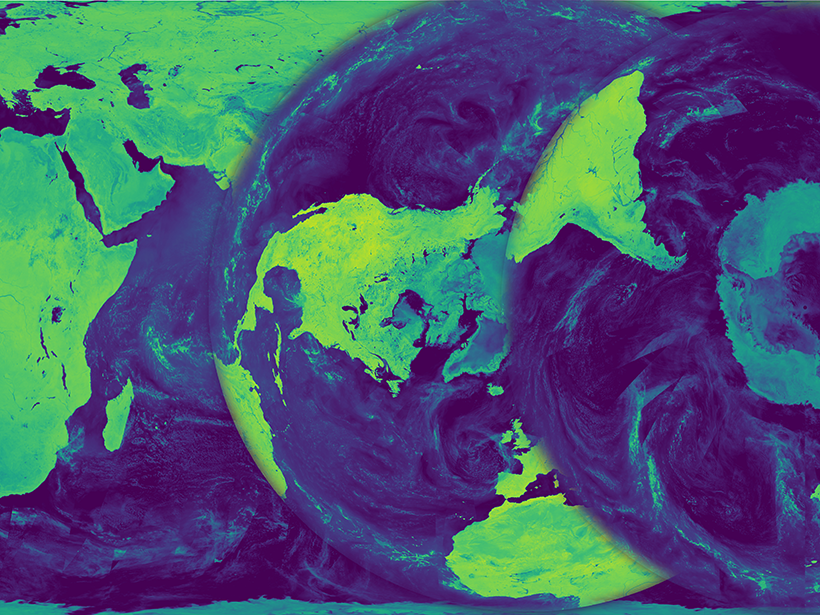
Microwave brightness temperature maps derived from satellite data.
Posted inScience Updates

Bringing Earth's Microwave Maps into Sharper Focus

by A. C. Paget, M. J. Brodzik, D. G. Long and M. A. Hardman 21 December 201631 March 2023

New processing capabilities improve the spatial resolution of satellite microwave data, enabling scientists to analyze trends in coastal regions and marginal ice zones.

Posts pagination

Newer posts 1 … 19 20 21 22 23 24 Older posts
Over a dark blue-green square appear the words Special Report: The State of the Science 1 Year On.

Features from AGU Publications

Research Spotlights

InSight into Seismology on the Red Planet

21 October 202621 October 2026
Editors' Highlights

Now Critical: Optimizing Complementary Ocean Carbon Observing Networks

29 October 202629 October 2026
Editors' Vox

Opening Access to Earth Observation Data for Disaster Mitigation

21 October 202620 October 2026
Eos logo at left; AGU logo at right

About Eos
ENGAGE
Awards
Contact

Advertise
Submit
Career Center
Sitemap

© 2026 American Geophysical Union. All rights reserved Powered by Newspack