• About
  • Sections
  • Topics
    • Climate
    • Earth Science
    • Oceans
    • Space & Planets
    • Health & Ecosystems
    • Culture & Policy
    • Education & Careers
    • Opinions
  • Projects
    • Postcards From the Field
    • ENGAGE
    • Editors’ Highlights
    • Editors’ Vox
    • Eos en Español
    • Eos 简体中文版
    • Print Archive: 2015–2025
  • Science Policy Tracker
  • Blogs
    • Research & Developments
    • The Landslide Blog
  • Newsletter
  • Submit to Eos
  • AGU.org
  • Career Center
  • Join AGU
  • Give to AGU
  • About
  • Sections
  • Topics
    • Climate
    • Earth Science
    • Oceans
    • Space & Planets
    • Health & Ecosystems
    • Culture & Policy
    • Education & Careers
    • Opinions
  • Projects
    • Postcards From the Field
    • ENGAGE
    • Editors’ Highlights
    • Editors’ Vox
    • Eos en Español
    • Eos 简体中文版
    • Print Archive: 2015–2025
  • Science Policy Tracker
  • Blogs
    • Research & Developments
    • The Landslide Blog
  • Newsletter
  • Submit to Eos
Skip to content
  • AGU.org
  • Career Center
  • Join AGU
  • Give to AGU
Eos

Eos

Science News by AGU

Support Eos
Sign Up for Newsletter
  • About
  • Sections
  • Topics
    • Climate
    • Earth Science
    • Oceans
    • Space & Planets
    • Health & Ecosystems
    • Culture & Policy
    • Education & Careers
    • Opinions
  • Projects
    • Postcards From the Field
    • ENGAGE
    • Editors’ Highlights
    • Editors’ Vox
    • Eos en Español
    • Eos 简体中文版
    • Print Archive: 2015–2025
  • Science Policy Tracker
  • Blogs
    • Research & Developments
    • The Landslide Blog
  • Newsletter
  • Submit to Eos

mapping

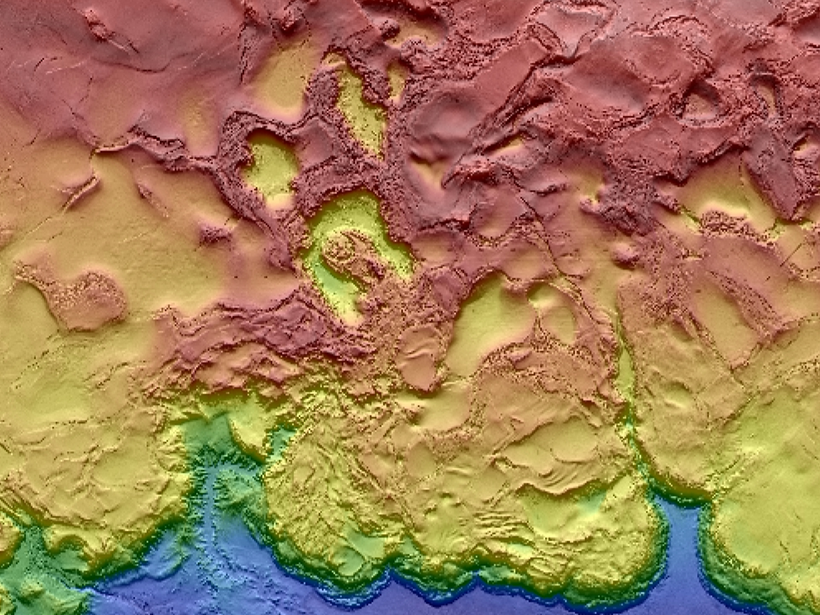
The search for Malaysian Airlines flight MH370 produced this detailed view of the landscape deep in the Indian Ocean.
Posted inScience Updates

Geological Insights from Malaysia Airlines Flight MH370 Search

by K. Picard, B. Brooke and M. F. Coffin 6 March 201726 September 2023

A rich trove of marine geophysical data acquired in the search for missing flight MH370 is yielding knowledge of ocean floor processes at a level of detail rare in the deep ocean.

Mt. Kilimanjaro.
Posted inNews

Kilimanjaro's Iconic Snows Mapped in Three Dimensions

Katherine Kornei, Science Writer by Katherine Kornei 3 March 20177 February 2023

New ground-penetrating radar measurements reveal the thickness and total ice volume of the mountain's Northern Ice Field.

Stone crumbled off the surface of a building in Napa after the 2014 magnitude 6.0 earthquake.
Posted inNews

Overlooked Data Source Improves Quake Intensity Maps

Sarah Derouin, Science Writer by Sarah Derouin 20 February 20178 December 2022

A new approach may fine-tune estimates of the range of shaking from earthquakes and help define areas of potential damage.

Geoscience instructors participating in a 2016 workshop.
Posted inScience Updates

Integrating Topographic Imaging into Geoscience Field Courses

by B. Pratt-Sitaula, B. Crosby and C. Crosby 7 February 20171 November 2022

Using TLS and Structure from Motion (SfM) Photogrammetry in Undergraduate Field Education; Cardwell, Montana, 16–19 August 2016

Microwave brightness temperature maps derived from satellite data.
Posted inScience Updates

Bringing Earth's Microwave Maps into Sharper Focus

by A. C. Paget, M. J. Brodzik, D. G. Long and M. A. Hardman 21 December 201631 March 2023

New processing capabilities improve the spatial resolution of satellite microwave data, enabling scientists to analyze trends in coastal regions and marginal ice zones.

Japan’s Self-Defense Forces personnel examine a still-inundated area following the Kinu River’s 10 September flood.
Posted inNews

Can Data Extracted from Twitter Help Map Flood Hazards?

by T. L. Carey 16 December 201630 August 2022

Tweets, if scrutinized closely, may allow scientists to map hazards in real time, helping to guide emergency response.

app-gives-sea-level-rise-at-tide-station
Posted inNews

A Quest to Put Sea Level Rise Data in Your Pocket

Aaron Sidder, freelance science writer by Aaron Sidder 15 December 201611 January 2023

A new climate change app uses interactive data maps to engage users and prompt the exploration of questions related to changing sea levels and climate vulnerability.

Thermokarst hills
Posted inNews

Map Reveals Hot Spots for Arctic Greenhouse Gas Emissions

JoAnna Wendel, freelance science writer and illustrator by JoAnna Wendel 17 October 20165 October 2022

By bringing together data on permafrost stability, soils, and other Arctic conditions, scientists have plotted where permafrost is vulnerable to collapse, which could release long-stored carbon.

Nighttime photograph of the continental United States.
Posted inResearch Spotlights

Mapping Geoelectric Hazards Across the United States

Leah Crane by L. Crane 13 October 20165 July 2022

Variations in Earth’s magnetic field can induce electric fields in the ground, driving damaging currents through our power grids.

Soldiers search for survivors following rainfall-triggered landslides in Hiroshima, Japan, on 20 August 2014.
Posted inNews

Tracking Landslide Hazards Around the World, Pixel by Pixel

Aaron Sidder, freelance science writer by Aaron Sidder 6 October 201610 February 2023

Combining satellite precipitation measurements and remotely sensed environmental data, a new system aims to improve landslide awareness and preparedness in all corners of the globe.

Posts pagination

Newer posts 1 … 18 19 20 21 22 23 Older posts
A view of a bridge, with the New Orleans skyline visible in the distance between the bridge and the water. A purple tint, a teal curved line representing a river, and the text “#AGU25 coverage from Eos” overlie the photo.

Features from AGU Publications

Research Spotlights

AI Sheds Light on Hard-to-Study Ocean Currents

14 January 202614 January 2026
Editors' Highlights

Detecting Remagnetization with Quantum Diamond Microscopy

15 January 20269 January 2026
Editors' Vox

Hydrothermal Circulation and Its Impact on the Earth System

3 December 20253 December 2025
Eos logo at left; AGU logo at right

About Eos
ENGAGE
Awards
Contact

Advertise
Submit
Career Center
Sitemap

© 2026 American Geophysical Union. All rights reserved Powered by Newspack