

While radiocarbon is best known as a dating tool, this rare isotope can also provide unique and wide-ranging insights into the cycling of carbon in the Earth system.
Modeling

Posted inFeatures
Baked Contacts Focus a Lens on Ancient Lava Flows
Two studies, conducted 40 years apart, show how combining field observations and thermal modeling can reconstruct the history of massive lava flows and how they altered the surrounding landscape.

Posted inResearch Spotlights
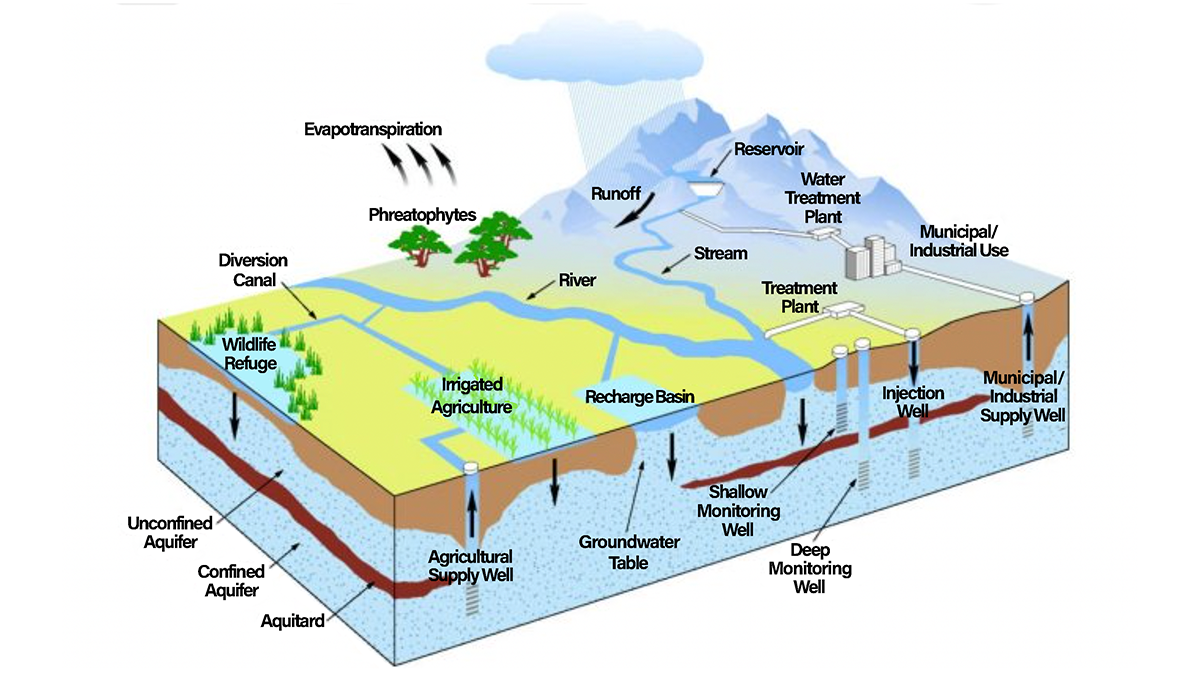
El agua subterránea se repone mucho más rápido de lo que pensaban los científicos

Un nuevo modelo basado en el clima indica que los científicos podrían haber subestimado la importancia del agua subterránea para mantener los ríos y la vida vegetal.
Posted inEditors' Highlights
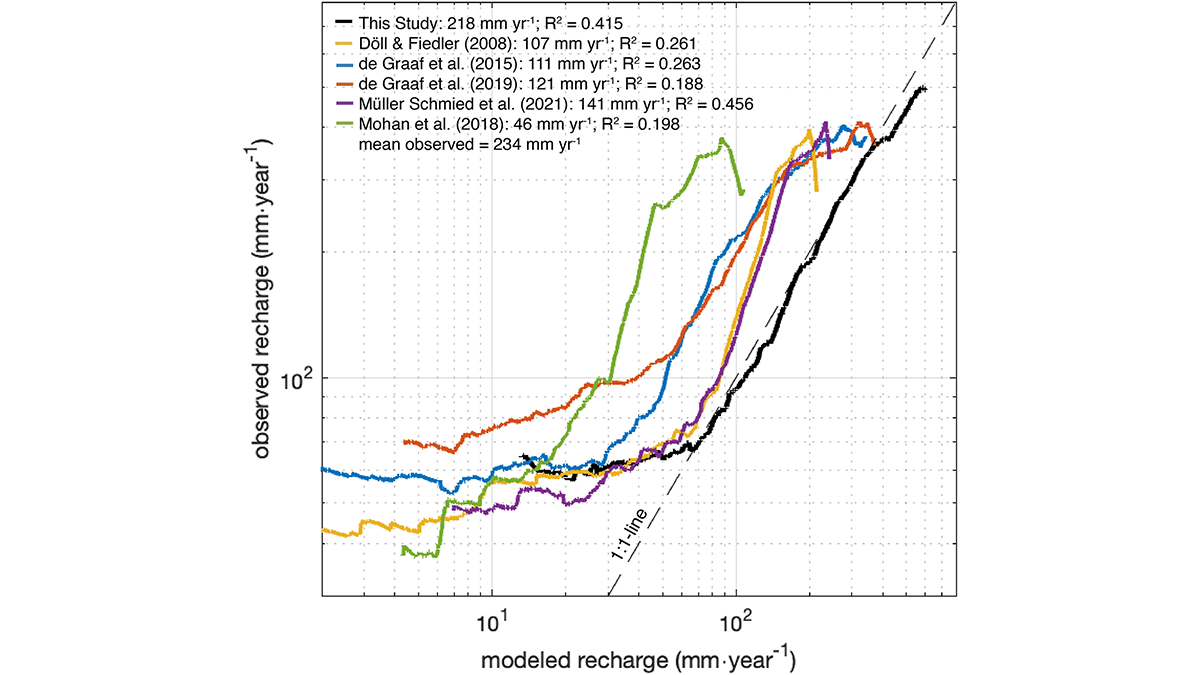
Global Models Underestimated Groundwater Recharge and Discharge
A new estimate for global groundwater recharge by rainfall and snowmelt, which dictates the upper limit of sustainable groundwater use, doubles the previous estimates from global models.
Posted inEditors' Highlights
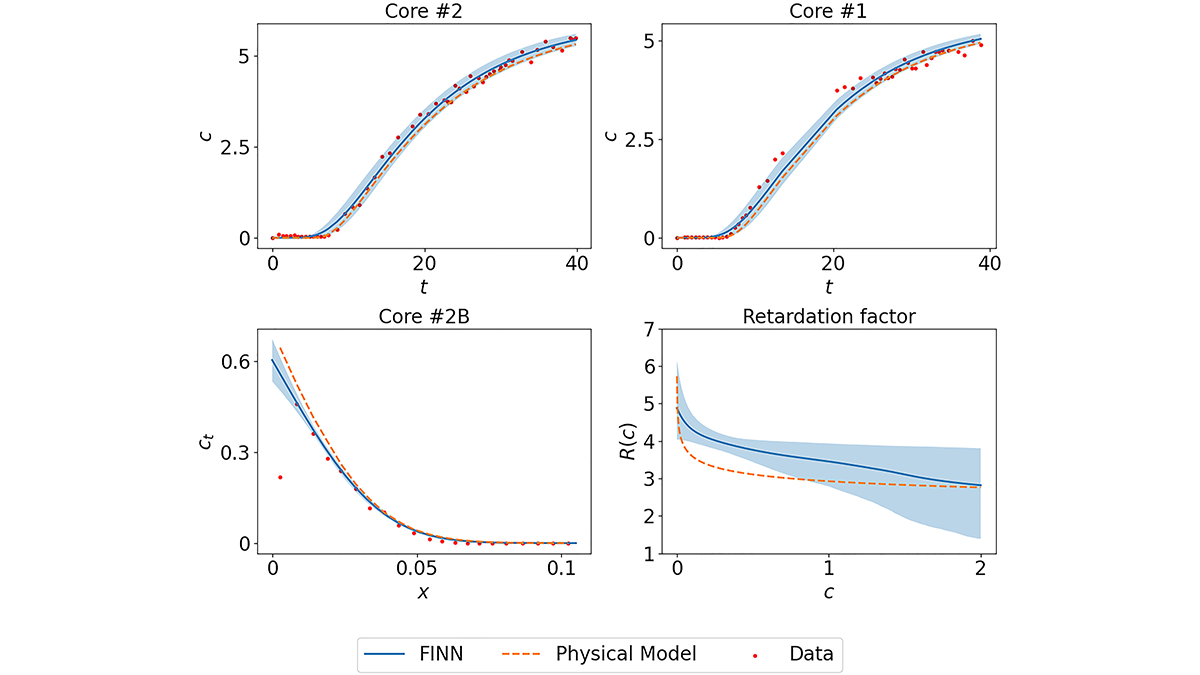
Playing Bricks with Neural Networks to Learn Sorption Processes
Designated neural network modules are combined to mimic numerically-discretized diffusion-sorption equations, which allows learning “missing pieces” in system understanding and their uncertainties.
Posted inEditors' Highlights
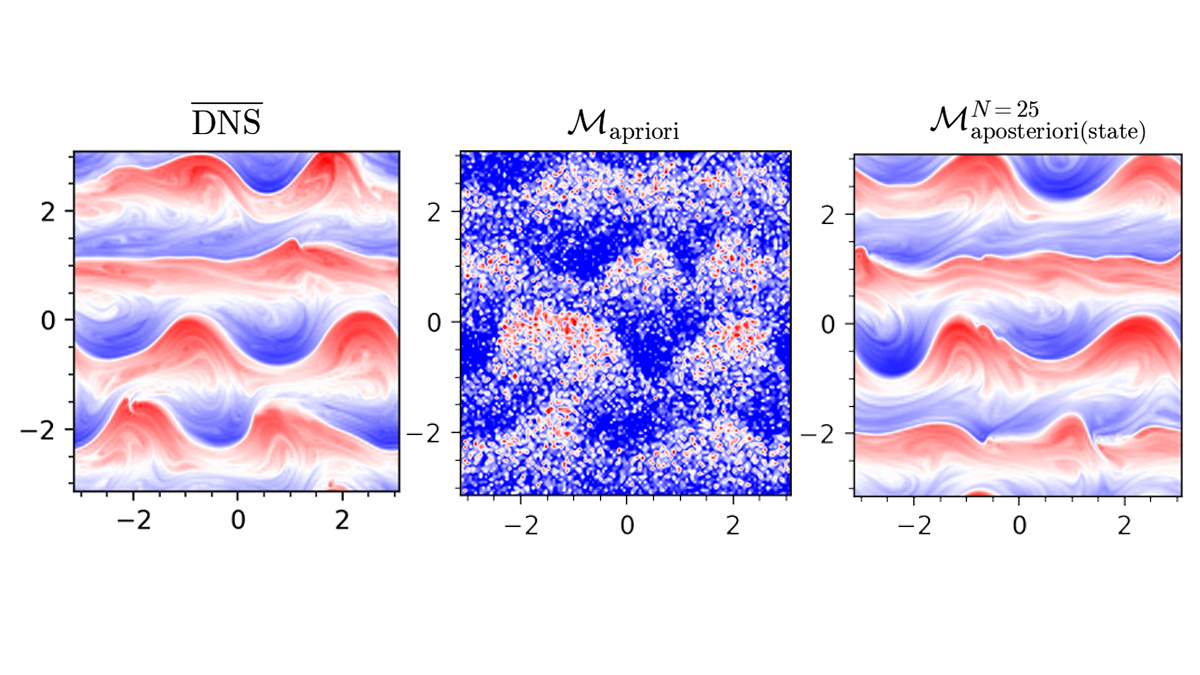
Interactive Learning for Better AI-Based Subgrid-Scale Modeling
A study shows that interactive learning can significantly enhance the performance of artificial intelligence-based parameterization of small-scale processes, a critical component of climate models.

Posted inResearch Spotlights
To Estimate Plant Water Use, Consider the Xylem
New research shows that chemical isotopes from plant xylem can improve representations of the forest water cycle.

Posted inEditors' Highlights
An Innovative Approach to Model Complex Hurricane Flood Hazards
A new study shows that it is possible to produce regional assessments of how hurricane flood hazards change due to both evolving storm tides and precipitation rates in a warming climate.