• About
  • Sections
  • Topics
    • Climate
    • Earth Science
    • Oceans
    • Space & Planets
    • Health & Ecosystems
    • Culture & Policy
    • Education & Careers
    • Opinions
  • Projects
    • ENGAGE
    • Editors’ Highlights
    • Editors’ Vox
    • Eos en Español
    • Eos 简体中文版
    • Print Archive
  • Science Policy Tracker
  • Blogs
    • Research & Developments
    • The Landslide Blog
  • Newsletter
  • Submit to Eos
  • AGU.org
  • Career Center
  • Join AGU
  • Give to AGU
  • About
  • Sections
  • Topics
    • Climate
    • Earth Science
    • Oceans
    • Space & Planets
    • Health & Ecosystems
    • Culture & Policy
    • Education & Careers
    • Opinions
  • Projects
    • ENGAGE
    • Editors’ Highlights
    • Editors’ Vox
    • Eos en Español
    • Eos 简体中文版
    • Print Archive
  • Science Policy Tracker
  • Blogs
    • Research & Developments
    • The Landslide Blog
  • Newsletter
  • Submit to Eos
Skip to content
  • AGU.org
  • Career Center
  • Join AGU
  • Give to AGU
Eos

Eos

Science News by AGU

Support Eos
Sign Up for Newsletter
  • About
  • Sections
  • Topics
    • Climate
    • Earth Science
    • Oceans
    • Space & Planets
    • Health & Ecosystems
    • Culture & Policy
    • Education & Careers
    • Opinions
  • Projects
    • ENGAGE
    • Editors’ Highlights
    • Editors’ Vox
    • Eos en Español
    • Eos 简体中文版
    • Print Archive
  • Science Policy Tracker
  • Blogs
    • Research & Developments
    • The Landslide Blog
  • Newsletter
  • Submit to Eos

seafloor

Posted inOpinions

Keeping Our Focus on the Subseafloor

by N. Bangs and James A. Austin Jr. 3 October 201718 October 2022

Hard-pressed funding agencies wonder whether marine seismic facilities are worth the investment. A recent survey gives a resounding yes.

Researchers look at submarine permafrost cores to track microbial growth
Posted inResearch Spotlights

Microbes May Thrive in Subsea Permafrost Long After Flooding

Sarah Stanley, Science Writer by Sarah Stanley 1 September 20179 December 2021

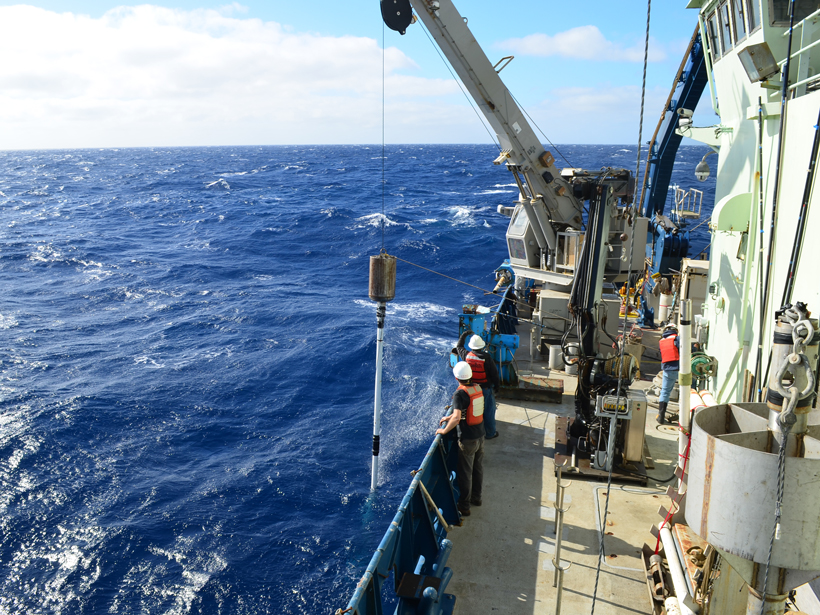
Two cores from the East Siberian Arctic Shelf reveal how microbial communities develop over thousands of years as submarine permafrost slowly thaws.

climate change globe arctic
Posted inResearch Spotlights

New Baseline for Understanding Arctic Oxygen and Nutrient Fluxes

by Terri Cook 11 August 201727 September 2022

Significant spatial and temporal patterns emerge from the first pan-Arctic comparison of oxygen demand in marine sediments.

Strips and bands of color off the western coast of Australia indicate the MH370 search area.
Posted inNews

Seafloor Data from Lost Airliner Search Are Publicly Released

Katherine Kornei, Science Writer by Katherine Kornei 21 July 201726 September 2023

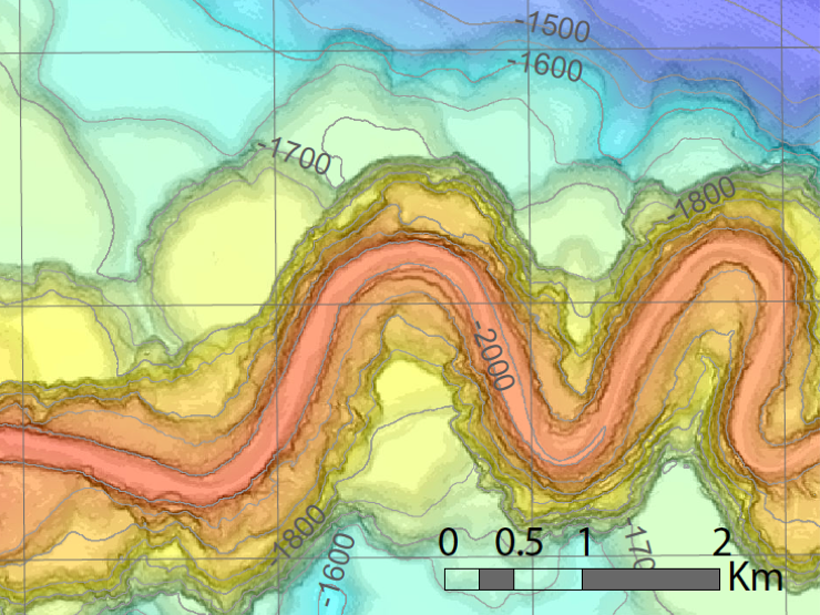
Detailed maps of the bottom of the Indian Ocean reveal deep canyons and landslides but no wreckage of Malaysia Airlines flight MH370, which went missing in 2014.

Sea cucumber among manganese nodules in the Pacific Ocean’s Clarion-Clipperton fracture zone.
Posted inResearch Spotlights

Natural Resource Exploitation Could Reach New Depths

by Jenny Lunn 21 July 201727 February 2023

The deep seafloor could provide humans with supplies of valuable metals, but opinion is divided as to whether sustainable exploitation is possible and worth the ecological and economic risk.

Posted inEditors' Vox

Mesmerized by Gracefully Gliding Albatrosses

by U. ten Brink 18 July 20176 October 2021

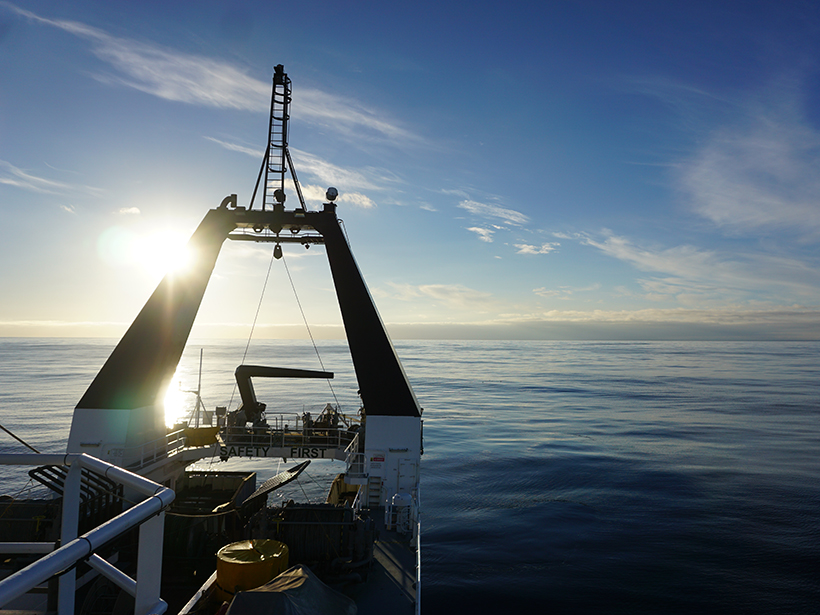
Despite avian distractions and dreadful weather, a research cruise to map the seafloor off Alaska revealed new insights into the Queen Charlotte Fault.

Researchers assess how rough seafloor terrain influences waves
Posted inResearch Spotlights

Modeling Ocean Waves over Rocky Reefs

by S. Witman 12 July 201724 February 2023

A field survey in Australia links rugged seafloor terrain to erosion-causing waves.

Modeling offers a glimpse of how cyclones impact the ocean depths
Posted inResearch Spotlights

Impacts of “Bomb” Cyclones Reach the Ocean Floor

by S. Witman 8 June 201716 December 2021

Japanese researchers study explosive cyclones with models to simulate decades of ocean circulation data.

Salt tectonics at work in this snip of a new hi-res seafloor map of the Gulf of Mexico, made from oil and gas industry data.
Posted inScience Updates

A 1.4-Billion-Pixel Map of the Gulf of Mexico Seafloor

by K. V. Kramer and W. W. Shedd 24 May 201729 September 2021

The U.S. Bureau of Ocean Energy Management releases the highest-resolution bathymetry map of the region to date.

Methane seep
Posted inNews

Ancient Methane Seeps Tell Tale of Sudden Warming

JoAnna Wendel, freelance science writer and illustrator by JoAnna Wendel 5 May 201731 July 2023

Newly discovered rock mounds left by ancient methane seeps give scientists clues that methane on ancient ocean floor was released by ancient global warming.

Posts pagination

Newer posts 1 … 13 14 15 16 17 … 19 Older posts
A view of a bridge, with the New Orleans skyline visible in the distance between the bridge and the water. A purple tint, a teal curved line representing a river, and the text “#AGU25 coverage from Eos” overlie the photo.

Features from AGU Publications

Research Spotlights

Understanding Flux, from the Wettest Ecosystems to the Driest

24 November 202524 November 2025
Editors' Highlights

Climate Variations in Tropical Oceans Drive Primarily Extreme Events

1 December 20251 December 2025
Editors' Vox

Echoes From the Past: How Land Reclamation Slowly Modifies Coastal Environments

19 November 202519 November 2025
Eos logo at left; AGU logo at right

About Eos
ENGAGE
Awards
Contact

Advertise
Submit
Career Center
Sitemap

© 2025 American Geophysical Union. All rights reserved Powered by Newspack