• About
  • Sections
  • Topics
    • Climate
    • Earth Science
    • Oceans
    • Space & Planets
    • Health & Ecosystems
    • Culture & Policy
    • Education & Careers
    • Opinions
  • Projects
    • ENGAGE
    • Editors’ Highlights
    • Editors’ Vox
    • Eos en Español
    • Eos 简体中文版
    • Print Archive
  • Science Policy Tracker
  • Blogs
    • Research & Developments
    • The Landslide Blog
  • Newsletter
  • Submit to Eos
  • AGU.org
  • Career Center
  • Join AGU
  • Give to AGU
  • About
  • Sections
  • Topics
    • Climate
    • Earth Science
    • Oceans
    • Space & Planets
    • Health & Ecosystems
    • Culture & Policy
    • Education & Careers
    • Opinions
  • Projects
    • ENGAGE
    • Editors’ Highlights
    • Editors’ Vox
    • Eos en Español
    • Eos 简体中文版
    • Print Archive
  • Science Policy Tracker
  • Blogs
    • Research & Developments
    • The Landslide Blog
  • Newsletter
  • Submit to Eos
Skip to content
  • AGU.org
  • Career Center
  • Join AGU
  • Give to AGU
Eos

Eos

Science News by AGU

Support Eos
Sign Up for Newsletter
  • About
  • Sections
  • Topics
    • Climate
    • Earth Science
    • Oceans
    • Space & Planets
    • Health & Ecosystems
    • Culture & Policy
    • Education & Careers
    • Opinions
  • Projects
    • ENGAGE
    • Editors’ Highlights
    • Editors’ Vox
    • Eos en Español
    • Eos 简体中文版
    • Print Archive
  • Science Policy Tracker
  • Blogs
    • Research & Developments
    • The Landslide Blog
  • Newsletter
  • Submit to Eos

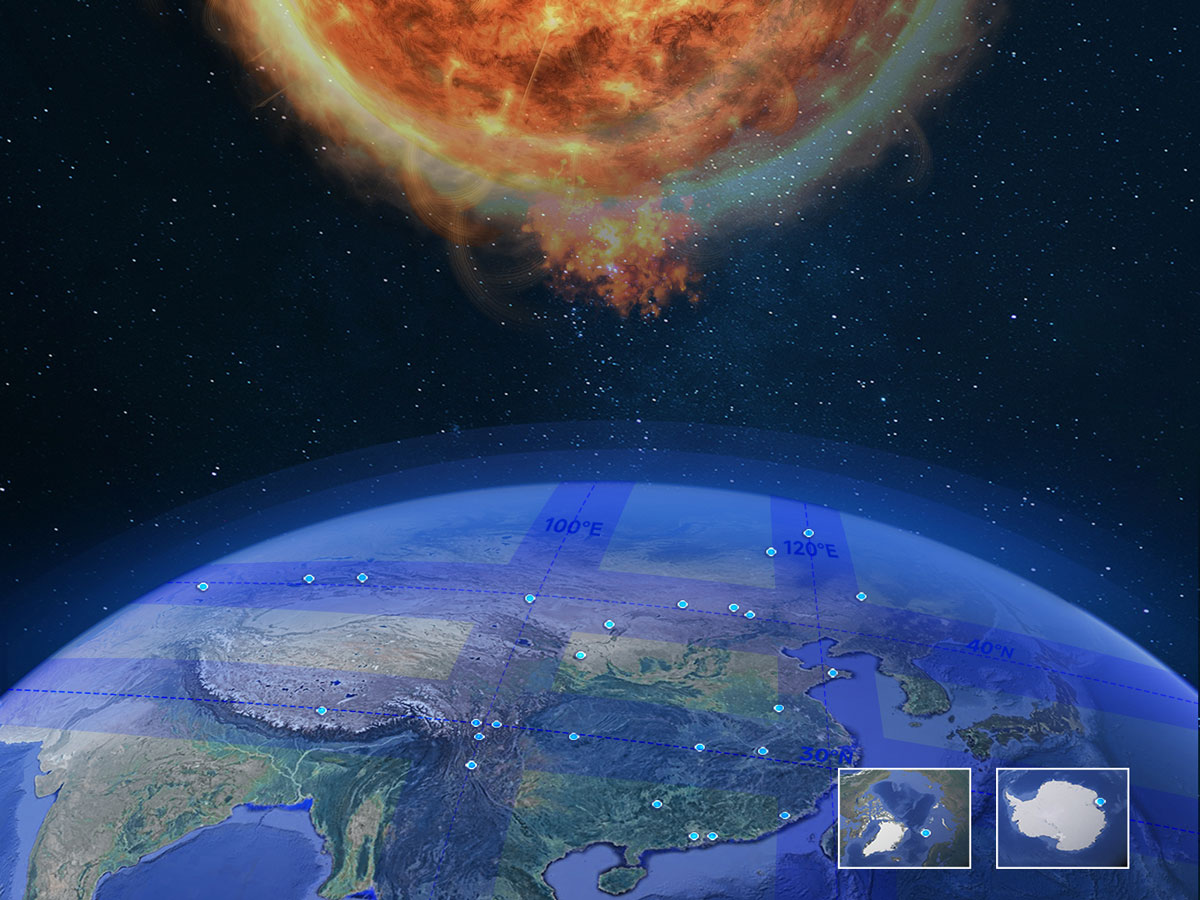
monitoring networks

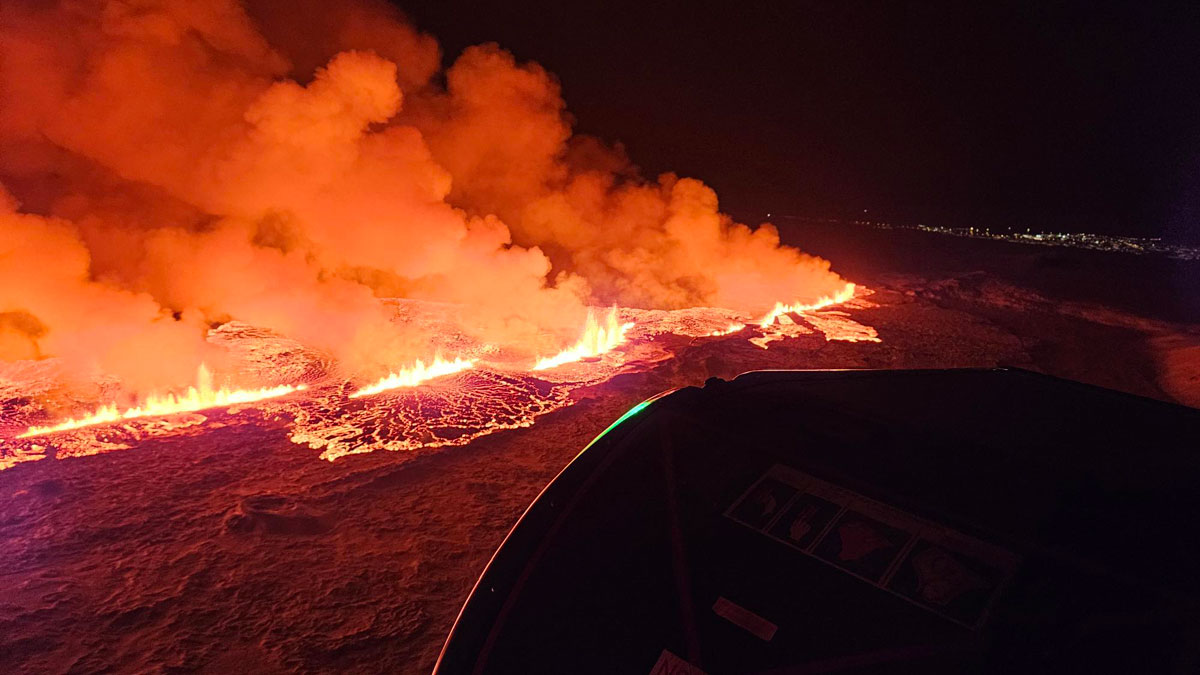
A satellite image looking down at snow-covered Reykjanes Peninsula with an erupting volcanic fissure and steam plume.
Posted inNews

Iceland’s Recent Eruptions Driven by Tectonic Stress

Kimberly M. S. Cartier, News Writing and Production Intern for Eos.org by Kimberly M. S. Cartier 23 February 202423 February 2024

Magma flow in the magmatic dike near Grindavík was among the fastest recorded. The processes driving that flow could be at play at volcanoes in Hawaii, off the African coast, and anywhere crustal plates split apart.

Map of the world with the ocean appearing in black and land surfaces appearing in rainbow colors denoting land surface temperatures.
Posted inScience Updates

Trustworthy Satellite Earth Observations for Science and Society

by Fabrizio Niro, Michael Cosh and Jaime Nickeson 8 February 20248 February 2024

Enhancing confidence in satellite observations of terrestrial properties like land surface temperature and soil moisture requires advances in validation and data quality assessment practices.

Bubbles and the silhouettes of fish are seen from below, with light from the surface above them.
Posted inFeatures

Oceanic Cacophony 

by Alka Tripathy-Lang 21 December 202321 December 2023

The ocean is a pretty loud place, and anthropogenic noise is adding another layer to the soundscape.

Aerial view of a tall metal frame tower towering over a forest under a cloudy sky and with snow-covered mountains in the distance. An illustrated rainbow-colored beam from the tower to the ground is superimposed on the photo.
Posted inScience Updates

Ecosystem Observations from Every Angle

by Zoe Pierrat, Troy Magney, Xi Yang, Anam Khan and Loren Albert 14 December 202314 December 2023

Proximal remote sensing provides a bridge between ecosystem flux data at Earth’s surface and optical data from satellite sensors, improving our grasp of feedbacks between terrestrial ecosystems and climate.

Image of a coastal town seen from the air with a geothermal power plant in the background.
Posted inNews

Eruption Now Unlikely Near Icelandic Town

Kimberly M. S. Cartier, News Writing and Production Intern for Eos.org by Kimberly M. S. Cartier 6 December 20236 December 2023

Scientists and local authorities had been tracking the eruption’s precursors for weeks and evacuated residents. Then the magma stalled.

A close-up view of a fiber-optic cable. One main cable is filled with smaller glass strands that are pathways through which light communications pass and transmit data.
Posted inNews

Thunderquakes Map the Subsurface

Sarah Derouin, Science Writer by Sarah Derouin 4 December 202314 May 2024

Researchers have figured out how rumbling thunder turns to seismic waves and how this shaking could be used to reveal subsurface geology.

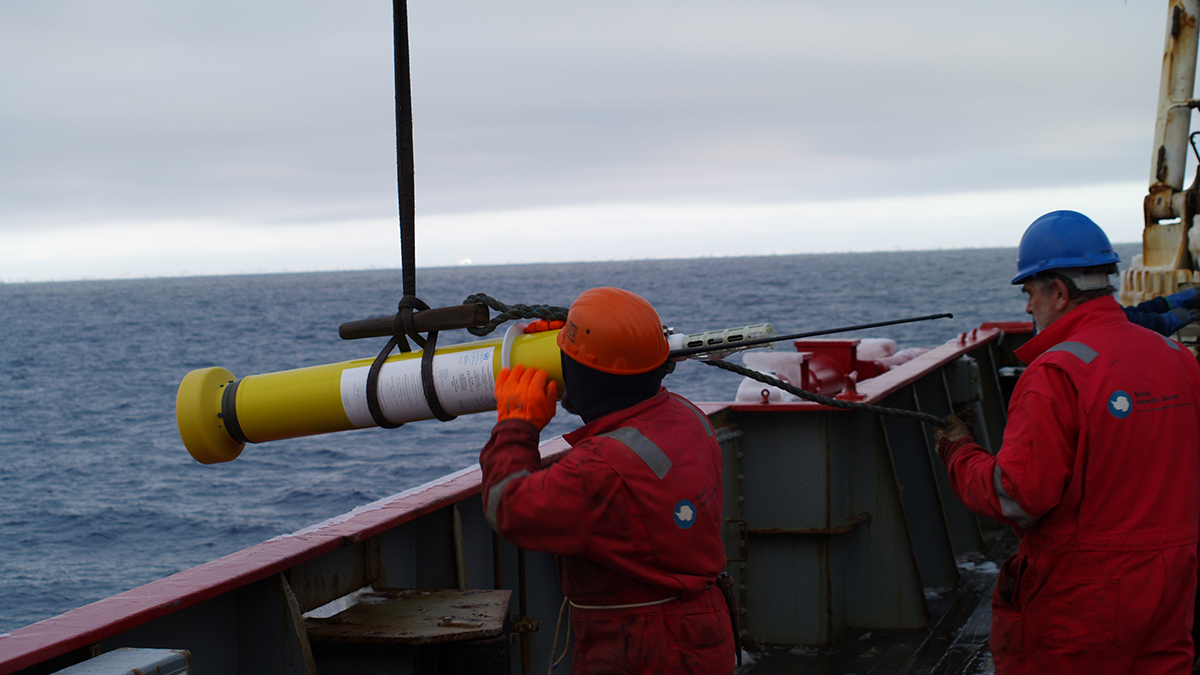
A buoy with a red and yellow bottom and a white top, labeled “TAO,” is lowered into the ocean from a ship.
Posted inResearch Spotlights

Bolstered by Buoys: Predicting El Niño

Aaron Sidder, freelance science writer by Aaron Sidder 27 November 202327 November 2023

Scientists investigate the importance of a Pacific buoy network in monitoring and predicting the El Niño–Southern Oscillation.

Un instrumento de monitoreo científico con una cubierta en forma de cúpula montado en un tripíe se encuentra en una franja de césped entre dos áreas boscosas.
Posted inResearch Spotlights

Los primeros eventos de deslizamiento lento observados en el sur de Costa Rica

Rachel Fritts, Science Writer by Rachel Fritts 20 November 202320 November 2023

Cinco eventos observados en la Península de Osa revelan nueva información sobre el papel que estos pequeños y lentos terremotos pueden desempeñar en la acumulación de tensión y riesgos de tsunami a lo largo de las zonas de subducción.

A ring of fire annular solar eclipse just before maximum eclipse on a burnt orange sky.
Posted inNews

Ham Radios Crowdsourced Ionospheric Science During Eclipse

Kimberly M. S. Cartier, News Writing and Production Intern for Eos.org by Kimberly M. S. Cartier 26 October 202310 April 2024

Amateur radio operators who study space physics and the upper atmosphere probed the ionosphere’s response to the 2023 annular solar eclipse using shortwave transmissions.

A sail-shaped prototype of an ocean sensor floats in a pond
Posted inNews

Biodegradable Sensors Could Explore the Seas More Sustainably

by Lisa Aubry 26 October 202326 October 2023

Researchers are developing environmentally friendly instruments to monitor the oceans.

Posts pagination

Newer posts 1 … 4 5 6 7 8 … 16 Older posts
A view of a bridge, with the New Orleans skyline visible in the distance between the bridge and the water. A purple tint, a teal curved line representing a river, and the text “#AGU25 coverage from Eos” overlie the photo.

Features from AGU Publications

Research Spotlights

An Ecosystem Never Forgets

19 December 202519 December 2025
Editors' Highlights

Frictional Properties of the Nankai Accretionary Prism

11 December 20259 December 2025
Editors' Vox

Hydrothermal Circulation and Its Impact on the Earth System

3 December 20253 December 2025
Eos logo at left; AGU logo at right

About Eos
ENGAGE
Awards
Contact

Advertise
Submit
Career Center
Sitemap

© 2025 American Geophysical Union. All rights reserved Powered by Newspack