
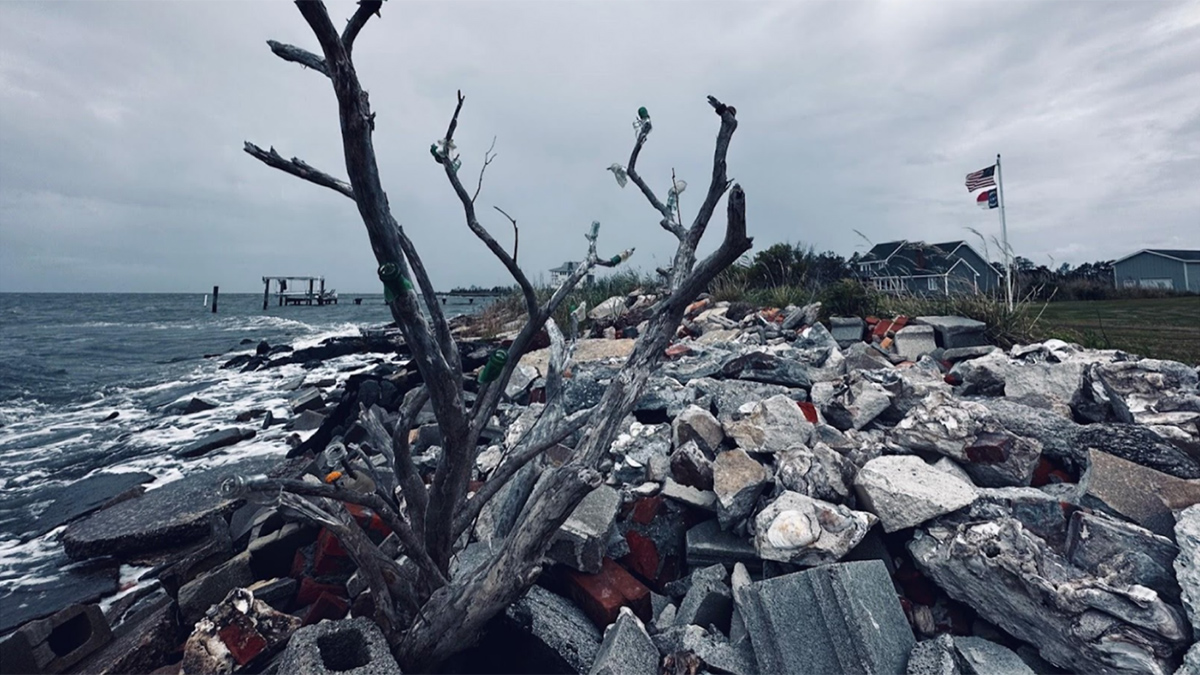
Nearly the entire North American Coastal Plain (NACP), a biodiversity hot spot of more than 1 million square kilometers, is vulnerable to rising sea levels, land subsidence, and increasingly severe weather. As a result, marine saltwater is intruding inland more frequently and in greater amounts in this region, which runs down most of the U.S. Atlantic coast and around much of the Gulf of Mexico.
Groundwater extraction and dense networks of agricultural canals and ditches throughout the rural landscape of the NACP often exacerbate the penetration of salinity into the coastal interior [Helton et al., 2025], which alters soil and water chemistry in coastal systems [O’Donnell et al., 2024; Tully et al., 2019].
Salinization of the coastal plain has already caused widespread declines in soy and corn agricultural yields.
Salinization of the coastal plain has already caused widespread declines in soy and corn agricultural yields and in the extent of both herbaceous and forested freshwater wetlands over the past 20–30 years. For example, from 1996 to 2016, 19,480 square kilometers of coastal forested wetlands throughout the NACP were lost [White et al., 2021], and from 2011 to 2017, about 19,000 acres of farmland on the Delmarva Peninsula, to the east of Chesapeake Bay, were lost [Mondal et al., 2023].
The rapid ecological changes occurring in the rural NACP both influence and are influenced by ongoing demographic and economic changes. These social-environmental connections will shape future outcomes for people and places.
Preparing for and adapting to these outcomes—whether by abandoning coastal land, adapting through crop rotation or impoundments, or restoring lost marshes, for example—will require difficult decisions by landowners and planners, as well as financial resources and engineering innovations. A range of policies and institutions, such as conservation programs, that influence these decisions and their consequences can ease or aggravate environmental and social outcomes. An interdisciplinary approach is therefore needed to understand the tandem hazards of saltwater intrusion and sea level rise (SWISLR) and to mitigate the risks they pose.
Toward those ends, a community of natural and social scientists, experts from conservation-focused nongovernmental organizations, representatives from state and federal agencies, extension specialists, and rural NACP stakeholders set out in 2022 to build a connective intellectual network focused on SWISLR. The network sought to expand collective capacity to predict and prepare for SWISLR impacts in rural communities through sharing and synthesis of knowledge about coastal social and environmental change.
A Holistic Approach to a Complex Problem
Salinization of soils, surface water, and groundwater presents major challenges for communities throughout the NACP. It harms drinking water supplies and agricultural productivity, and it destroys freshwater wetlands, leading to rapid habitat conversion and coastal land loss, all of which negatively affect human well-being, livelihoods, and economies.
These effects can disproportionally hit rural communities with fewer resources to adapt to change, as well as low-income households and people of color. Subsequent shifts in population density and makeup, policy responses (or the lack thereof), and other factors (e.g., financial or spiritual reliance on freshwater-dependent ecosystems) can drive further reductions in income, changes in property values, and increases in insurance costs. These enviro-economic factors intersect with inequitable, multigenerational practices involving land availability, bank and agency lending, and race, amplifying the contributions of salinization to long-standing environmental justice concerns [O’Donnell et al., 2024].
Damage to agriculture and natural habitats can affect collective local social fabrics, cultural identities, and residents’ sense of self.
Damage to agriculture and natural habitats can also affect collective local social fabrics, cultural identities, and residents’ sense of self. For many Indigenous coastal communities, changes brought on by SWISLR are leading to a “loss of place”—the disappearance of familiar features in one’s environment tied to cultural identity and livelihood (i.e., solastalgia). Loss of place can, in turn, exacerbate grief, depression, and other mental health issues.
Prior to 2020, many scholars, practitioners, and decisionmakers were studying and trying to manage impacts of SWISLR on social, economic, and ecological systems. However, these efforts were localized and disconnected, despite their shared desire to understand the risks posed in threatened coastal regions.
The SWISLR Research Coordination Network (RCN) was established to unite these different groups and to address the lack of holistic understanding of SWISLR’s effects on the vast, predominantly rural ecosystems and communities of the NACP. The RCN focused its research on six major questions:
- Who is engaged in decisions about climate risk prevention, climate adaptation, and SWISLR mitigation, and who is excluded?
- What proportion of the NACP has recently undergone and is currently vulnerable to significant ecosystem transitions as a result of SWISLR?
- How are water management and climate change interacting to determine the magnitude, extent, and duration of saltwater intrusion within and across the NACP?
- What are the consequences of SWISLR for farms and coastal fisheries?
- How is SWISLR affecting the structure, biodiversity, and function of ecological systems throughout the NACP?
- How are coastal communities interpreting, responding to, and managing SWISLR impacts and risks?
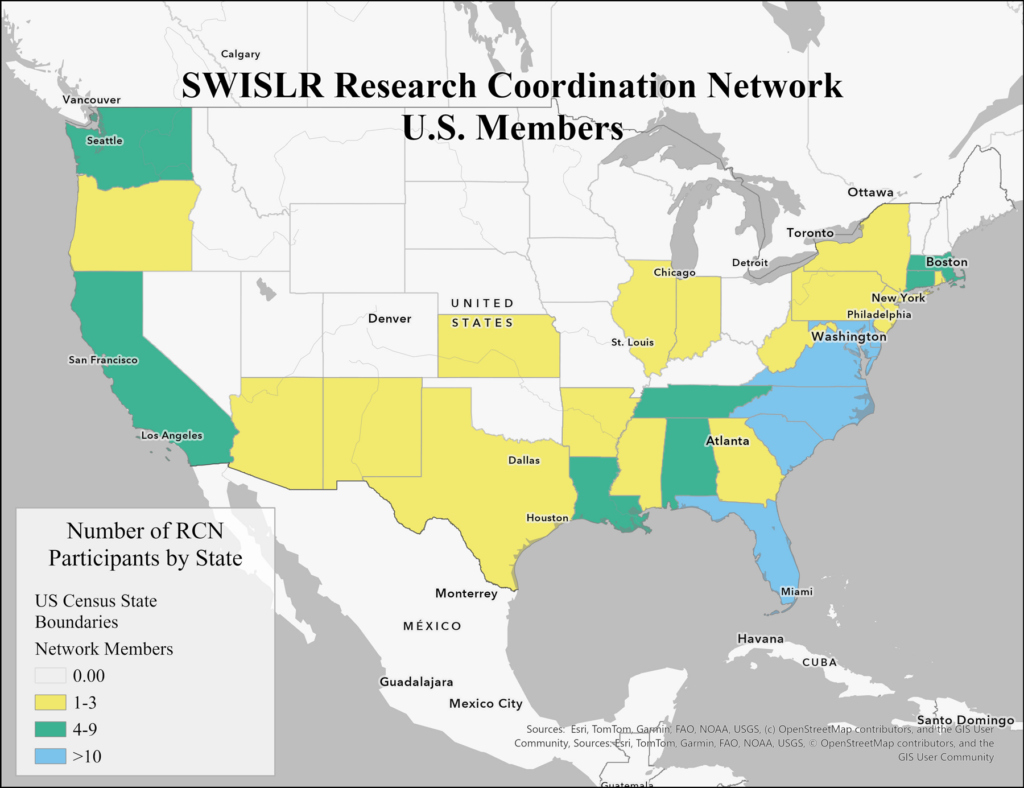
The RCN has grown from an initial 12-member steering committee into a broad network of 358 participants based in 28 states (Figure 1) and spanning many academic fields (e.g., anthropology, environmental justice, hydrology, and soil science) and community and government affiliations. This disciplinary diversity and scale created a dynamic space for problem-solving and idea generation, as well as for networking and mentoring, particularly for early-career researchers who’ve been connected with senior experts and community members.
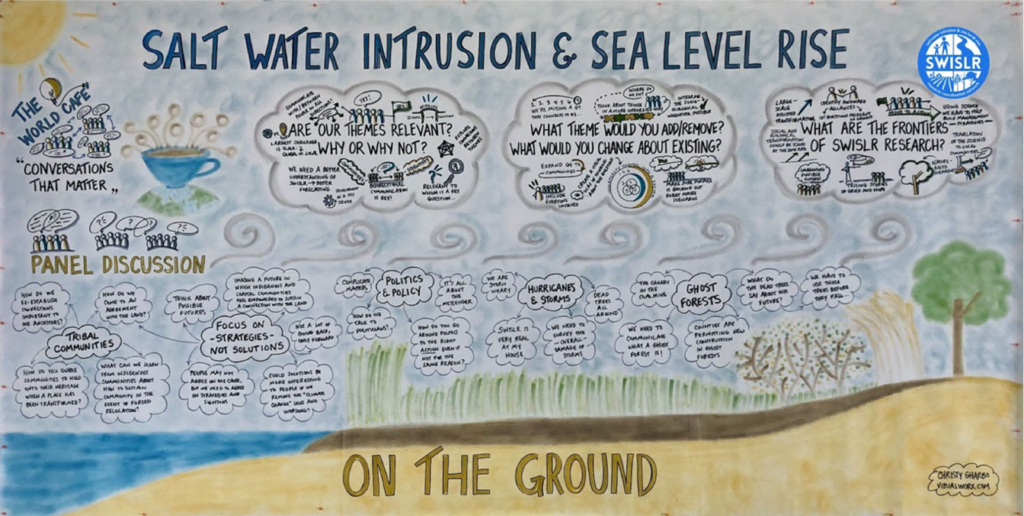
Three in-person meetings, structured to foster interdisciplinary collaboration and data sharing, helped to build and strengthen the RCN. The first and second meetings, in 2023 and 2024, refined ideas for projects aimed at answering the questions above using generative, barrier-reducing discussion approaches such as the World Café method (Figure 2). The resulting projects included studying soil chemistry shifts due to salinity increases throughout the NACP and synthesizing how human modifications alter patterns of SWISLR. The third meeting focused on strategies for strengthening the network into the future.
Since then, the RCN has continued building an interdisciplinary community to collect and synthesize scientific understanding of SWISLR’s effects and risks. We also continue to codevelop research directions that provide the knowledge and insights that community leaders need to protect vulnerable coastal systems.
What Have We Learned?
Through the RCN, participants have learned valuable lessons about the science of SWISLR and about working effectively with members of communities facing SWISLR issues.
Research often considers aboveground and belowground hydrologic pathways, such as groundwater aquifers and surface water channels, in isolation instead of as connected parts of a landscape.
One lesson is that the connection between aboveground and belowground hydrologic pathways is important for understanding the magnitude, duration, and timing of inundation and salinization. However, research often considers these pathways, such as groundwater aquifers and surface water channels, in isolation instead of as connected parts of a landscape. Often, salinization of aquifers and soils (e.g., in freshwater wetlands and agricultural settings) occurs well inland of seawater inundations because of the hydrologic connectivity of a region, hindering predictions required to inform coastal residents and managers reliably. SWISLR RCN scientists have helped to introduce and cement the idea that saltwater intrusion and sea level rise are intrinsically connected and should not be thought of as separate pathways [Helton et al., 2025].
Beyond this insight, few aspects of the landward movement of saltwater into freshwater-dependent systems are generalizable, because the ways that saltwater moves through these systems and how they react are quite different [O’Donnell et al., 2024; Helton et al., 2025; Tully et al., 2019]. We have learned that not only do hydrological and ecological systems react differently from place to place, but also that these systems interact with economic and cultural practices to create hazards related to SWISLR that are unique to each affected area.
In coastal Louisiana, SWISLR is often discussed in terms of land loss, the responses to which are limited because of the requirements of navigation for the oil and gas industries. For coastal Maryland and Virginia, the loss of economically important farm fields is SWISLR’s primary threat. In North Carolina, low-lying areas are heavily ditched, and many coastal residents see increased flooding near these historically ditched areas.
There are no quick fixes or one-size-fits-all solutions to these hazards, and adapting to the specific risks within different social and ecological contexts is key.
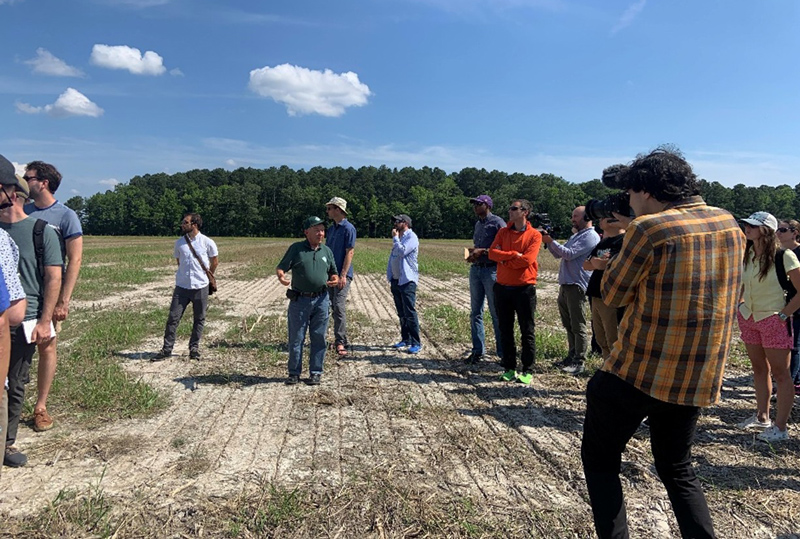
Collaborating with people affected by SWISLR to discuss the issues they face and codevelop useful research plans has offered learning opportunities beyond those from the research itself. Discussions with Maryland farmers, coastal residents of North Carolina, and Indigenous communities in Louisiana have reinforced that rural coastal communities often rely on a powerful sense of individualism and self-sufficiency, characteristics that strengthen their resolve in the face of adversity. Long-standing underinvestment, limitations on institutional support, and social and environmental justice issues across unincorporated spaces have left many such communities to confront the challenges and risks of SWISLR alone, and to make their own plans for the future to preserve their culture.
We have found that productive conversations about saltwater intrusion and sea level rise start by focusing on tangible shared experiences of impacts.
In these communities, we have found that productive conversations about SWISLR start by focusing on tangible shared experiences of impacts, such as how flooding complicates commuting to school and work. Using the same language that community members do to discuss these problems (e.g., “flooding” and “erosion” instead of “sea level rise”) helps researchers ground their findings in real life and contributes to constructive conversations.
This approach has been successful, for example, in the SWISLR RCN’s partnership with the community-led Down East Resilience Network in coastal Carteret County, North Carolina. Community leaders from this area have been involved in all-hands meetings to share ideas and concerns and to direct research toward pressing issues. Projects initiated because of constructive community conversations around SWISLR include efforts to measure potential septic system contamination and to build rural community networks.
The encroachment of SWISLR can be subtle and slow, sometimes occurring over decades, which means that resulting changes can be difficult to notice, creating a barrier to action for some community members. Finding and working with local partners trusted in both the research sphere and affected communities is important for breaking through such barriers. These individuals can serve as liaisons to help communicate the scope and significance of SWISLR’s effects and to identify practical solutions.
Finding Sustainable Solutions for Coastal Communities
Saltwater intrusion and sea level rise are transforming the NACP. The long-term ramifications for lives and land in rural coastal communities require long-term solutions, not just “Band-Aids” (e.g., parcel-level living shoreline projects) that are often easier to implement but ultimately insufficient. The following directions, based on the work of the SWISLR RCN, are likely to maximize the lasting benefits of interventions to help affected communities:
Local actions are more effective against a large problem when the goals are unified, knowledge is shared, and solutions—even if regionally distinct—are coordinated.
- Start with triage. We need to identify where both the need and the potential for significant change to mitigate SWISLR’s negative effects are strong and target those issues, communities, or geographies first.
- Go big. Coastal landscapes are highly interconnected, and SWISLR’s impacts are extremely widespread. Large-scale environmental projects such as the Comprehensive Everglades Restoration Plan (CERP) or community-wide decisionmaking efforts like the Chesapeake Bay Program, rather than small, patchwork actions (e.g., clearing debris and vegetation from roadside ditches), are key to creating effective change. Local actions are more effective against a large problem when the goals are unified, knowledge is shared, and solutions—even if regionally distinct—are coordinated.
- Stay connected. Mentoring and growing the network established by the RCN are vital for ensuring that responses and insight to SWISLR continue to move forward at a pace faster than the detrimental hazards. During the final stage of the RCN, we are creating the SWISLR Seek Platform, an online resource for scientists, practitioners, community members, and others across disciplines, career stages, sectors, and locations to continue connecting and sharing insights from their work and experiences.
The complex challenges of SWISLR are not just scientific or technical, but also deeply involve social and economic conditions and systems. Understanding these challenges holistically requires knowledge and input from an interdisciplinary array of contributors. Progress and problem-solving to find sustainable solutions across the coastal plain will ultimately come from community-focused collaborations in which diverse voices are heard.
Acknowledgements
We acknowledge the entire SWISLR RCN, especially those who joined for the in-person meetings. In alphabetical order, those members are Steve Anderson, Marcelo Ardón, Kevin Befus, Torry Bend, Hanne Borstlap, Anna Braswell, Kevin Burke, James Dennedy-Frank, Ryan Emanuel, Rebecca Epanchin-Niell, Greg Ferraro, Keryn Gedan, Ashley Helton, Matthew Kirwan, Kayle Krieg, David Lagomasino, Amy Lesen, Elsie Liu, Alex Manda, Grace Molino, Brian Moyer, Lindsay Naylor, Scott Neubauer, Clair Norden, Opal Otenburg, Jeeban Panthi, Jeri Parrent, Spencer Rhea, Brian Roberts, Alison Schulenburg, Erin Seekamp, Julia Sharapi, Matthew Sirianni, Sarah Spiegler, Jen Swenson, Kate Tully, Yuyang Wang, Eric Ward, Elliott White Jr., Serina Wittyngham, Justin Wright, and Henry Yeung. We also acknowledge Christy Gharbo at VizualWorx for assistance with graphic design and meeting facilitation. The SWISLR RCN was funded through the National Science Foundation’s Dynamics of Integrated Socio-Environmental Systems (DISES) program.
References
Helton, A. M., et al. (2025), Over, under, and through: Hydrologic connectivity and the future of coastal landscape salinization, Water Resour. Res., 61(7), e2024WR038720, https://doi.org/10.1029/2024WR038720.
Mondal, P., et al. (2023), The spread and cost of saltwater intrusion in the US Mid-Atlantic, Nature Sustain., 6, 1,352–1,362, https://doi.org/10.1038/s41893-023-01186-6.
O’Donnell, K. L., et al. (2024), Saltwater intrusion and sea level rise threatens U.S. rural coastal landscapes and communities, Anthropocene, 45, 100427, https://doi.org/10.1016/j.ancene.2024.100427.
Tully, K., et al. (2019), The invisible flood: The chemistry, ecology, and social implications of coastal saltwater intrusion, Bioscience, 69(5), 368–378, https://doi.org/10.1093/biosci/biz027.
White, E., Jr., et al. (2021), Climate change driving widespread loss of coastal forested wetlands throughout the North American Coastal Plain, Ecosystems, 25, 812–827, https://doi.org/10.1007/s10021-021-00686-w.
Author Information
Kiera O’Donnell ([email protected]), East Carolina University, Greenville, N.C.; Emily S. Bernhardt and Aeran Coughlin, Duke University, Durham, N.C.; Ken W. Krauss, Louisiana Universities Marine Consortium, Chauvin; and Xi Yang, University of Virginia, Charlottesville